




BY ANDY WALGAMOTT, NORTHWEST SPORTSMAN MAGAZINE
A record run, a record flood.
Local salmon restorations, national frustrations.
Increasing fees, less paperwork.
Commission compassion, commission controversies.
A record bull, a record amount of comment and vitriol.
Those were just some of the highs and lows when it came to Northwest fish and wildlife in 2025, a year that both gaveth and tooketh.
Every year at about this time I compile a list of what made news in our local critter world, and somehow the 365 days that just were produced one helluva pile of material.
And while I know that this isn’t every last little itty bitty scrap of news – hit me at awalgamott@media-inc.com for everything I forgot – with no further adieu, let’s get into it, beginning with my all-time favorite subject …

THE NEVER-ENDING SAGA OF THE WASHINGTON FISH AND WILDLIFE COMMISSION
Just days before his time as governor of Washington came to a end at the start of 2025, Democrat Jay Inslee tried to cement his stamp on the state Fish and Wildlife Commission by appointing Colville Rotary Club member and former park ranger Lynn O’Conner to replace thoughtful Douglas County rancher Molly Linville and returned Vice Chair Tim Ragen of Anacortes for another term.
New governor and fellow Democrat Bob Ferguson said not so fast, rescinding the O’Conner and Ragen appointments “in light of the Ruckelshaus report” and feedback from “multiple individuals, and tribes” after the aforementioned joint UW-WSU survey of fish and wildlife world stakeholders “raised several concerns” about the commission in recent years. In April, after an extended interview process, Ferguson returned Linville to the citizen panel, reupped Jim Anderson’s term and added Victor Garcia of Anacortes. All three received majority do-confirm nods from a state Senate committee as well as positive reactions from sportsmen and tribal interests.
As if to underline concerns about the commission’s drift the past few years, a series of emails released by the Sportsmen’s Alliance Foundation included one in which Chair Barbara Baker questioned recruiting more sportsmen – an absolutely stunning position for someone to have while overseeing policy for an agency actively trying to bring in more hunters, anglers and license dollars. She defended herself against other SAF accusations in a fiery June meeting, then announced the next month she would not be running for chair again.
Those emails also led to an investigation into the behavior of the so-called “fanatical four” commissioners – Baker and three others. As recent reporting revealed, the investigation actually was “set in motion” back in June by the Governor’s Office but became more publicly known in August via letter from WDFW Director Kelly Susewind to Ferguson. The latter led Washington Wildlife First – which overall experienced a year of waning influence – to call for the director’s resignation, but as 2025 comes to a close, the director’s still the director, and findings from the governor’s investigation are due in February, per a recent WA State Standard article.
Somewhere in all of that – and with a hand or two still reaching for the wheel to put things back in the ditch – the commission did manage to nearly unanimously set new black bear and cougar harvest frameworks, wrapping up a particularly contentious topic from recent years. The former features an August 1 start of fall bear season and bag limit of two, except starting two weeks later and a bag of one in regions where sow mortality rates are above 8 percent. There’s also a ban on shooting sows with cubs or cubs, and bear ID tests in more game management units where grizzlies may roam or could be reintroduced to. The cougar framework theoretically allows for the hunter harvest of about 10 more cats across the state than last season and it switches from a 13 percent cap on hunting and conflict removals to an upper bound of 16 percent. Units that on average exceed 16 percent over recent years revert to a 10 percent cap for three years. Bottomline, not the worst outcome, not the best, but at least that’s behind us.
OREGON FISH AND WILDLIFE COMMISSION NOT QUITE AS NOISY, BUT STILL BUSY
In contrast to Washington, the Oregon Fish and Wildlife Commission found itself in the headlines far, far less, but that is not to say they didn’t get anything done. Members approved a coastal fall Chinook season that brought fishing back to the Coquille River for the first time since 2021 and they modified an ODFW staff proposal that initially would have fully closed the Umpqua River to allow a fishery with a 500-king season, which was met by mid-August.
And as they approved coastal wild coho seasons, the commission also directed ODFW to look into eking out some more opportunity on three systems near Newport. After huddling with federal overseers, the agency tacked on a total of 27 “bonus fishing days” on the Siletz, Yaquina and Alsea Rivers.
Commissioners also changed the face of Eastern Oregon mule deer hunting by adopting new wildlife management units. These “deer herd ranges” are more closely aligned with migratory bucks and does or areas used by resident deer, and while it might take hunters a little while to get used to the new boundaries and unit names while putting in for controlled tags in 2026, ODFW has created a map to get a sense of how things are shifting and a page with much more information.
As they welcomed two new members, the commission also elevated the conversation around hook regulations on the Columbia, tasking ODFW Director Debbie Colbert to begin discussions about bringing back barbs on the big river with her counterparts at WDFW. There are tradeoffs to dropping the barbless requirement, which some anglers and guides appear ready to accept, but it’s hard to say how interested Washington might be about tweaking management on the shared stream.
And late in the year, Oregon’s commission also set rockfish limits at four for all of 2026, eschewing the summer bump to five after high catches this past season threatened the guideline, but boosted the lingcod bag to three a day.
LICENSE FEE HIKES, NEW AND RETURNING ENDORSEMENTS HIT NORTHWEST SPORTSMEN
Against the backdrop of a large budget deficit that allowed for them to suck a like amount of money out of WDFW’s General Fund disbursements, Washington lawmakers unexpectedly introduced and passed a bill to increase the price of most state fishing and hunting licenses by 38 percent, the first fee hike since 2011, and they also brought back the Columbia River Salmon and Steelhead Endorsement. The former went into effect July 1 and the latter is required to fish the big river and tribs for Chinook, winter-runs, etc., starting January 1, 2026.
Where the Washington increase came out of left field, not so with Oregon’s, where state lawmakers modeled their fee hike legislation after ODFW proposals, including a new $9 Ocean Endorsement, that had been shopped for at least a year beforehand. The price of everything from combined angling tags to second rod endorsements, deer tags to shellfish licenses will cost an overall average of 12 to 14 percent more beginning with the 2026 license year (the combined tag actually jumps 50 percent), then increase again in 2028 and 2030 by smaller amounts so as to avoid the Washington sticker shock effect that was forecasted to result in an 11 percent decrease in WDFW license sales as well as $350,000 less in federal disbursements tied to those sales.
Idaho didn’t see higher fees, but IDFG did switch the awarding of nonresident deer and elk tags from first come, first serve to a draw-only system starting with the 2026 season. The first application period for it was back in early December, with results expected in early January, followed by a second round for unclaimed tags in February. While wildlife officials there say it should lead to fewer frustrations with the old process, they acknowledge that because you have to buy the $185 hunting license upfront to apply, if you’re not drawn, you don’t get your money back.

FEDERAL FRUSTRATIONS MOUNT
The downsizing of the federal workforce by the Trump Administration beginning after the inauguration last January saw a National Marine Fisheries Service specialist lose his “dream job” supporting US v. Oregon fisheries management. Mark Baltzell, who signed on with NMFS after a long career with WDFW, shared his story during a March virtual press conference organized by Washington US Senator Patty Murray (D) as concerns rose about how cuts rapidly coming down from Washington, DC, put the salmon-season-setting process known as North of Falcon into “choppy waters.”
In April, a New York Times article detailed how Chinook production at nearly a dozen hatcheries in Western Washington was said to be in “limbo” because a critical federal staffer was now out of a job, placing future fisheries at risk, and then later that month, I reported that the critical Pacific Coastal Salmon Recovery Fund was also on the chopping block via a budget procedure known as a “passback.” The fund has provided and leveraged $4 billion for West Coast habitat work. As a footnote, my story earned a link on the official legislative website of Congress, and so I’m probably gonna win the Heisman Pulitzer for the piece. Suck it, NYT.
In March, the hectic stop-start flow of federal money into ODFW bank accounts – awards and contracts frozen and then unfrozen, removed from payment systems and then put back in, and messages that funds would be frozen but that never actually happening – was discussed by the agency’s chief operating officer, who also reported to his commission that despite the uncertainty, the funds were still ultimately available for drawdown. Late in the year he reported 40 percent of ODFW’s budget comes from federal funding and that delays in disbursements can cause issues if ODFW’s on-hand cash balance isn’t large enough.
In June, the chair of the Northwest Indian Fisheries Commission was more vocal about federal funding cuts and NMFS staffing reductions, terming them “contrary to the federal government’s trustee obligation to protect and implement the treaties we signed in the 1850s, reserving the right to fish, hunt and gather in our traditional areas.” The Spokane Spokesman-Review reported federal hatcheries in the Columbia Gorge had lost one-third of their staffing due to federal downsizing, one official with the Columbia River Inter-Tribal Fish Commission worried that production of coming years’ returns might be affected, and very late in 2025, USFWS Director Brian Nesvik ordered a “review” of all national fish hatcheries, as well as national wildlife refuges, to “look for refuges or hatcheries established for a purpose that no longer aligns with the mission.” What that last one might mean in terms of critical fish production and hunting access and habitat is TBD.
One of the biggest stories of the year was the attempted selloff of public lands by certain Republicans in Congress. Alarm bells began going off in April over a report that Congressmen were considering it as part of federal budget reconciliation process, and sportsmen were mobilized in May against a US House bill that would have authorized the sale of half a million acres in Nevada and Utah. While that proposal died, somehow it came back even larger and far, far worse in the US Senate as Mike Lee (R-Utah) unveiled a bid to sell off 2.8 million acres across the West, supposedly to help with housing. Mapping showed the pool of potentially available lands included critical big game range, and as pushback from hunters and anglers grew over the deeply unpopular idea, Lee’s fellow Republican senators began to make clear they were against it too. Lee was forced to dial it back to try to get it through the upper chamber, and then, with his idea threatening passage of the so-called One Big Beautiful Bill in the US House as conservative representatives there put their foot down, he pulled it, leading to cries of victory and sighs of relief from outdoorsmen and public land lovers of all political stripes and backgrounds. “Every now and then, the good guys win,” posted MeatEater. “One battle down. More to come. For now, the land’s still ours. Breathe it in.”
But somehow, that couldn’t be the end of the story on public land. The Trump Administration’s Department of the Interior announced in September it was looking at rolling back a Bureau of Land Management rule that finally put conservation on equal footing with other uses, while back in April, their US Fish and Wildlife Service and National Oceanic and Atmospheric proposed to cut out the regulatory definition of the word “harm” as it applies to Endangered Act Species-listed critters and otherwise includes the habitats of listed species in take protections, and the US Forest Service proposed rescinding its habitat-protecting Roadless Rule.
On the flip side of the land battle, the Wild Olympics Wilderness & Wild and Scenic Rivers Act, which would designate about 195 square miles of the Olympic National Forest as wilderness and 464 stream miles on 19 river systems in federal and state land as wild and scenic, advanced out of a US Senate subcommittee hearing, and the US Supreme Court left in place a lower court ruling on “corner crossing,” thereby protecting “access to more than 3.5 million acres of public lands in Wyoming, Colorado, Utah, New Mexico, Kansas, and Oklahoma, with implications for an estimated 8.3 million acres across the West,” per Backcountry Hunters and Anglers.
And while public access is always going to be secondary there, one of the most productive areas to hunt elk in Washington was summarily closed for this past season just as hunters began putting in tags for the Yakima Training Center military installation. US Army officials said it was “due to an anticipated influx of military units training at YTC from June to December and a reduced number of police and security officers currently on staff.” The federal hiring freeze announced early in the year slowed recruitment of staffers who help facilitate public access to the base.
THE WOLF FRONT
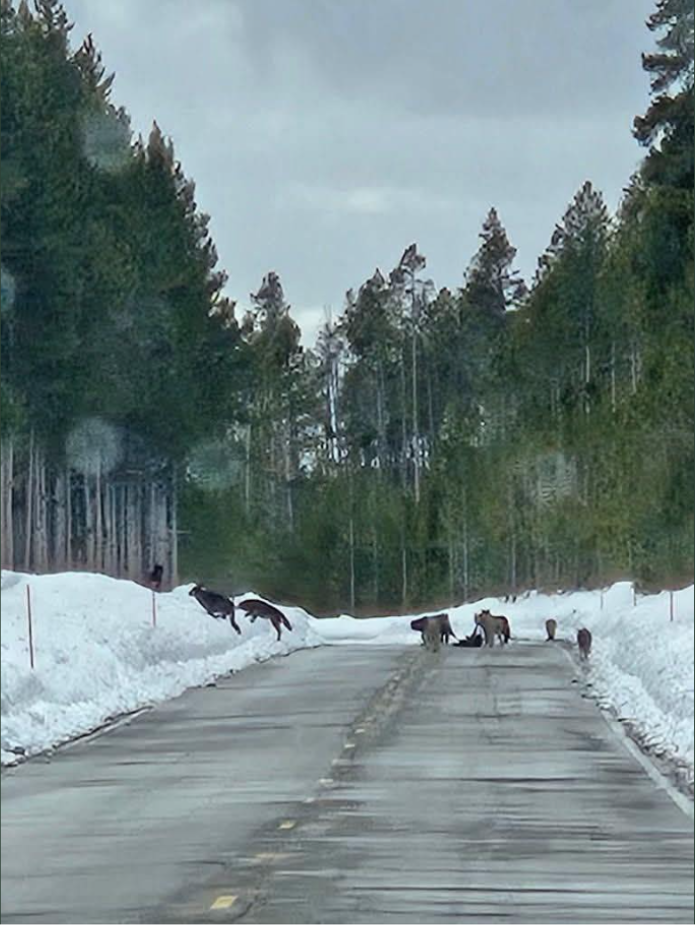
I’m not saying it was a quiet year on the Northwest wolf front – none are – but maybe there was a little less howling than usual? Oregon’s annual count surged anew, while Washington’s dipped for the first time in 15 years of tallying, a seesaw that nonetheless should have been expected given the incredible sustained longterm growth of the species in the Evergreen State.
July saw WDFW officially switch the blame for a series of Ferry County calf depredations from the Sherman Pack to “New group at west of the Kettle Crest.” Not to be outdone, the Sherman Pack subsequently went on a tear of its own in late summer, leading to the lethal removal of one member in August, a temporary restraining order issued by a King County court commissioner against a followup kill permit issued after continued attacks, a depredation investigation the same day as the TRO came out followed by another a week later, and a King County judge’s ruling against the basis for halting the removal operation in the first place. It wasn’t restarted, but afterwards, the whole rigamarole led Senator Shelly Short (R-7th District) to introduce a bill that would require wolf advocates to have to sue locally over WDFW wolf management actions instead of over in the environs of the fur-friendly Emerald City.
Federally, the US Fish & Wildlife Service announced on November that coming up with a national wolf recovery plan was no longer needed thanks to how well the species has, well, recovered, and then in early December, the US House voted 211-204 to delist them, including all Eastern Washington and Oregon Republican representatives and one purple district Democrat. It’s unclear how far the bill will get in the Senate or will be delivered to the president.
Not long after USFWS Director Nevsik said Colorado Parks and Wildlife could only source gray wolves for its voter-mandated reintroduction effort from the federally delisted Northern Rockies population, Centennial State officials pleaded to the Washington Fish and Wildlife Commission for some, but alas, the citizen panel’s vote last year to keep them state endangered meant there wasn’t even a pair to spare. Colorado then desperately turned again to the Colville Confederated Tribes, but that path was also a no-go due to instate tribal issues, and shortly after that, CPW’s director resigned for another state job and an interesting agreement not to sue his former agency.
Hmmm, guess it wasn’t so quiet after all – awoooooooooooo!
WHEN ANIMALS ATTACK PEOPLE
This past year saw an unusual number of coyote attacks on people in urban areas, starting of on New Year’s Eve when a 5-year-old boy was bit and pulled to the ground in Renton, southeast of Seattle. Two months later and not far to the north in Bellevue, a series of coyote attacks on kids and grownups was quelled when WDFW Police officers killed two coyotes. Then in Portland in late October, a coyote that went after kid was captured and destroyed a week later.
In July at Hurricane Ridge near the visitor center, a collared cougar dragged a 4-year-old boy off a trail before his father chased it off, leading to injuries to the dad and an airlift to Harborview Hospital for the child. The big cat was tracked down by a canine team and dispatched early the next day. A cougar with a telemetry device had been seen in the same area two weeks before.
COMBATTING POACHERS
In February, the Oregon Hunters Association, Coastal Conservation Association of Oregon and Association of Northwest Steelheaders teamed up to double the rewards on offer for reporting fish poachers in the Beaver State from $200 to $400, as well as expand the list of violations that qualify for payout, including snagging or attempted snagging.
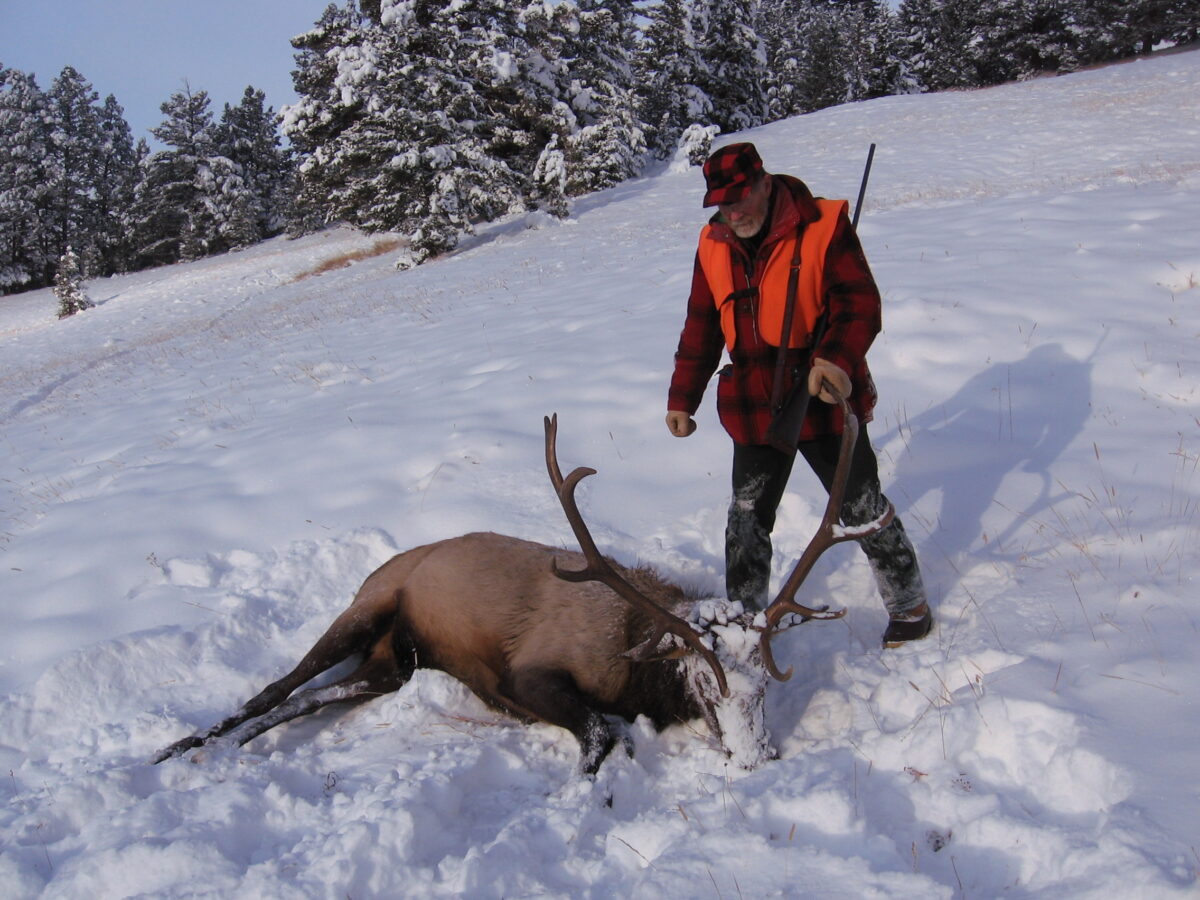
Poaching cases peppered my blog throughout the year – the illegal killing of a second Klickitat wolf, an Umpqua wild steelhead that was wasted, hunting bears with hounds in Wahkiakum County, shovelfuls of geoduck violations in South Sound, felony wildlife trafficking at a Skagit County restaurant and in Southcentral Washington, that gal in Hermiston who took a pic of a sturgeon in her bathtub to draw the attention of guys, yet more spree big game killing in Grays Harbor County, wastage cases involving six northern Willamette Valley deer …
… But I think the case that galled me the most was the one where Idaho head hunters thought they could get away with killing mule deer bucks year after year without drawing the necessary controlled tags. “Ringleader” Robert Zeko, 50, of Idaho and Bobby Ephrem, 48, of Oregon received the heaviest penalties – up to a year in prison each – but five other men also received jail time of 15 days to three months, according to IDFG, which identified 32 illegally killed bucks by their “network.” “This was just a criminal enterprise from 2017 on. You knew what you were doing. I’m almost left speechless that you could do this for years in a row without consequence,” Twin Falls County Judge Benjamin Cluff said to one defendant during his late October sentencing, according to KIVI video.
SAD STEELHEAD STORIES
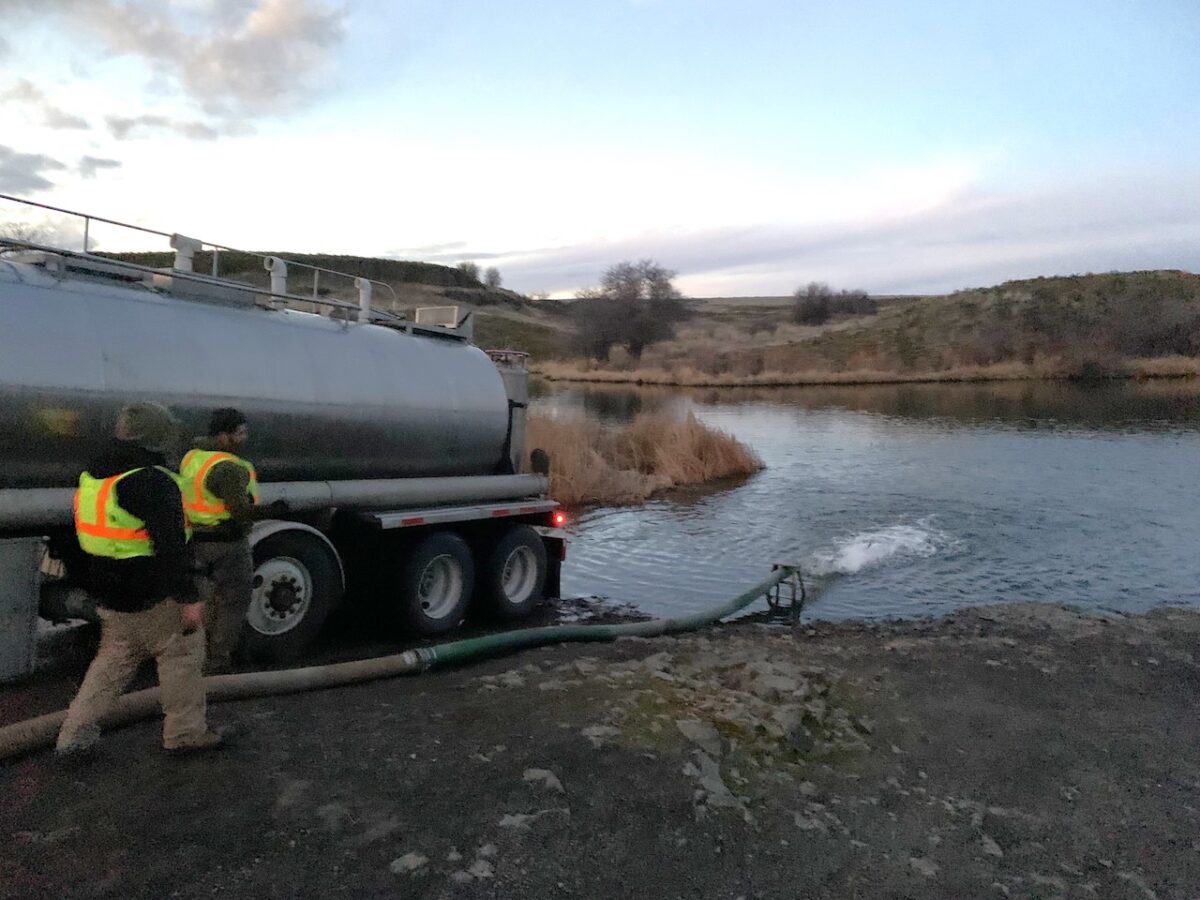
State budget cuts this year in Olympia saw WDFW forced to say it was shutting down the Skamania Hatchery, which will lead to the loss of 100,000 winter-run steelhead smolts otherwise released into Vancouver-area streams. Agency managers also announced that the 2026 Skagit-Sauk wild steelhead catch-and-release fishery will not occur because lawmakers failed to approve funding for monitoring the popular season (and fisheries on other rivers), a disappointment to all involved, though an opener this coming February, March and/or April was always going to be dependent on a forecast of at least 4,000 fish.
As a followup to that first itemm above, this fall, as part of the 2026 supplemental budget request process, WDFW asked lawmakers for several hundred thousand dollars to begin closing down the Skamania Hatchery over the next three years. As I eventually discovered, shuttering the facility would also put the kibosh on the recently federally approved integrated winter steelhead hatchery program on the Washougal River, which itself was meant to replace a segregated program that was killed off via Wild Fish Conservancy lawsuit in 2024. To quote myself, it was “one of the most soul-crushing developments I’ve felt while chronicling” a sh*tpile of sad Washington steelhead news over the past couple decades.
Fortunately – if that can even be considered the right word – Governor Ferguson’s proposed 2026 supplemental budget does not include any money for pulling the plug on Skamania Hatchery, and there might even be a glimmer of hope. In an all-staff email earlier this month, WDFW budget guru Morgan Stinson said “a number of stakeholders have asked for the amount it takes to keep the hatchery funded, and we have communicated that we’ll need $667k per year to keep Skamania open and $2.2 million to keep Skamania and Toutle open in 2027-29.”
And in July, the National Marine Fisheries Service agreed to issue a key Endangered Species Act listing finding on Olympic Peninsula steelhead by December 1. That was extended to January 13, 2026, following the fall federal government shutdown. Meanwhile, in a year-long public process, WDFW tightened winter steelhead regulations and season dates coastwide in changes to the permanent regulations that will go into effect in early January 2026.

SMOLT LOSSES
In February, the results of an investigation into the loss of 37,000 Chinook smolts released into an Oregon Coast slough in fall 2024 confirmed that “human error” was to blame. ODFW took “full responsibility” for the loss after its staff failed to determine if the waters of Beaver Slough on the Coquille River were actually suitable for the young salmon. Locals knew the slough was uninhabitable for fish that time of year and that there were good options available nearby. “It’s disgusting with all the hours we put in volunteer time and volunteer money, and it’s just wasted,” Dana Mills, a Salmon Trout Enhancement Program member, told news station KCBY.
While ODFW stressed that it had “reduced staff and programs to help limit (hunting and fishing license) fee increases” in 2026, the hike was also accompanied by the closure of Salmon River Hatchery, which legislators did not fund during this year’s budget negotiations following an exhaustive review of the state’s hatchery system. While individual production programs at Salmon River will continue by being shifted to other facilities, the agency also acknowledged it would result in 45,000 fewer springers released into the Nestucca, 50,000 fewer summer steelhead into the Nestucca and Wilson, and 20,000 fewer pounds of rainbow trout into Mid- and North Coast lakes and Willamette Valley waters.
THE PROBLEMS WITH TOO MANY WILD PINKS
2025 was a pink salmon year – hurray! – but sometimes too many humpies can be a problem. Case in point: the Sultan River, where researchers in February reported finding not only 36 percent fewer Chinook in the Snohomish County stream in odd years compared to even ones, but sharply lower reproductive success too. That’s because most Chinook end up spawning higher up in the Sultan in odd years. They largely abandon the relatively gravel-rich lower river to all the humpies and move into the steeper, tighter and much less productive canyon stretch of the Sultan. Their fry-per-redd productivity drops from 1,819 plus or minus 230 in even years to 395 plus or minus 149 in odd years. It’s a problem because low numbers of wild Chinook in the Snohomish Basin have impacted fisheries for, er, pinks as well as more numerous coho.
SOCKEYE SURPRISES, STRANGE FISH
They’re the same species, but sockeye runs to streams on either side of the North Cascades went different ways. The Skagit system hit a new all-time record of more than 91,800 – 30,000 more than forecast – but the Upper Columbia return stubbed its toe, with only 167,549 of a predicted 350,200 coming back, leading to reduced fishing and the cancellation of two Northcentral Washington derbies that were set to focus on red salmon. Where the 2026 Columbia forecast of 274,900 sockeye is so-so, things are very bright on the Baker, where a record 1.5 million smolts passed through the system’s floating surface collectors in 2025 and will return after spending 1.5 to 2.5 years at sea feeding in the North Pacific.
On the Lake Washington sockeye front, it looked for a moment like all might be lost as state funding for a project that’s been suppressing predatory fish populations to help more young sockeye get out of the metro lake was “significantly” impacted by cuts in the 2025-27 WDFW budget and then in late July, this year’s return was headed towards an all-time low. But some things you just can’t kill off so easily – a late surge at the Ballard Locks kept the run out of the cellar, King County provided “bridge funds” for one year of suppression work, and a longtime sockeye advocate says he now has the ear of a key state senator and will have half an hour to highlight the importance of the fishery and tamping down hungry predators.
Meanwhile, the oddest sockeye story of 2025 certainly was the run that turned up in the Willamette River, which is not known for the species whatsoever. The fish are likely survivors of 2023’s draining of Green Peter Reservoir that killed large numbers of kokanee due to barotrauma, but at least 500 survived and returned this fall as sockeye. An Army Corps of Engineers plan to do a similar deep drawdown to aid the outmigration of listed salmon and steelhead through Detroit Lake and which could produce a similar sockeye surge as kokes are flushed downstream was postponed to late 2026, to the relief of kokanee anglers and local communities worried about drinking water.
Strange fish turning up in odd spots wasn’t limited to sockeye – late summer saw a Garibaldi-based crew land a very rare 9-foot-2, 160-plus-pound striped marlin, which was one of four caught over a three-day span. Albacore aren’t foreign to Northwest shores whatsoever, but the boat two anglers used to catch a whole pile of ’em 44 miles out in the briny blue off Depoe Bay might have been – a 16-foot Alumaweld Super Vee. And in a full-circle story, Gary Lundquist – the guy who spotted that dead bluefin on an Orcas Island beach in 2023 – saw one caught aboard his boat off Westport late last summer.
And then there’s the story of the Oregon-spotted-bass-state-record-in-waiting, a 9.2-pounder caught in late April on a Willamette Valley lake by Joshua Buller, but which won’t be officially listed in ODFW’s books because the agency doesn’t actually recognize that particular brand of bass like it does with largemouth and smallmouth, stripers and wipers and also purportedly considers them “invasive.” Buller released his fish after his folks took pics and video.
COLUMBIA STURGEON, SMELT MANAGEMENT SWITCHAROOS
The new year was exactly two days old when Columbia Gorge sturgeon managers determined the Bonneville Pool would not see another retention day after the entire 2025 harvest guideline was exceeded by 115 fish following high effort and catch rates on the opening day. Late in the year, that led the DFWs to scrub the New Year’s Day 2026 opener there and on The Dalles Pool. Instead, they will consider potential fisheries “later this winter” when the big river is running cooler than it has in recent years and fishing is less likely to be as hot as a year ago, potentially stretching season out a little longer.
As smelt, also known as eulachon, began to mass in the Lower Columbia last winter, WDFW unveiled a new wrinkle in how Cowlitz River dipping openers are announced. Instead of rando emergency rule change notices and press releases emailed out right beforehand, the agency set a series of tentative openers – Wednesdays and Saturdays – and, based on abundance, gave dippers a heads up by the Friday beforehand if there would be harvest opportunities the coming week.
How’d it work out? Well … let’s just say things didn’t line up well in Longview – but they sure did further up the big river in Troutdale when ODFW sent out a late-day notice opening the Sandy for a seven-hour dipathon two afternoons hence and which ultimately yielded 75,927 pounds of smelt. This winter’s smelt forecast is for a run smaller than 2025’s but which could still support recreational openers. WDFW has already set up a calendar of dates.

SALMON RESTORATION WINS AND LOSSES
A big project on the East Fork Lewis River that aims to improve habitat for ESA-listed fall Chinook, coho, chums and summer and winter steelhead broke ground in May and by October, salmon were spawning in freshly restored portions of what’s known as the Ridgefield Pits! The work is occurring at the site of several old gravel surface mines that became part of the river during the huge 1996 flood, degrading fish habitat in the system, and it is also benefitting the local economy. The final three of the nine original pits will be reconnected to the river next year.
Also in May, it was reported that 8,300-plus kokanee hit the spawning grounds of Lake Sammamish during the 2024-25 run, the second most in 30 years of monitoring and nearly 450 times more than came back in 2017-18 – when just 19 did and extinction wasn’t out of the question. The remarkable turnaround comes thanks to fish passage improvements to upstream gravels and the extended rearing period and delayed release of young kokanee to more optimal times of year.
Meanwhile, the US Government unilaterally pulled out of the Resilient Columbia Basin Agreement, the pathway to potential breaching of the four lower Snake River dams, which is considered the single best way to achieve salmon recovery in the system, and which was signed by the Biden Administration with the states of Washington and Oregon and the Yakama, Nez Perce, Warm Springs and Umatilla Tribes in December 2023. Oregon immediately vowed to continue work to restore the runs via the Columbia Basin Restoration Initiative – the states’ and tribes’ efforts – and alongside several fellow plaintiffs, asked a federal judge to lift the longterm stay on litigation the RCBA had paused. That was granted and in October, they filed for a preliminary injunction in federal court to increase spill over the dams and other measures to improve survival of salmon and steelhead.
A new manmade channel around a dam on the Okanogan/Okanagan River system will raise hopes of even larger sockeye returns up the Columbia River to Northcentral Washington and southern British Columbia by opening access to 84-mile-long Okanogan Lake and 13 major tributaries and their spawning and rearing grounds. While it won’t do anything for the summer thermal block above the Brewster Pool, the bypass in Penticton is still expected to also be used by Chinook and other salmonids. A couple mountain ranges to the east in BC, an angler incidentally landed the first Chinook on the Canadian side of the Upper Columbia, a feat only possible after the Colville Tribes and others began release salmon above Grand Coulee Dam seven years ago.
Well to the south, Chinook expanded further into the Oregon side of the Klamath Basin, blowing past the Keno Dam fish ladders and turning up in the Link River in Klamath Falls, and in Upper Klamath Lake tributaries such as the Williamson and Sprague Rivers, among other streams, they haven’t been seen in for well over 100 years. They also explored irrigation canals, highlighting the need for better fish screening in the ag-rich watershed. And unfortunately, the return also led to the first case of salmon poaching here in a century.
ENVIRONMENTAL ISSUES
King County researchers announced they’d confirmed that a simple soil mix formula is 100 percent effective at removing coho-killing 6PPD-quinone, a type of tire preservative that mixes with ozone at ground level, from road runoff as concerns about the toxic compound’s impacts began to spread beyond the world of just salmon. While 6PPD-q is most strongly associated with Seattle and coho, Oregon officials organized a roundtable to talk about the problem in the Portland area early in the year and research came out that found it to be nearly as bad for coastal cutthroat trout as silvers.
WDFW approved new chronic wasting disease rules, including a statewide ban on baiting or feeding deer, elk and moose and the use of hunting scents made with the pee or glands of said cervids, as well as requiring that all bucks, bulls, cows and does harvested or collected as roadkill anywhere in far Eastern Washington be tested for the always-fatal disease. Meant to slow the spread of the always-fatal deer family disease, compliance was mixed come fall hunting seasons, leading to reminders from state wildlife officials. Meanwhile, CWD was confirmed in sixth and seventh Northeast Washington whitetails, one shot near a 2024 case cluster in northern Spokane County and the other on the Spokane Reservation in southern Stevens County. The latter confirmation will bring the number of CWD counties in Washington to three.
Chinese mitten crabs were found in the Lower Columbia upstream of Astoria and the lower Willamette near Sellwood, both of which were firsts and worrisome because of the “significant infrastructure and ecological damage” seen in San Francisco Bay during an infestation there. These two either came in as ballast or were illegally released.
To fight back against bucket biologists’ unlawful release of smallmouth bass in the Oregon Coast’s Coquille River, ODFW permanently allowed the use of spears, spear guns and bait, moving away from the previous summer-to-summer approach. The Oregon Fish and Wildlife Commission also OKed spearfishing for bass and walleye in rivers across the state, while it was opened for those species and others in select waters in Idaho. While stabbing these fish with a spear while swimming and snorkeling is unlikely to have a largescale impact on the popular game fish, the changes are also indicative of an increasingly muscular approach being taken by a host of Northwest managers with nonnative fish believed to feed on juvenile salmon and steelhead, including testing this year on the Yakima to see if killing smallies will improve smolt survival.
There was also some attention to the pinniped front as late in the year a US House subcommittee held a hearing on sea lion and seal predation and what more can be done about it after NMFS extended take authority on the Columbia and Willamette for the Steller and California sea lion balances leftover from the August 2020 permit.

MIXED BAG – LAND ACQUISITIONS, ESA LISTING TALK, LAW$UIT LOVER$’ PAYDAY
In a year that saw access to public ground threatened like never before, Northwest states were able to secure more land for hunting and fishing. WDFW wrapped up the purchase of the four-lane ramp and parking area at a Sekiu salmon and bottomfish angling resort, securing access to the Strait of Juan de Fuca, while the Washington Fish and Wildlife Commission approved the acquisition of 2,135 more acres for the Big Bend Wildlife Area of northern Douglas County and The Nature Conservancy transferred its 9,000-acre Beezley Hills Preserve in western Grant County to WDFW. While WDFW always has eyes on more acquisitions, it saw $1.25 million weeded out of its annual lands maintenance budget last legislative session, and now lawmakers are looking to mow down another $1.5 million in the 2026 supplemental.
In Oregon, there were a few arched eyebrows about the great news that $22 million in federal funding had been secured for ODFW and the Confederated Tribes of the Umatilla Indian Reservation to jointly acquire, own and manage a new wildlife area near La Grande, which would be a first. The news came out just as CTUIR had recently announced that their Tatwin (formerly Rainwater) Wildlife Area in Southeast Washington would no longer be open for public hunting or foraging, pending federal approval, raising concern nontribal hunters would eventually be shut out of ODFW and CTUIR’s new 11,438-acre Qapqápa Wildlife Area too. Ownership terms would be different, but perhaps to address that, ODFW put out a press release specifically stating the state-tribal area would be managed in part for “providing public access for hunting, fishing, and wildlife viewing.”
NMFS found that Washington Coast Chinook are “most likely at low risk of extinction,” a possible precursor to a next step in 2026 deciding that an ESA listing is not warranted. That was the case with Oregon Coast Chinook, the feds announced earlier this month. Both stocks had been petitioned for listing by environmental groups, some of whom vowed to challenge the latter decision.
Speaking of … in federal court, Wild Fish Conservancy and The Conservation Angler followed through on a lawsuit threat against NMFS over alleged ESA violations associated with funding Mitchell Act hatcheries under the new December 2024 biological opinion. That biop was reportedly pulled back by the feds for “clarification” on the eve of the suit … which was just about the same time that word came out WFC had hit a $1.6 million payout for its ultimately unsuccessful suit over a 2019 biop authorizing king salmon fisheries in Southeast Alaska and the southern resident killer whale prey increase program.
Finally, on the land-based-critter side, thanks to a “strong comeback,” the whitetails of the Lower Columbia are on the verge of a delisting proposal. USFWS said the population “meets all the goals in its recovery plan” and that they would be recommending taking them off the ESA list soon. From a low of just 300 to 400 in the 1970s, there are now an estimated 1,354 in 10 herds on islands in the big river and nearby mainland areas, and if all goes well, a few tags will be available from ODFW and WDFW sometime in the coming years to hunt them like the delisted Columbian whitetail herd in the Roseburg area.
And that, kids, is going to have to be all the time for this if I plan to get any Actual Work done the rest of this week, let alone participate in this evening’s festivities organized by Amy.
Happy New Year, best of luck in 2026 – but what do you say we try and keep it a little less newsy?
