BY ANDY WALGAMOTT, NORTHWEST SPORTSMAN MAGAZINE
With as many as 70 percent of Yakima River salmon and steelhead smolts reportedly dying as they migrate down the lower 40 miles of this Eastern Washington stream, federal and tribal officials are teaming up to figure out how to improve their survival.
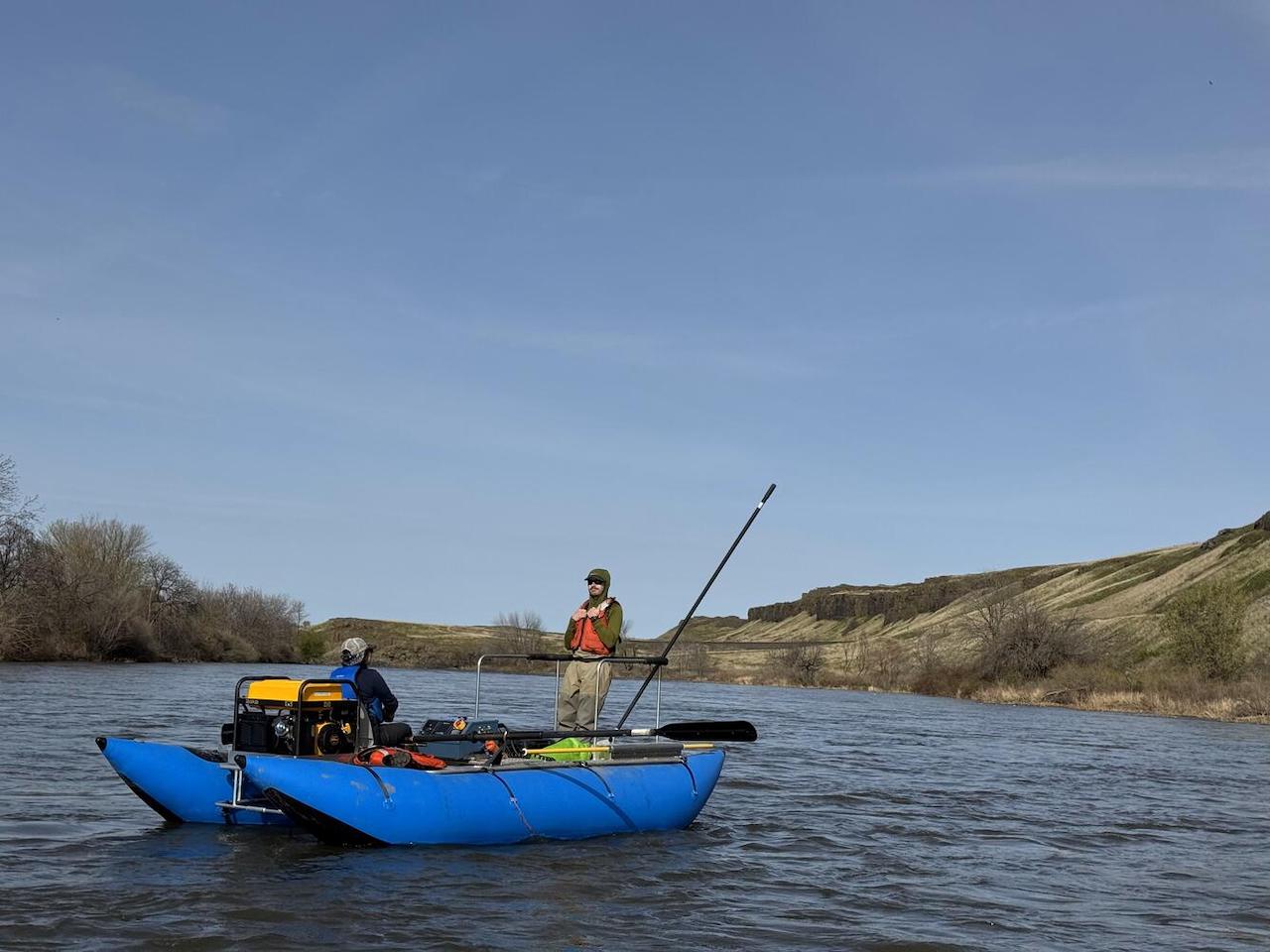
The US Geological Survey’s Western Fisheries Research Center says they and the Yakama Nation are assessing whether killing smallmouth bass in that stretch will lead to fewer of the young outmigrating salmonids being eaten there, and they’re investigating white pelican predation as well.
The bass work began this past spring and involved removing over 6,000 of the fish and checking to see what they’d been chewing on, according to a WFRC press release out this week.
“With bass stomach contents in hand, WFRC staff are working in the lab to determine whether there’s enough information to estimate how many salmon the Smallmouth Bass are eating. If successful, future work will focus on estimating the value of bass removal, giving Yakama Nation managers the information they need to determine whether and if so, how to continue with removal efforts,” the release states.
Smallies provide a popular fishery in the lower Yakima each spring as they head up the warming river to spawn. It was the subject of an April 2018 piece in this magazine, in which longtime Tri-Cities bass angler Wayne Heinz wrote:
“In the next 60 days, tribal hatcheries will release 3,822,000 salmon smolts to drift down the Yakima River. The Washington Department of Fish and Wildlife estimates 19,000 smallmouth bass will swim upriver to spawn. Do you hear a dinner bell ringing? I do, and I heed it each spring.
It’s a great chance to catch good numbers of bass, and some nice-sized ones too.”
Aggressive, hard-fighting bronzebacks have been introduced across much of the Western U.S. for recreational fishing, and like other Midwestern species, they’ve done quite well in the region’s highly altered waters.
Too well in some cases, such as streams like the Yakima that are home to seagoing runs of Chinook, sockeye, summer-run steelhead and other stocks that provide important treaty and nontreaty fisheries and widespread cultural, economic and environmental benefits.
In recent years, fishery managers across the Northwest have begun taking a more muscular approach to deal with nonnative predatory species threatening salmon and steelhead. WDFW, IDFG, Northeast Washington and North Idaho tribes, and BC officials have heavily targeted invasive northern pike in the Upper Columbia, Pend Oreille and Spokane River systems so as to dent their spread and keep them out of the Columbia’s anadromous zone. On the coast, ODFW and the Coquille Tribe have removed tens of thousands of smallmouth from the Coquille River to help fall Chinook, and both Oregon and Idaho recently liberalized fishing regulations to allow spearfishing of walleye and bass in streams.
Back on the Yakima, as with bass numbers, white pelican populations are also growing on the river. The birds arrive just as smolts head downstream and adult sockeye – which are not the biggest salmon in the stream – return in the months before spawning.
WFRC and the Yakamas are collecting and analyzing pelican gut contents and diet preferences during this overlap to figure out what and how much the birds are consuming to extrapolate that across the flock.
“By removing smallmouth bass and other salmon-eating predators, this initiative not only seeks to protect native fish populations but also fosters a deeper understanding of ecological interactions. As fieldwork continues through 2026, the insights gained will be instrumental in ensuring the resilience of local ecosystems for generations to come,” WFRC reports.
The Yakima is also home to a blue-ribbon trout fishery for rainbows and cutthroat.
Another facet of WFRC and the Yakama Nation’s work evaluates flow management in the lower river to better meet fish and electrical generation needs. Their analysis suggested that changing operations at Roza Dam in the Yakima Canyon so smolts went through the facility’s west gate instead of its east gate and the bypass “will increase survival through the dam.”
And they found that – go figure – young salmon and steelhead entrained into irrigation canals had a lower survival probability than those that went through dam spill bay.
WFRC’s press release concludes, “As these projects progress, the data collected will be vital in shaping future management decisions and policies aimed at safeguarding native salmon populations and the broader aquatic ecosystem. The work being done now sets the stage for long-term environmental health benefits and supports the sustainability of the region’s fishery resources.”