BY ANDY WALGAMOTT, NORTHWEST SPORTSMAN MAGAZINE
Colorado will have to look for wolves elsewhere for its voter-mandated reintroduction after the Washington Fish and Wildlife Commission voted 8-1 that it couldn’t approve the request for up to 15 wolves right now.
During a fast-moving discussion this morning about a fast-moving issue, the commission did leave the door open for future translocation after Washington wolves are downlisted in state statutes.
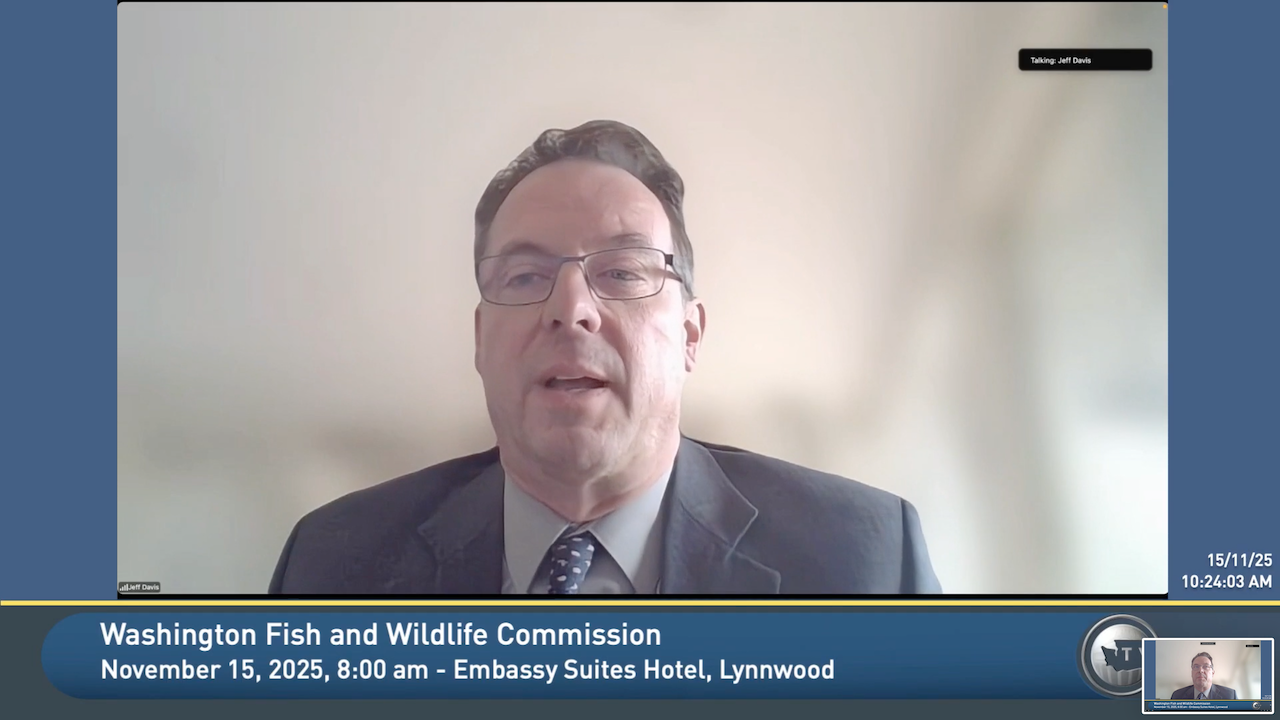
The decision follows on a late October request from Colorado Governor Jared Polis and his state’s fish and wildlife director, Jeff Davis, who appeared this morning remotely and acknowledged the “magnitude of the request” to his former employers at WDFW. He said Washington wolves would be placed in his state’s southern release oval, in an area of abundant elk populations.
His counterpart, WDFW Director Kelly Susewind, said that after discussions with agency staff, Colorado’s ask was doable – “Biologically, we can accommodate the request” – but that it was also a decision firmly in the commission’s “bailiwick.”

No commissioners were gung ho, however, as their hands were essentially tied by their controversial vote last year to keep Washington wolves listed as endangered rather than downlist them to sensitive status.
Commissioner Lorna Smith, appearing virtually due to a bad cold, said she was “torn.” While the Port Townsend-area resident said she’d love to see gray wolves recovered across the Rocky Mountains, with last year’s Washington wolf count decrease giving off a cautionary signal and state residents “across the aisle” not in support, she wasn’t in favor at this time.
Commissioner Barbara Baker of Olympia pointed out that a decision was being asked of the commission very quickly due to the US Fish and Wildlife Service recently telling Colorado it could only source wolves from the federally recovered population in the Northern Rocky Mountains, but that translocation is also a “tried and true” conservation strategy. She saw an opportunity to strengthen ties with tribes and Colorado – Director Davis was one of her coauthors on the controversial Conservation Policy – but also that the commission didn’t know enough about how all of this would work to say yes or no right now. She was basically asking for more time to gather information and make a decision while there was still a window for translocation to occur in late winter.
Commissioner Steven Parker of Yakima said for him the question wasn’t a biological issue but a policy one, and he’d heard a “rare and beautiful consensus” from the public against translocation, so he was against it.
Vice Chair John Lehmkuhl of Wenatchee said it wouldn’t be wise to remove some number of state-endangered wolves for Colorado’s request. He pointed out he’d been among the commissioners who’d voted to downlist wolves and that the state’s population was “robust enough we could do this and contribute to western US recovery,” but he was also a no.
Commissioner Molly Linville of rural Douglas County was another of the members who’d voted to downlist but said she’d back the majority’s decision now. Stating that she represented Washington wildlife and the public, she said she hadn’t heard support for translocation, and she wanted to make a decision today. “I don’t want to kick the can down the road,” she said before ultimately voting no.
Commissioner Melanie Rowland of Twisp suggested changing the question before the commission from a yes or no to yes or not now. She said she was in favor of “enhancing” Colorado’s wolf population, but also said that translocation can be “hard” on wolves and that the commission had a responsibility to increase wolves in Washington and why not put them on the Olympic Peninsula?
Commissioner Woody Myers of Spokane viewed it similarly to Commissioner Parker, that it wasn’t a biological issue but a policy one, and he too heard the public sentiment against. He said it would stress Washington’s population, there was a possibility some number of wolves would just run off in the Centennial State, and the only benefit of translocation he could see would be to help out with livestock depredations in Washington.
And Chair Jim Anderson of Buckley also said he didn’t support Colorado’s request. He said that while he disagreed with the commission’s decision not to downlist, it would be “odd” now to take endangered wolves out of state.
With discussion finished, Commissioner Smith introduced a motion directing Director Susewind to draft a letter to Director Davis that Washington is unable to support the request for wolves at this time, but would reconsider it in the future once wolves in the state are downlisted from endangered.
The vote was 8-1 in favor, with Baker the only no. She said that it wasn’t because she didn’t agree with helping after downlisting. “I don’t think this equation is that simple,” she added.
Per Colorado Governor Polis’s letter to Washington, that state envisioned bringing in 30 to 50 wolves over three to five years. With this being year three of that operation, it’s unclear if the Washington Fish and Wildlife Commission might bring wolves back up for another downlisting decision in the remaining timeframe, though perhaps it might encourage state lawmakers to take up regional management again …
Oh, what a tangled web we weave.
And with that, I’m going to do something else today. Bye, kids!