BY ANDY WALGAMOTT, NORTHWEST SPORTSMAN MAGAZINE
A meeting today between the Oregon Department of Fish and Wildlife and Bonneville Power Administration over recently pulled federal funding for a hatchery salmon program close to the mouth of the Columbia did not produce any breakthrough for the state agency whatsoever.
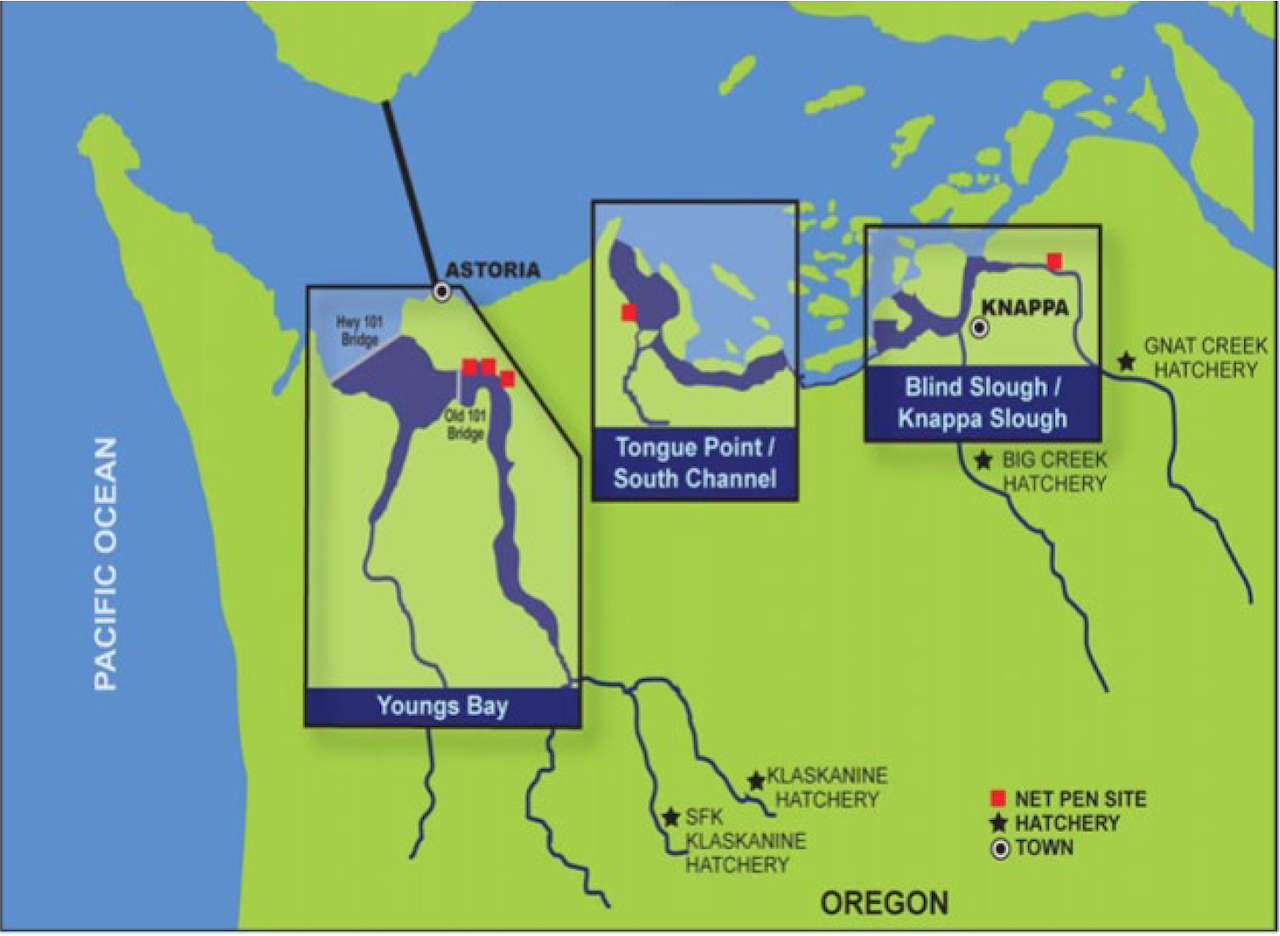
It amounts to further frustrations for ODFW and its program partners, who are left wondering how to fill a $2.3 million shortfall, keeps the fate of 7 million hatchery Chinook and coho currently in production up in the air, and ultimately may lead ODFW to have to close the Gnat Creek Hatchery between Astoria and Clatskanie.
And it raises questions about the fed’s responsibility for mitigating its dams, which have inarguably impacted salmon and steelhead runs up and down the Columbia as well as the ability to harvest the surplus while impacting weaker stocks as little as possible.
As we reported last month, ODFW was placed in this situation by an unexpected June 18 letter from BPA announcing it was ending its contributions to the Select Area Fishery Enhancement Program as of September 30 after some three decades of support and despite having finalized a public process earlier this year that reiterated that.
SAFE is jointly operated by ODFW, Clatsop County Fisheries and WDFW, though all of the fish are released from the Oregon side due to a 2024 lawsuit settlement ending a netpen coho program on the Washington side.
BPA Administrator Jason Sweet said SAFE hadn’t delivered on its goals of protecting weak or listed salmon and steelhead stocks and the program didn’t align with increasing fish numbers above Bonneville Dam.
That message appears to have been reiterated today during a contentious meeting that ended early, according to sources.
Per ODFW, BPA – which markets hydropower produced at Bonneville and other upstream federal dams on the Columbia River – told them that it has “no responsibility to harvest.”
“The meeting made it clear that BPA does not believe it must mitigate for direct impacts from their operations that have diminished fish abundance and harmed tribal, recreational, and commercial fisheries in the Columbia Basin,” said ODFW Director Debbie Colbert.
An email to BPA late this afternoon was not immediately returned, but ODFW says that the unilateral federal funding move made without consulting them “sets a dangerous precedent.”
ODFW believes the SAFE Program is part of an overall suite of mitigations for the federal hydropower system’s impact on fish and that building all the dams is the reason the big river’s runs are just “fractions” of what they once were.
The Northwest Power and Conservation Council, which is something of an overarching fish and wildlife mitigation investment advisor created by Congress via 1980’s Northwest Power Act, has repeatedly recommended SAFE funding, and recently did so, but BPA now apparently believes it has the power to unilaterally decide it doesn’t have to, according to ODFW.
It’s not just a hit to ODFW’s budget, but the local economy as a whole.
ODFW says that moving commercial fishermen into off-channel bays and sloughs produces “reliable and productive” commercial harvests, and that recreational anglers also benefit, with sport fishermen catching one-third of SAFE-produced fish, mostly in the Pacific, Lower Columbia and select tributaries.
But without BPA’s funding, ODFW says it will need to close Gnat Creek Hatchery, lay off eight full-time staffers and the state “will lose tens of millions of dollars in economic activity and harvest opportunity for thousands of commercial and recreational fishermen in future years.”
Most of Oregon’s Congressional delegation as well as Governor Tina Kotek have expressed their support for the SAFE Program.
On the other side, the Wild Fish Conservancy, which has been experimenting with Lower Columbia commercial fishing before and after shutting down that Washington element of the program, supports BPA’s move.
In mid-June, a BPA spokesman noted its Fish and Wildlife Program provides more than $300 million annually for mitigation work in the greater Columbia.
As it stands, an ODFW fact sheet is urging people to contact BPA and ask that SAFE Program funding be reinstated. It lists BPA’s phone number – 800-622-4519 – and email addresses for four decision makers there:
Robin Furrer, Acting Administrator and CEO: rrfurrer@bpa.gov
Suzanne Cooper, Deputy Administrator and COO: sbcooper@bpa.gov
Benjamin Zelinsky, Acting Executive Vice President: Environment, Fish and Wildlife: bdzelinsky@bpa.gov
Jason Sweet, Executive Manager, Fish and Wildlife Program: jcsweet@bpa.gov