BY ANDY WALGAMOTT, NORTHWEST SPORTSMAN MAGAZINE
Oregon’s two US Senators and five of its six Congressmen are calling out the Bonneville Power Administration’s sudden decision to quit funding hatchery salmon production at the mouth of the Columbia River last month.
“The loss of SAFE program funding from BPA puts the entire program at risk and is anticipated to have devastating, regional impacts on Columbia River native fish populations,” write Senators Jeff Merkley and Ron Wyden, and Representatives Andrea Salinas, Janelle Bynum, Suzanne Bonamici, Val Hoyle and Maxine Dexter, all of whom are Democrats.
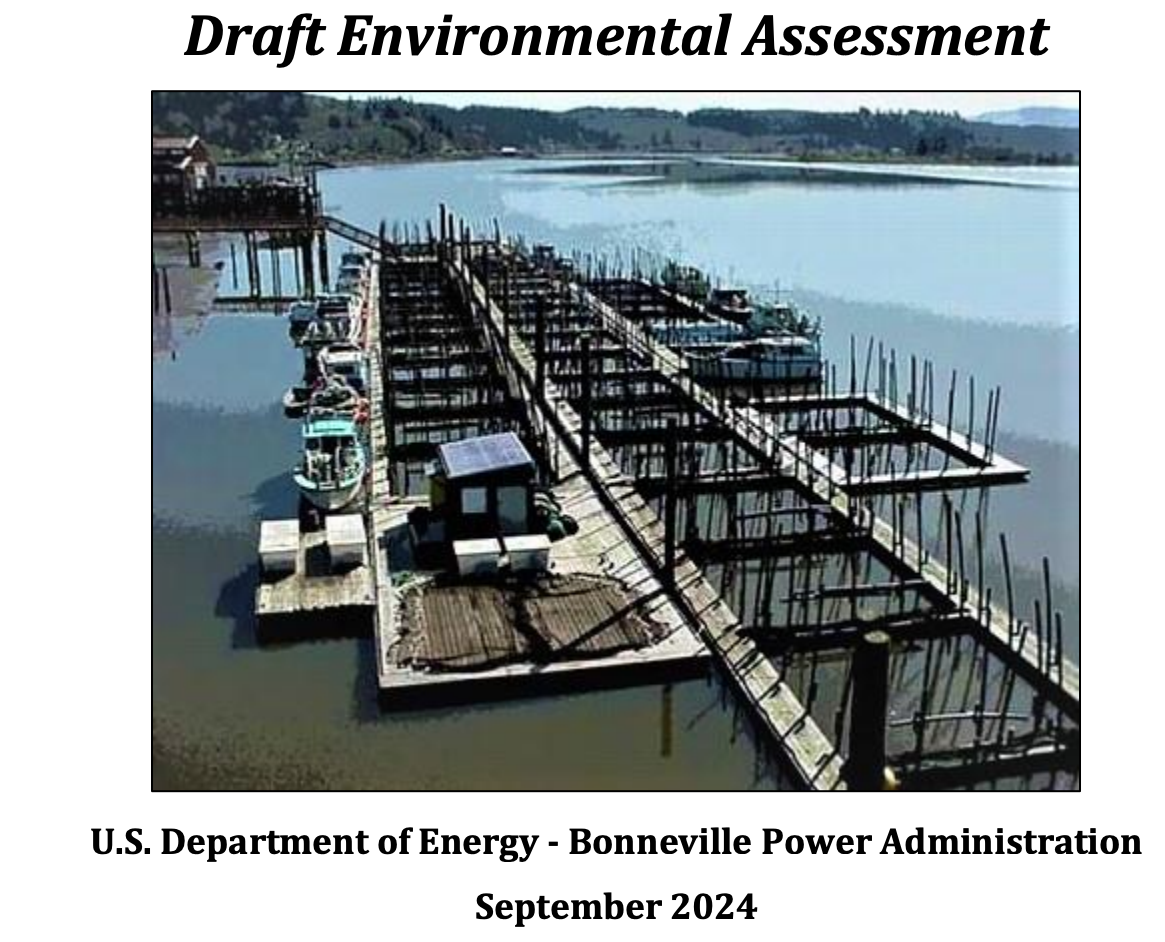
SAFE stands for Select Area Fishery Enhancement, and it encompasses a system of hatcheries and floating netpens in off-channel bays on the Oregon side of the big river. It primarily benefits commercial fisheries but about a third of returning SAFE salmon are harvested by sport anglers off the coast, at Buoy 10 and in tributaries.
“Hatcheries are a critical regional resource. Estimates show that approximately 80 percent of the salmon and steelhead that return to the Columbia River Basin were hatched and reared in fish hatcheries. The SAFE program produces millions of hatchery fish each year, providing relief for stocks of Endangered Species Act-listed fish while also supporting the region’s world class commercial fishing industries and recreational fishers alike,” they added in their letter to BPA’s new regional administrator Travis Kavulla.

In a separate letter sent to BPA in late June, Oregon Governor Tina Kotek and Washington Governor Bob Ferguson, also both Democrats, expressed “significant concerns” over the $2.4 million SAFE Program shortfall created by BPA unilaterally declaring an end to its participation as of the end of September.
The issue first came to light June 18 in an Oregon Department of Fish and Wildlife press release sent out late the same day that BPA informed the agency, as well as WDFW and Clatsop County Fisheries, which jointly operate the program that rears spring and tule Chinook and coho.
Our initial article the next day has been followed by widespread coverage that has drawn scrutiny to BPA’s unexpected move. Earlier this year, BPA completed a public process that reaffirmed it would continue partially funding the program, which began in the early 1990s.
In their letter, the Oregon senators and representatives say that the federal pullout has put 7 million salmon currently in production at risk.
“It is likely that the hatchery will have to be closed and fish may be culled,” they write.
That would be a waste.
For BPA’s part, on June 18, Fish and Wildlife Program Executive Manager Jason Sweet advised ODFW, WDFW and CCF that while the federal agency had initially supported SAFE’s concept of boosting harvest via hatchery runs to off-mainstem areas of the Columbia and reducing impacts on weak or listed stocks, the program “ultimately has not demonstrated an ability to deliver this theoretical benefit, and the program’s value as a hydropower mitigation tool has therefore been in question for some time.”
A BPA spokesman subsequently pointed out its Fish and Wildlife Program provides more than $300 million annually for mitigation work in the basin.
Maybe so, but the “minimal notice” that federal SAFE funding was being cancelled put a not insignificant financial burden onto ODFW, WDFW and CFF, and that has nearly the entire Oregon Congressional delegation up in arms.
“We urge BPA to reconsider its decision to walk back on its partnership with regional stakeholders to support fish mitigation activities through the SAFE program. Without strong collective action, communication, and trust, the hardworking stakeholders in the region won’t be able to overcome challenges of diminishing salmon populations and energy security. Further, walking back on the SAFE program stands in opposition to the President’s Executive Order 14276 on Restoring American Seafood Competitiveness. We encourage BPA to fulfill its obligations, and renew its contracts with ODFW, WDFW, and Clatsop County to provide certainty in critical fish stocks in our region,” they state in their letter.
The only member of Oregon’s Congressional delegation not to sign was Cliff Bentz, the Republican representing all of Eastern Oregon and most of Central and Southern Oregon.