



BY THE OLYMPIA OUTSIDER™, NORTHWEST SPORTSMAN MAGAZINE
What do Punxsutawney Phil and the Olympia Outsider™ have in common?
At about this time every even-numbered year, we both climb out of our holes and declare there will be six more weeks of winter and/or the Washington legislative session, plus or minus some number of WDFW-, fish- and wildlife-related bills.
The latter part of that mostly applies to me.
Yes indeed, kids, it’s time once again to look at the bills that did not make this week’s policy cutoff deadline and those that are still prowling the halls of power during this short session of the legislature.
The main news at the state capital, of course, is another big budget shortfall, an estimated $2 billion this go-around, and a proposed income tax for those who earn over $1 million. Fish and wildlife bills tend to attract far less attention than that stuff, but nonetheless they can be affected by it and are noteworthy to us.
As always, the Olympia Outsider™ is contractually obligated to warn that no bill Inside Olympia should ever be considered dead-dead-dead, but some of these are in fact dead-dead because they did not receive the necessary committee recommendation by this week to move forward. To wit:
HATCHERIES: NO GO ON BRAUN BILLS
After last year’s legislative hits to fisheries, hatchery production – always a concern for Evergreen State anglers whose seasons are primarily powered by clipped salmon and steelhead – received some attention from lawmakers this session.
In Senate Bill 6241, Senator John Braun (R-Chehalis) aimed to fire up a widescale, Oregon-style steelhead broodstock program. It received a public hearing and support from many fishermen, but the much-coveted idea was also brutally and bloodily bonked, bled out and gutted by 1) a fiscal note saying the idea would cost $14 million a year to implement and 2) a very firm no from WDFW (this Wild Steelhead Coalition blog summarizes the gist of the agency’s opposition and why WDFW’s new Quillayute steelhead broodstock program should be the model).
A scaled-back substitute version of the bill was said to be in the works, but apparently it was eaten by sea lions on the way to being delivered to Olympia, as it never made it to Senate AGNR before this week’s deadline.
Another Braun bill, SB 6207, would have required WDFW to not reduce production levels due to hatchery closures, such as is being seen with Skamania Hatchery and the loss of 116,000 steelhead and trout due to budget cuts from Olympia. The proposal received eleventy gazillion Facebook likes, but that was about it, as the bill didn’t even receive a hearing.
BOB OKE GAME FARM: RELOCATION AND REMEDIATION
With decades of pheasant poop from a WDFW game farm filtering into a Chehalis Valley aquifer and beginning to impact local wells, Substitute House Bill 2668 from Representative Ed Orcutt (R-Kalama) directs WDFW to begin the process for moving the 40,000-plus-bird operation to a new location.
During a hearing crammed in right at the absolute deadline, Orcutt and local officials emphasized that they support the hunting opportunities the farm helps provide, but they expressed grave concerns about high levels of nitrates found in groundwater and said the plume is moving toward a municipal well.
Orcutt’s bill directs WDFW to come up with a list of alternative locations for the ringneck ranch by this December, submit a request for predesign funding next year, and, upon deciding on a new spot, apply for Capital Budget funding in 2029 to both build the facility and remediate issues at Bob Oke. That effectively puts coming up with the not-insubstantial amount of money for all that a few years down the line rather than during this tight budget session.
The bill was given a unanimous, bipartisan do-pass recommendation out of HAGNR and was referred to the House Capital Budget Committee.
For its part, WDFW says it shares concerns about elevated nitrate levels and that is has reduced the number of pheasants reared at Bob Oke – named for a state senator who enjoyed pursuing the colorful birds – voluntarily acquired a CAFO permit for the facility, and is working with the state Departments of Ecology and Agriculture and Lewis County “to design and implement best management practices intended to reduce and mitigate any impacts the operation may have on water quality.”
WOLF MANAGEMENT: HOWLS TO NO AVAIL
As ever, wolves are on the mind of Northeast Washington legislators this session.
SB 5960 and companion HB 2221 aimed to require WDFW to reduce predator numbers, i.e., wolves, if big game herds in federally delisted Eastern Washington fell below a certain point compared to a rolling average, and both bills received hearings before the upper and lower chambers’ Agriculture and Natural Resource Committees.
Hunters and locals worry about deer numbers, which have taken big hits from disease outbreaks in recent years, and they would like to see more active management of predators on the part of WDFW to help bring the whitetail herd back faster.
The House version of the bill was tabled for more work over the summer, while on the Senate side, after pushback from, in part, livestock interests, prime sponsor Senator Shelly Short (R-Addy) stripped translocating wolves out of her bill as well as narrowed its scope to just Northeast Washington. But it was still passed over when it came time for SAGNR to make a recommendation to the full chamber.
Two bills that carried over from last year, HB 1311, requiring WDFW to manage wolves as a sensitive rather than endangered species – as had been recommended by the agency before the Fish and Wildlife Commission failed to do so in 2024 – and HB 1825, which in part would have repealed a longtime ban on transporting grizzly bears into the state, were both up for a recommendation decision but none was taken.
SEA LION MANAGEMENT: ASPIRATIONAL WISHES OK, BUT NOT FUNCTIONAL ONES
In 2025, state lawmakers went all in on the self-funding model of fish and wildlife management, increasing license costs and bringing back the Columbia River endorsement while stripping an equal amount of General Fund disbursements from WDFW’s budget. So you might think that a pair of bipartisan bills to allow boaters to voluntarily donate to a sea lion management account while registering or renewing their tabs would be right up penny-pinching legislators’ trolling lane, yes?
Well, you’d be wrong.
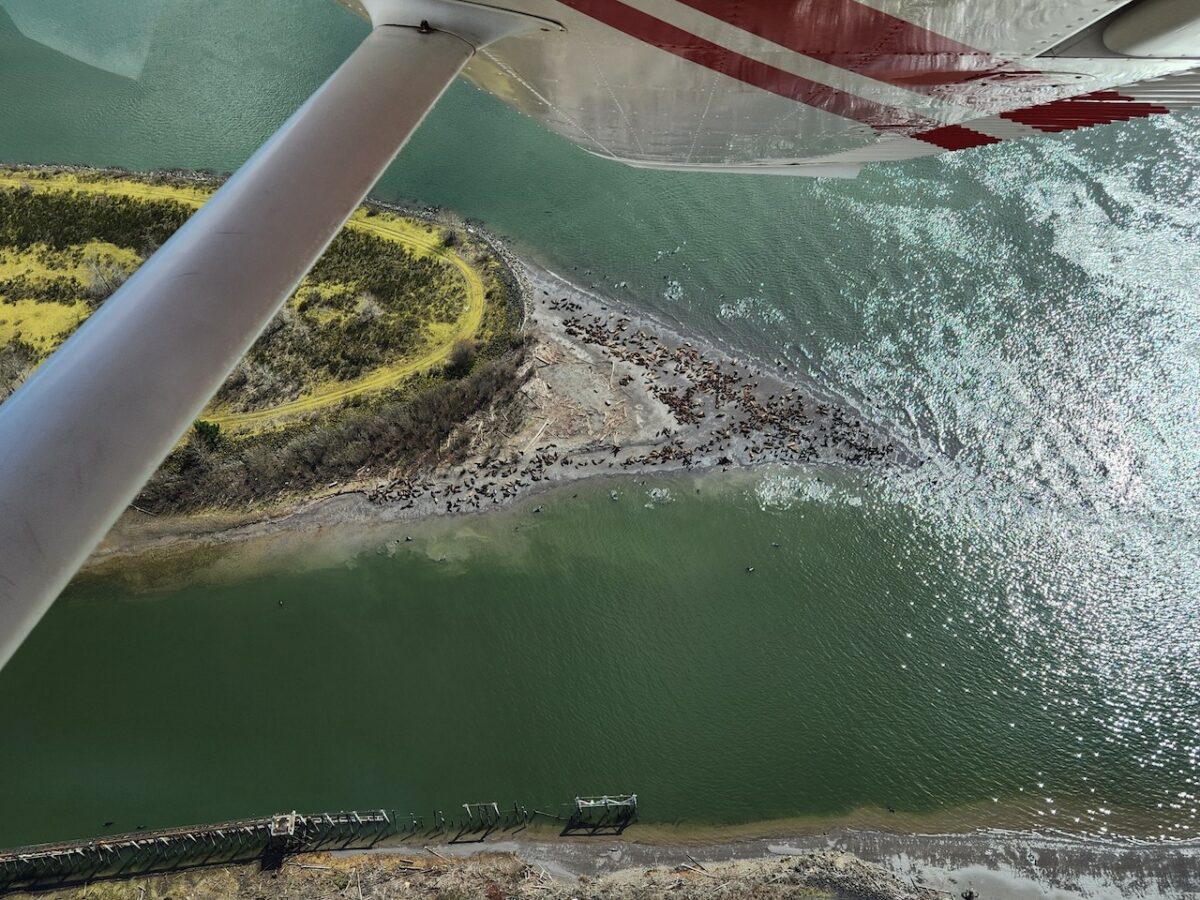
Neither HB 2131 nor SB 5851 made it out of committee. The former was subject to strong pushback, despite the clear, proven benefits sea lion removals have had in terms of saving Endangered Species Act-listed salmon and steelhead at choke points.
Still alive on the sea lion front, a pair of letters, essentially, to Congress pleading to modify the Marine Mammal Protection Act.
House Joint Memorial 4004 would ask federal lawmakers to amend the act to allow, among other things, lethal removal of pinnipeds preying on ESA-listed salmon throughout Puget Sound. It passed out of the House on a strong bipartisan vote, 80-16, with two representatives excused, and has been sent over to the Senate.
Senate Joint Memorial 8013 is more ambitious. It asks DC to not only tweak the MMPA but the Migratory Bird Act to protect salmon runs in Pugetropolis. While this bill has yet to actually have a hearing, it is somehow still alive, per a WDFW cheat sheet the Olympia Outsider™ acquired this week. Never try to understand the weird ways under the dome – that’s ol’ Oly Out’s motto.
FISH AND WILDLIFE COMMISSION: A QUIET YEAR, FOR A CHANGE
Recent years have seen numerous attempts at reforming the Washington Fish and Wildlife Commission – cutting it off at the knees and stuffing WDFW into the governor’s cabinet or under the Commissioner of Public Lands; giving the counties more say in membership; sidelining lazy-ass governors if they drag their feet too long on filling an empty seat – but 2026’s short session was relatively quiet on this front. Whether it’s a sign that legislators are more comfortable with the commission post-Inslee or just emblematic of the short session, only one new bill dropped, and it went a different direction than recent ones.
HB 2578 from Representative Debra Lekanoff (D-Bow) would have added four more seats to the nine-member commission and filled them with representatives from federally recognized tribes. Lekanoff argued it would strengthen the state-tribal relationship, and she found support from the Colville Confederated Tribes, but ultimately the bill was not considered for moving out of committee. Per The Seattle Times, Lekanoff does plan to reintroduce it in the future.
TRIBAL FISHING RIGHTS: REPEALING 1980S’ INITIATIVE
HB 2554 would essentially repeal a relic of the Fish Wars post-Boldt Decision and which isn’t used by state fishery managers, who long have considered it unconstitutional. It’s the second time in recent years Rep. Lekanoff has brought this bill to filet 1984’s Initiative 456 from state law, and it received a majority do-pass recommendation from HAGNR and was sent to the House Rules Committee.
SALMON RECOVERY: NEW OVERSIGHT PANEL
Another Lekanoff bill, HB 2598 would create a Salmon Advisory Commission whose membership would include legislators, the Governor’s Office and tribes – altogether, around four dozen different people – to “develop recommendations regarding agency actions, legislation, and budget priorities to enhance salmon and steelhead recovery,” per a nonpartisan legislative staff briefing.
Despite skepticism from the committee chair about duplicative effort and a call from Todd Myers of the Washington Policy Center to prioritize boots-on-the-ground work instead of another oversight panel, the bill narrowly squeaked out of committee and is over in Rules.
WILDLIFE PASSAGE: COORDINATING EFFORTS
After getting left on the highway shoulder last session, a wildlife corridor bill hobbled back into Olympia this year and transmogrified into Engrossed Substitute SB 5203. It tasks WDFW and WashDOT with working together on implementing WDFW’s statewide wildlife habitat connectivity plan and creates two accounts to fund work around critter corridors and building crossings like those along I-90 east of Snoqualmie Pass and on Highway 97 in Central Washington.
To paraphrase a legislative writeup of testimony in favor of the bill, it offers something for hunters, insurance companies and animal lovers alike to like, and it passed off the floor of the Senate this week on a 31-18, nearly party-line vote. Next up it trots over to the Hou … WATCH OUT FOR THAT RAM!!!

6PPD: BANNING A COHO KILLER
And finally, for well over a decade now I’ve followed The Case of Coho That Die Too Early, and to cut straight to the prime suspect, the problem is 6PPD. It’s a preservative in our tires that makes rubber last longer, which is great for our wallets, but it also reacts with ozone and becomes toxic 6PPD-quinone. When flushed into urban streams during rainstorms, even minute amounts can kill coho before they can spawn, as well as young fish as they rear in freshwater before heading to sea. During a federal trial last week, an expert witness said the amount of 6PPD in just four car tires could produce enough 6PPD-q to kill a staggering 11-plus million salmon.
Enter HB 2421, which would ban the sale of tires made with 6PPD starting in January 2035. The original bill would have tacked on a $3 to $6 mitigation fee per tire starting in 2027, with the money going to, in part, stream sampling, fish surveys and removing tires from waterways, but that was filtered out of SHB 2421 as it passed the House Committee on Environment & Energy on an 11-9 vote. Next the bill rolls into the House Committee on Appropriations on February 9.
Editor’s note: Let’s face it, the Olympia Outsider™ is not exactly Johnny On The Spot, given the number of interstate mile markers between his home office and the home of Washington lawmakers through March 12, so if he’s missed any bills or other pertinent news of note from the legislature, feel free to drop his boss a line at awalgamott@media-inc.com.
