BY ANDY WALGAMOTT, NORTHWEST SPORTSMAN MAGAZINE
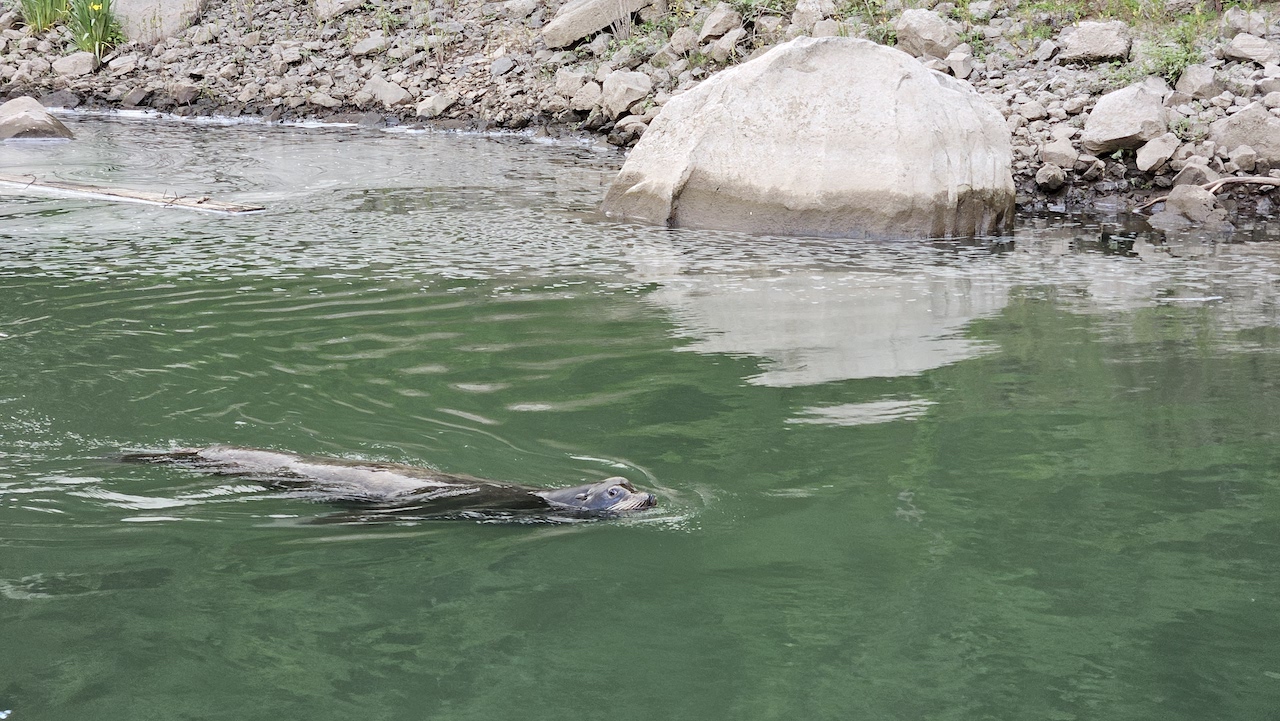
When it comes to sea lions in the Columbia and Willamette, it can seem like a losing battle, but a presentation last night showed that lethal removals are in fact working to save salmon and steelhead – nearly 50,000 of the fish at two pinch points since mid-2020 alone.
Fish advocates would like to increase the scope of those removals to protect runs and angling, but given the overly protective Marine Mammal Protection Act, the onerous, federally OKed process for euthanizing California and Steller sea lions and the need for more funding to do so, what you can do in the meanwhile is support ongoing state and tribal efforts, keep yourself out of any PETA highlight reels, and continue to use online forms and apps to report sea lion presence, particularly at haulouts.
That was the nut of what fishermen heard at a Tuesday evening public meeting put on by Coastal Conservation Association of Oregon’s Tualatin Valley Chapter at the local Bass Pro Shops and which featured reams of data from two ODFW staffers tasked with managing the pinnipeds.
It was a mix of background on the MMPA, Sections 120 and 120(f) removals, what ODFW and other agencies have observed in terms of reduced sea lion presence and predation at Bonneville Dam and Willamette Falls, and calls to action and to act better, and it was delivered as the Columbia’s annual smelt and spring Chinook runs are primed to make an appearance, which will bring anglers and sea lions together on the water in pursuit of tasty fish.

The glacial pace of dealing with overpredation by sea lions is wildly aggravating, but a durable alliance has overcome steep odds to go lethal in the first place – protection that wasn’t afforded Lake Washington steelhead, which went extinct after Herschel et al et ’em all.
Bruce Polley, a longtime CCA member, recalled how once upon a time he was told that amending the MMPA to allow removals would be impossible, but when he mentioned bipartisan support and tribal backing, it flipped a switch and he was told, “Oh, that might work.”
Overall, 389 Californias and 116 Stellers have been removed at the dam and falls under the original permit and a new one granted in August 2020, and Shay Valentine, ODFW’s Columbia River marine mammal project leader, outlined what the latter had accomplished.
He said that between 2020 and last year, there had been a 91 percent decrease in “sea lion days” (the number of animals times the number of days they’re observed) at Bonneville in fall and a 40 percent decrease in spring. At Willamette Falls, sea lion numbers have decreased from 40 to four, and the amount of sea lion days have gone from 2,700 down to 800, largely because of the start of removals there.
Valentine said the effect of all that was a savings of 49,230 salmon and steelhead, an estimate based on sea lion size and energy needs but also backed up by studies of captive animals. The 95 percent confidence interval is as high as 69,000 salmonids and as low as 32,000.
Obviously, sea lions are probably just going elsewhere to feed in the Columbia system, which attracts on the order of 4,000 annually, but a follow-on effect of removals is that knowledge of the easy feeding grounds immediately below the dam and falls isn’t being passed on to the next generation of pinnipeds, Valentine said.
One of the most commonly stated examples of the positive effect of sea lion removals is how Willamette River winter steelhead went from having an 89 percent chance that one run would wink out to just an 11 percent chance. While reduced predation from sea lions wasn’t the sole reason behind that bounceback, not having 25 percent of the run eaten by them certainly played a role in that, and an initial “dirty dozen” seen at the falls have not come back.
For more on program results, see the DFWs’ Sea Lion Management Report for 2025.
Valentine also detailed the biology of Columbia-visiting sea lions, all of which are males and average from 600 pounds for Californias to 1,100 pounds for Stellers, which have also been recorded weighing up to 1,925 pounds. The former animals are herdible, the latter you don’t really want to get in the way of, Valentine indicated. Both species are prone to genital cancer.
Fattening up for mating season, they all come to the big river because “this is where all the food is,” he said, but the Columbia’s also home to 32 separate salmon and steelhead populations, many of which are listed under the Endangered Species Act.
Valentine said both sea lion species “have fully recovered,” and the removal authority limits in the permit represent just 0.1 percent of the 175,000- to 200,000-strong population of Californias and 0.18 percent of the 75,000-strong eastern stock of Stellers.
Under the first removal permit, managers needed to first trap and brand sea lions and then watch to see if they were eating salmon. One that Valentine drove over to Oregon’s Central Coast on a Thursday was back in the river when he came in to work on Monday – it had actually returned on the Saturday in between, he said.
Nowadays, the DFWs and tribes are working on removing a balance of 424 Californias and 62 Stellers that rolled over from the August 2020 permit into a new five-year authorization, and management has gone from the now distant past’s individual- to area-based.
Valentine said three traps are operated on the Willamette, and that the largely metal devices cost $70,000 to build – “they’re not cheap.” When ODFW received permission to remove Stellers, it quickly learned these far more irascible animals were hell on the 1×4 slats they’d been using in the traps – “snapped like toothpicks” – so they switched to 2x4s.
Expanding removals beyond Bonneville and the falls without commensurate increases in staffing and equipment would risk losing the ground managers have gained at both locations.
There was a certain irony in holding the meeting at a sporting goods store that’s very well-stocked with guns and ammo and thus far easier and cheaper solutions, at least in some folks’ minds, but the actual putting down of a sea lion involves a licensed veterinarian, secure location, squeeze cage and a drug cocktail that puts the animal to sleep – a process that costs $38,000 per animal, according to recent Congressional testimony.
Similar to organ donors, demand for parts from euthanized healthy sea lions is high among researchers who otherwise can only get their hands on diseased or malnourished ones. Sadly, the meat goes to waste due to the drugs involved.
(As a sidenote, the reason Alaska Natives are able to harvest sea lions and seals for subsistence purposes is that they have a very specific exemption spelled out in the MMPA.)
As he stood before a conference room overflowing with anglers, Valentine also outlined how we can help.
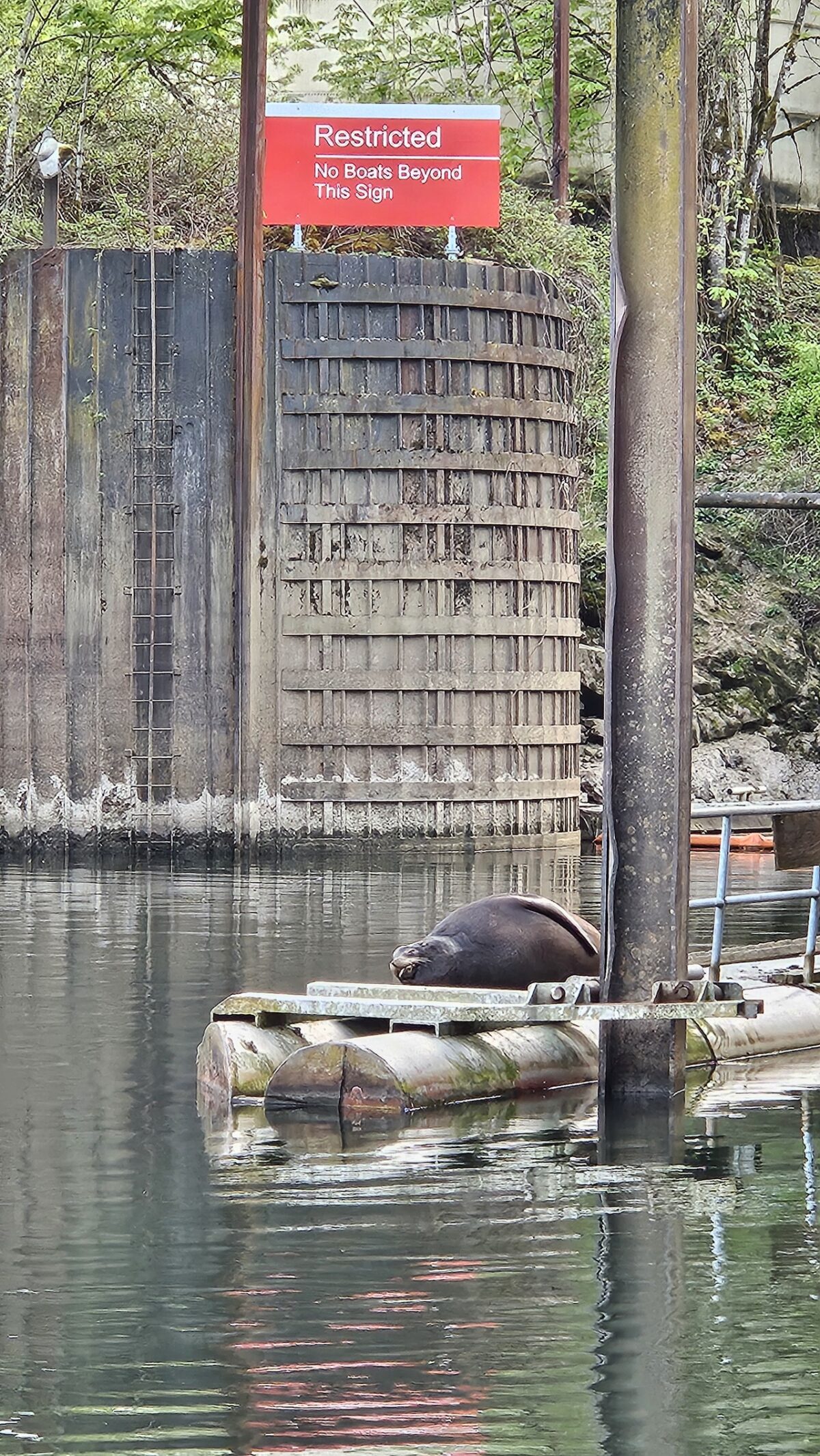
The primary way is to report your sightings, which funnel directly to him. While ODFW patrols the rivers for sea lions, Valentine said anglers’ eyewitness reports are also “extremely helpful,” and he was particularly interested in knowing about any haulout locations being used, which may offer a trapping opportunity.
Five years ago now, the DFWs came up with an online reporting system, and the Seal and Sea Lion Reporter is still active and available for desktop computers and smartphones, both iPhones and Android-based devices. ODFW has posted a user guide with more info.
I’ve personally reported a couple sea lions, and at the risk of sounding even more like your no-fun dad, as the meeting wrapped up, I thought CCA’s Polley also had some good advice for fishermen.
Anglers shouldn’t sabotage our cause by chasing down sea lions with boats and getting onto a PETA video, he said. One knucklehead attracted nationwide notoriety doing just that a couple years ago; who knows if they’ve taken their boat out fishing since then lest it be identified, called in and seized.
Should the fish on the end of your line attract the attention of a “Corolla” sized sea lion this season, several years ago the feds put out a one-sheet outlining “methods that are known to have been effective at deterring pinnipeds in the past.” As a kayak angler, I’m probably just gonna let them have the fish rather than risk a rollover or worse, but there are options on the sheet that may work for you.
There can be few more burdensome or touchy fish- and wildlife-related things in the Northwest than dealing with the MMPA. A pair of bipartisan bills in Washington that would have simply allowed boaters to voluntarily donate to sea lion work didn’t even make it out of committee this legislative session after overwhelming pushback.
But as the DFWs and tribes have proven to the feds that they can handle the responsibility of sea lion management, those working in this sphere also know they and their constituents have to be careful and in the end need to present solutions that as Polley put it make sense to – let’s just call it – the stereotypical Portland voter.
He said he was “really happy” with the job ODFW has been doing on the sea lion front.