THE FOLLOWING IS A PRESS RELEASE FROM THE WASHINGTON DEPARTMENT OF FISH AND WILDLIFE
With the first fall big game hunting seasons underway, the Washington Department of Fish and Wildlife (WDFW) reminds hunters to plan ahead for chronic wasting disease (CWD) testing and other considerations when hunting in 100-series GMUs. Hunters are an important stakeholder in CWD management; your actions matter to help manage the spread of this deadly disease.
CWD is a fatal neurologic illness of cervids, including deer, elk, moose, and caribou, caused by an infectious prion protein and transmitted from animal to animal through direct contact with infectious bodily fluids or through contaminated environments. There is no cure for CWD and testing tissue collected from the head of carcasses is the only reliable way to detect it.
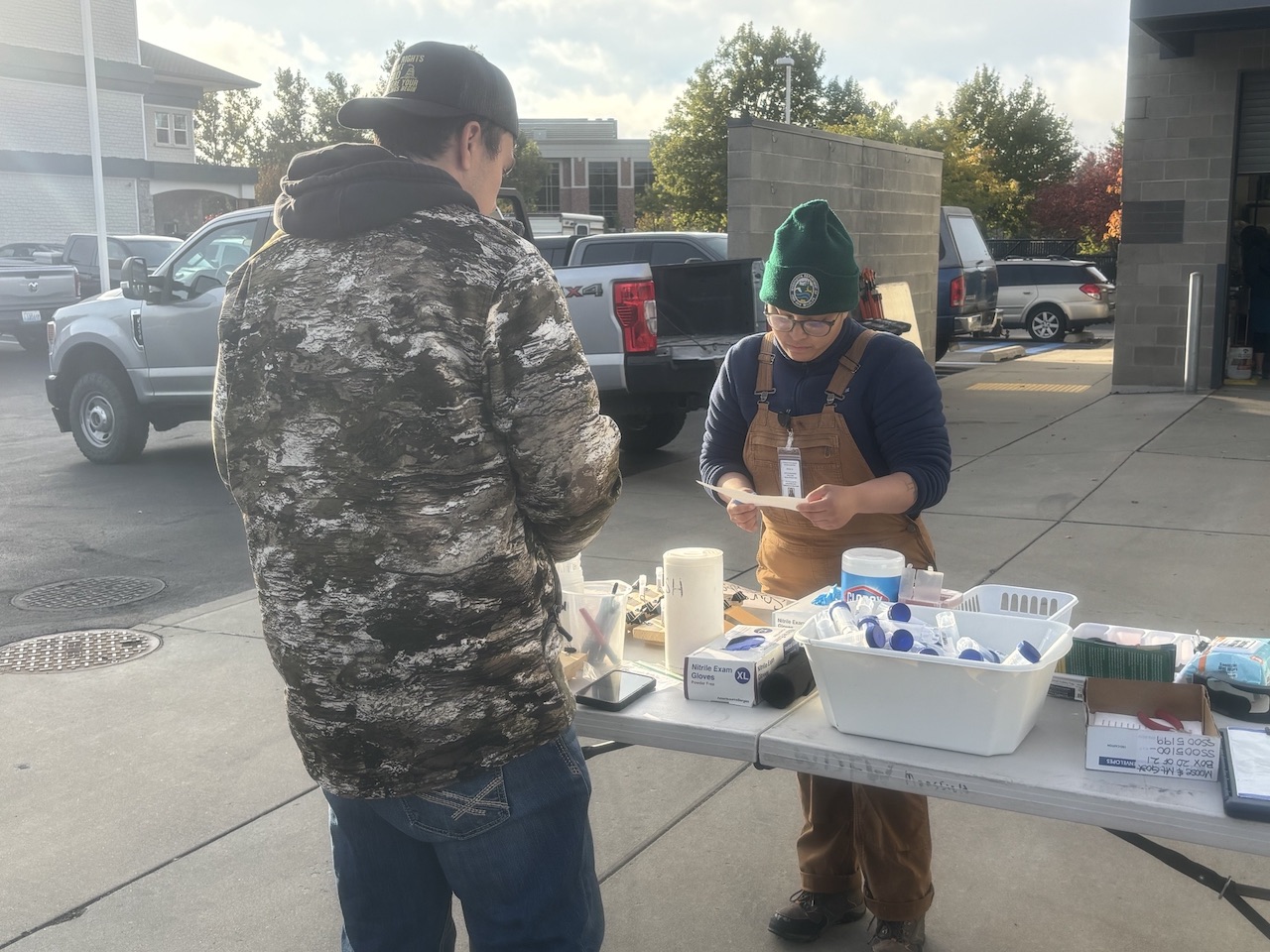
CWD has been confirmed in eight deer in Spokane and Pend Oreille counties since 2024 by WDFW. Rules passed in 2025 aimed at reducing the spread of the disease remain in place for 2026 hunting seasons, including mandatory testing of deer, elk, and moose within five days of harvest if harvested in 100-series game management units (GMUs). There are several ways to test animals, including at hunter check stations during weekends of the deer modern firearm season, leaving the head or lymph nodes at a self-serve CWD kiosk, stopping by WDFW offices in Spokane Valley or Walla Walla during advertised times, or having a participating taxidermist in WDFW’s Eastern Region take a sample. A list and map of testing options and locations is available on the Testing for chronic wasting disease web page. Hunter check station locations will be added as deer modern firearm season gets closer.
It is not possible to have a check station or kiosk in every community, so hunters should include time in their schedule to travel to a neighboring community for testing if necessary.
Submitting a CWD sample does not meet harvest reporting requirements. That must be done separately. To do so, log in to WDFW’s WILD system or contact Customer Service for help.
A reminder that baiting deer, elk, and moose for the purpose of hunting in Washington is banned statewide, as baiting draws animals together where they can spread disease. Using scent lures derived from cervid urine or glandular materials is also prohibited. For those that hunt outside of Washington, transportation restrictions are in effect to help prevent the spread of CWD. Washington does not allow whole carcasses to be brought into the state, nor can they be transported out of 100-series GMUs within Washington to other parts of the state. Meat must be deboned where it was harvested and only the edible meat should be transported.
More information is available on WDFW’s CWD webpage.