BY ANDY WALGAMOTT, NORTHWEST SPORTSMAN MAGAZINE
It will be awhile before the record floodwaters from this week’s back to back atmospheric rivers fully drain away across the North Sound and elsewhere in Washington and the true extent of damage to homes, farms, businesses, towns, roads and other infrastructure is known.
Right now, the focus is on rescuing those still in need, monitoring dikes and beginning the cleanup – and keeping an eye on another strong system forecasted to come in early next week.
This morning, high-ranking WDFW staffers gave the Fish and Wildlife Commission a report on how agency officers have been helping flood victims and what field staffers are initially reporting about state facilities.
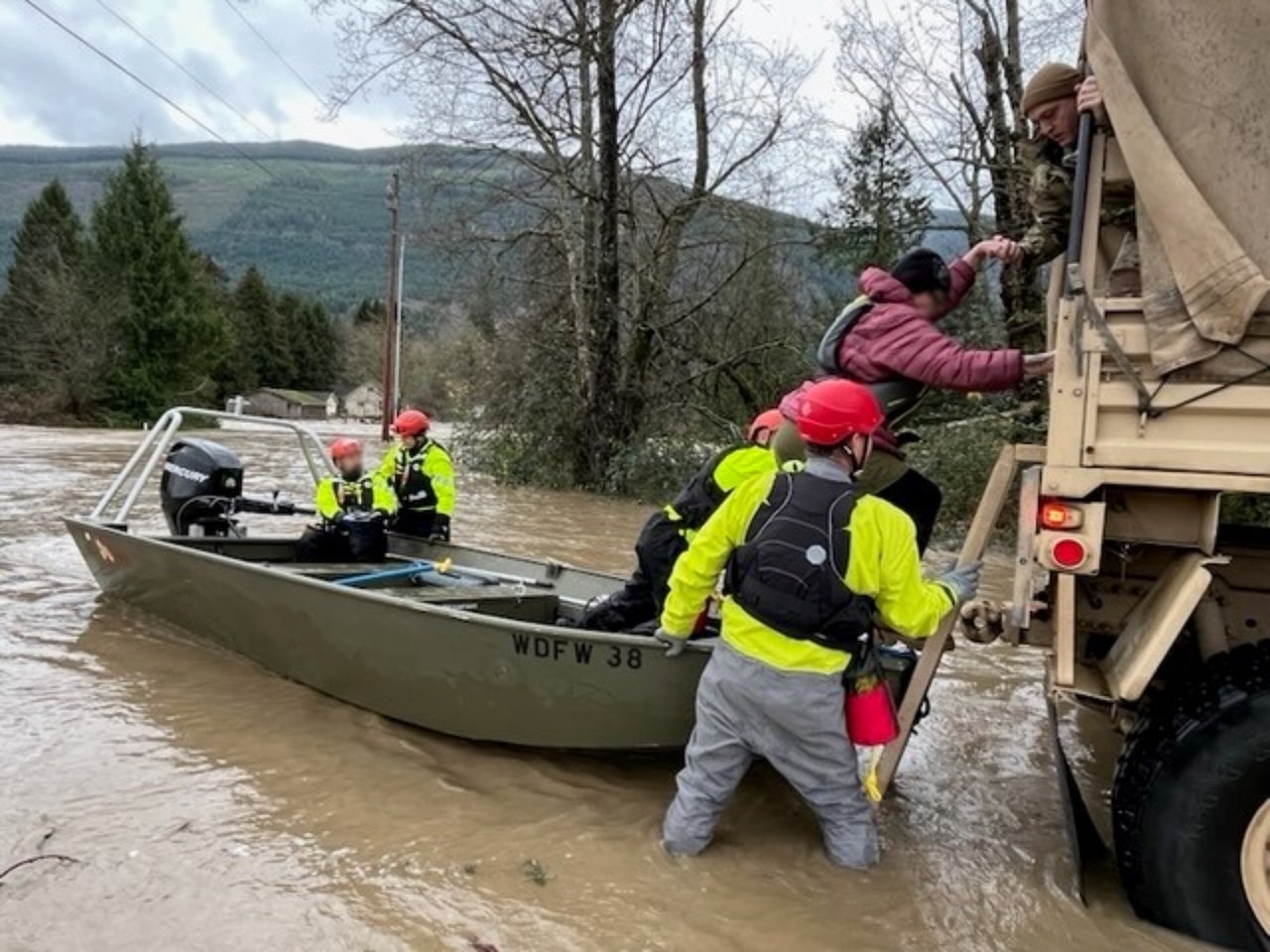
Deputy Director Amy Windrope reported that 14 WDFW Police officers specially trained in swiftwater rescue have been deployed as part of the state’s response to the flooding.
“And I just want to say, huge appreciation to those officers that are currently deployed in Skagit. They were there yesterday. I’m sure they’re going to be there today and maybe into the weekend,” she said.

Video of the officers performing a rescue of a woman at her home in flooded Hamilton was posted yesterday afternoon on the WDFW Police Facebook page, and more have been uploaded early this afternoon from Burlington, where a levy in town was overtopped and drained into some areas.
Elsewhere in the Skagit Valley, WDFW levies were reported to be holding this morning after passage overnight of the apparent new all-time record crest of the Skagit River of 37.73 feet at Mount Vernon.
Mick Cope, WDFW Wildlife Program director, gave commissioners a “quick thumbnail sketch” of what he was hearing from his division.
“I haven’t received any – luckily – haven’t received any reports of damage on our properties. I did check in with some folks that typically have those issues and we did have some staff that got evacuated off of Fir Island and they did so safely and everything, the equipment is protected. There is water, but there is not seemingly dangerous water and the levies there have held,” he stated.
Fir Island, between the North and South Forks of the Skagit and Skagit Bay, is home to large portions of WDFW’s Skagit Wildlife Area, including the Headquarters Unit, and was hit hard during November 1990’s flooding.
“Our Bob Oke Game Farm in Centralia has a tendency to get wet, and it did not get flood waters on it, so that was a good news,” Cope added.
“We may have some boat launches that get damaged in this, but we won’t know that for a little while as waters recede and things kind of get back to normal and we’ll learn more. But right now, staff are safe, our infrastructure seems safe and right now, everything seems to be as positive as it can be,” he reported.
One huge but immediately unanswerable question many anglers and others will have is how this fall’s salmon redds fared. That may not be known for months and years – until beach surveys, smolt trap counts and adult Chinook, coho, pink, sockeye and chum returns flesh out the damage more fully.
That said, scour from high flows is the bane of spawning gravel, and to have a moderate to major flood be followed so soon by major or record flooding will be worrisome. A massive October 2003 flood knocked Skagit pinks back for several generations.
The Northwest River Forecast Center shows the Skagit at Mount Vernon rising to major flood levels next Tuesday and Wednesday; most other Westside rivers don’t reach that high.
In the here and now, news and drone pics show vast lakes on valley bottoms where usually tame streams run, people have homes and farms, and ducks visit sheetwater. Now it’s all sheetwater.
“The director and I drove back from the Eastside yesterday afternoon and saw just an enormous amount of water,” said Windrope of her and Kelly Susewind’s travels this week. “It was astonishing.”
“Do we have any idea about any impacts to the hatchery operations?” asked Commission Chair Jim Anderson.
Susewind said that a couple in Eastern Washington were running on generator power and had plenty of fuel.
“So a lot of work going on, but everything’s under control for the situation,” he said.
That’s the initial word, the early word from WDFW as waters just begin to drop in the deltas and dry out further up the Nooksack, Skagit-Sauk, Stillaguamish, Snohomish, Cedar, Duwamish-Green, Puyallup and beyond. The main focus now is on the human toll and loss. A fuller picture on impacts to fish and wildlife – they’re treading water like that elk herd near Snoqualmie – will resolve itself in the coming days. Stay tuned.