BY ANDY WALGAMOTT, NORTHWEST SPORTSMAN MAGAZINE
Washington wildlife managers plan to start a new study to figure out what’s ailing wapiti in the mountainous southeast corner of the state, this one focusing on the health of cow elk.
This month, WDFW will capture and collar 100 adult cows in the Dayton, Tucannon and Lick Creek Game Management Units (GMUs 162, 166 and 175, respectively) to gain a better “understanding of the Blue Mountains elk population status as well as how nutrients in the environment influence the population growth rate.”
“We hope to learn more about the elk population’s resilience to weather events, such as drought and severe winters, as well as disease such as chronic wasting disease,” said Dr. Melia DeVivo, an agency ungulate research scientist, in a press release out today.
While CWD is not known to occur in this portion of Washington, WDFW says that better understanding what is impacting the population growth rate of elk on the northern and northeastern tiers of the Blues will inform management actions “that ensure conservation of the population.”
The cows will be tracked for two years to suss out details on their survival and reproduction.
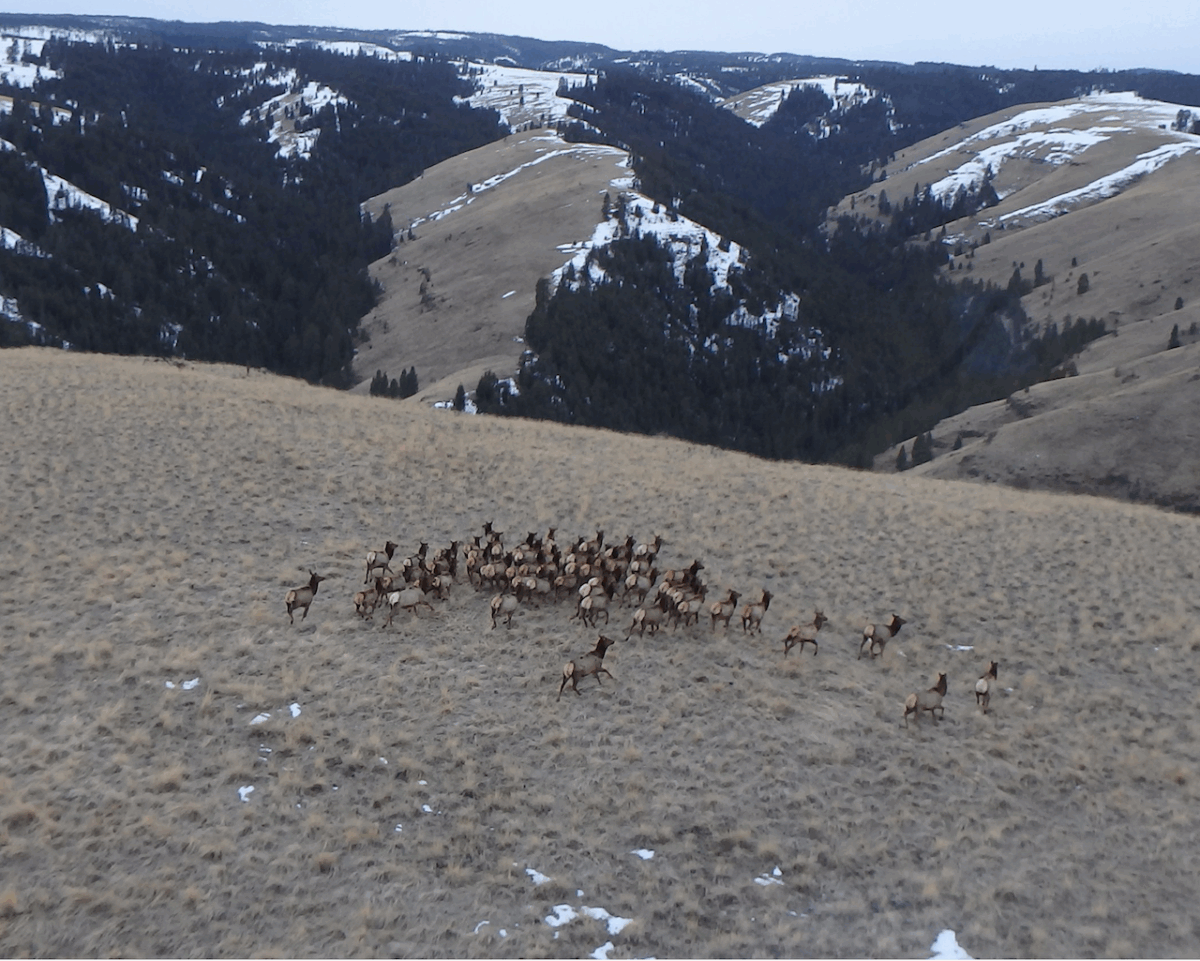
The work follows on a three-year study of calf elk survival in the same game management units earlier this decade. That began in 2021 after WDFW designated the herd as “at risk” when the population fell to 20 percent below agency objectives, declining from about 5,700 animals in 2016 to 3,600 by that year. Leading up to that, sharp reductions in tags for cows – the reproductive engine of the herd – had failed to spark a rebound.
In its first year, the study found a shockingly low calf survival rate of just 13.6 percent, well below the level needed just to maintain a stable population, though it rose in the subsequent two years and averaged 36.8 percent overall, about or just above the break-even point to achieve herd growth.
WDFW’s report on the calf study stated that “severe environmental conditions,” including drought and wildfire, probably made it more likely that 2022’s elk calves would be predisposed to predation than the next two years’ crops were.
The paper reiterated that cougars are the biggest killer of elk calves. Big cats in the Blues accounted for at least 57 of 77 calf deaths known to have been caused by predators in 2022 and, overall, 124 of 152 predation-related deaths across the three years. Bears killed 11 calves over the three years, cougars or bears nine, coyotes four, wolves two and bobcats one.
The paper pointed out that elk population growth rates are most strongly determined by survival of cows, which typically have pretty low mortality rates, then calf survival, and then pregnancy rates.
As Eric Barker at the Lewiston Tribune reported earlier this year, the three-year study led to “unclear results” and new questions, so now WDFW is going to look at what is affecting cows and thus Blue Mountains elk population growth rates.
“During years without drought, calf survival didn’t explain the low population estimates assessed over the last several years,” WDFW said in today’s press release.
The agency says a helicopter will be used to conduct captures and that biologists will attempt to minimize stress on the animals, as well as try to avoid causing elk to run through livestock fences or scare cattle. Operations are slated for December 9-19.