BY ANDY WALGAMOTT, NORTHWEST SPORTSMAN MAGAZINE
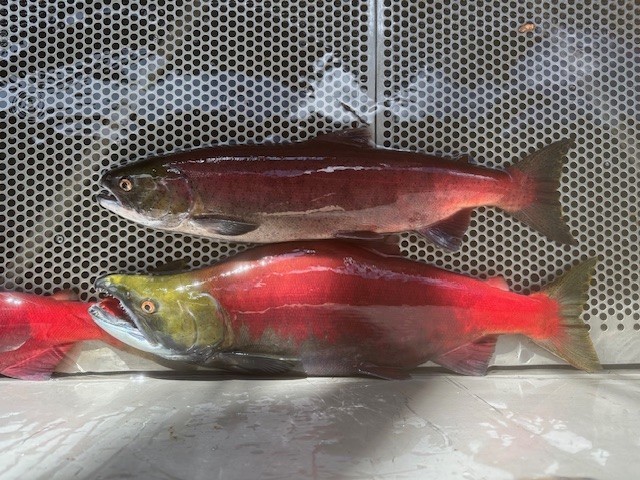
Sockeye are back in Oregon City – and not just in the brand-new downtown mural.
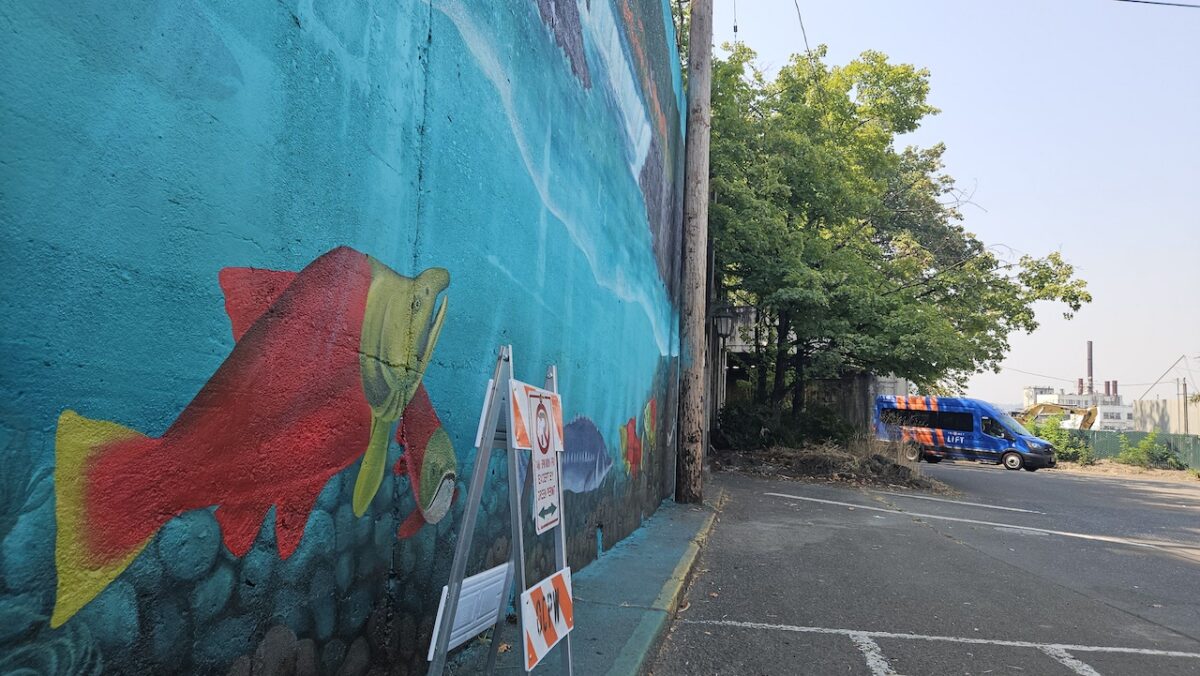
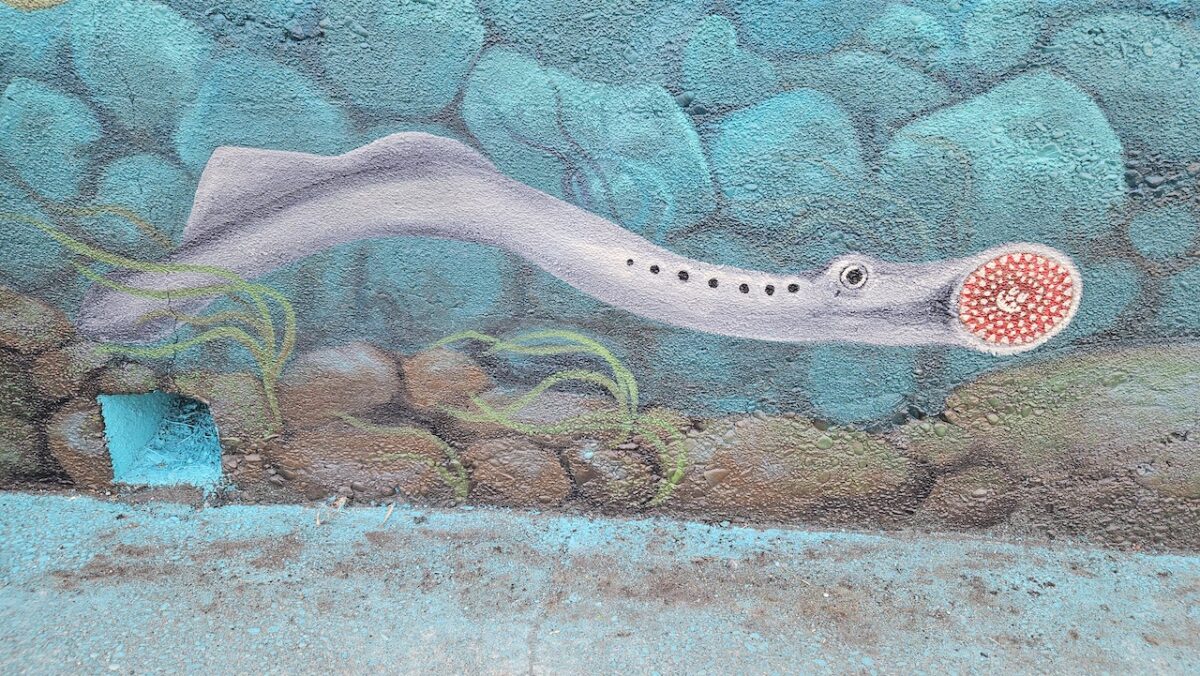
A handful have been counted at Willamette Falls, and what’s more, this year’s first fish have arrived about a month and a half earlier than last year’s first-of-its-kind run, which itself served as partial inspiration for the giant green-headed and red-sided salmon painted finning amidst the sturgeon and lamprey in the street art project.
For now, the real sockeye two blocks over in the Willamette River are more of a curiosity, and their numbers – six so far this summer – are no match compared to the tens of thousands of spring Chinook, steelhead and coho that annually draw local fishermen. But anglers also might want to pay a bit closer attention this fall because sockeye could be opened for harvest.

More on that in a moment, but first a refresher on where the heck these salmon are coming from – no, they’re not strays from the nearby Columbia River, up which swim hundreds of thousands of sockeye in most years on their way to natal lakes in Central Washington, Central Idaho and southern British Columbia.
They’re actually kokanee that were sucked out of Green Peter Reservoir east of Corvallis a few years ago during the first of what are now annual drawdowns of the impoundment to help young, Endangered Species Act-listed wild springers and winter-runs get from habitat high in the Cascades, past the dam to the Willamette and eventually the ocean.
While it was initially believed that many of the depths-dwelling kokanee died from barotrauma, some evidently survived, switched their internal settings from landlocked (kokanee) to anadromous (sockeye) mode, and presumably went to sea. Now they’re returning to spawn, like salmon are wont to do.

Last year, 124 adult sockeye were officially counted at Willamette Falls, mostly from mid-September through October, and ultimately more than 500 arrived upstream at the South Santiam’s Foster Dam fish trap.
The surprise surfeit of sockeye allowed ODFW to run an experiment.
The agency hadn’t stocked kokanee in Green Peter for fishing since 2015, but following the start of the drawdowns there by the Army Corps of Engineers in response to a federal court order, ODFW has begun releasing 50,000 fingerlings into the reservoir each year to see if it might help resuscitate the fishery.
Last year, with the sockeye on hand, ODFW decided to also outplant 130 of them into Quartzville Creek in November to see if they might help supplement the stocking.
Unfortunately, rains last fall raised the creek and biologists were unable to do redd surveys to see if the sockeye successfully spawned, according to ODFW spokesman Tim Akimoff, but they still plan to check next year’s kokanee spawners and survey in 2028 to see if any of the stocked kokanee or outplanted sockeye contributed to Green Peter’s population.
However, no sockeye will be put into Quartzville this year to continue that experiment.
“It turns out that holding sockeye for as long as it takes for them to get a clean bill of health was not good for them,” said Akimoff. “That is why we are considering having anglers catch them instead.”
If signed off on, the plan is to implement a temporary rule allowing sockeye retention in the mainstem Willamette and Santiam Basin. It wouldn’t take effect in the Santiam until after October 15, considered the date that the federally listed spring Chinook are done spawning, Akimoff said.
How to catch these sockeye will absolutely be anybody’s guess.
There’s not exactly a big, deep patch of still, cold water like at the Upper Columbia’s Brewster Pool for running downriggers, and hoochies and dodgers on short leaders. And it’s hard to say whether plunking a shrimp and Spin-N-Glo off the bank would work like it does in the spring off Lower Columbia beaches.
If anything – and assuming in the first place these sockeye actually survive river temperatures currently in the mid- to low 70s – they might be an incidental catch to coho, another nonnative salmon that has done unexpectedly well in the Willamette and its tributaries in the 2000s. (Two-rodding for coho will again be allowed above the falls.)
ODFW says it has no idea how many sockeye might return in 2026, and in a signal they’re not really interested in cultivating a new salmon run in the valley, they actually hope their numbers drop off “significantly” after this year,
“However, if a lot of kokanee get flushed out of Detroit Reservoir when the USACE draws it down, then we’ll see this pattern repeat over the next few years,” said Akimoff.
The big flush is the big fear of kokanee anglers who consider Detroit to be Western Oregon’s last, best lake for these tasty, orange-fleshed fish. Starting this November, the Corps of Engineers plans to drop the reservoir down to 1,425 feet, some 55 feet below the usual low winter pool (and around past record low levels driven by drought), and in future years as far down as 1,395 feet, exposing more of the lakebed to fall and winter rains.
The official idea here and at Green Peter and other Willamette Valley reservoirs is to help wild spring Chinook and winter steelhead smolts migrate down through the Corps’ dams, but there are also serious concerns below Detroit about the upcoming drawdown’s impact on drinking water supplies. The 2023 drawdown of Green Peter left the South Santiam a muddy mess. The Corps says it will use a “step down” approach to reduce water turbidity at Detroit this fall, but the city of Salem and Marion County have sued the feds over the plans.
If what happened with Green Peter kokanee is any indication about what Detroit kokes are about to go through, then indeed there will probably be another pulse of returning Willamette sockeye starting in 2028, and they’ll swim past Oregon City and its new wall painting.
Last year’s Willamette sockeye run stuck in lead artist Ana Gabriela’s mind and served as one inspiration for her 150-foot-long, 4,350-square-foot mural.
Living Current: A Cycle of Life is painted on a wall along Railroad Avenue, the alley between the Highway 99E tunnel and the municipal elevator.
“The second (reason) is a little more personal,” Gabriela added. “I’m from Vancouver, Washington, and (sockeye) can also be found in the Columbia River, which I live within walking distance of. It felt like a subtle and meaningful nod to the Columbia and a way to add a small piece of my own connection to these waterways into the mural.”
Gabriela says she loves to add personal touches in her work, “and this one felt especially fitting with what happened in the Willamette and the sockeye showing up.”
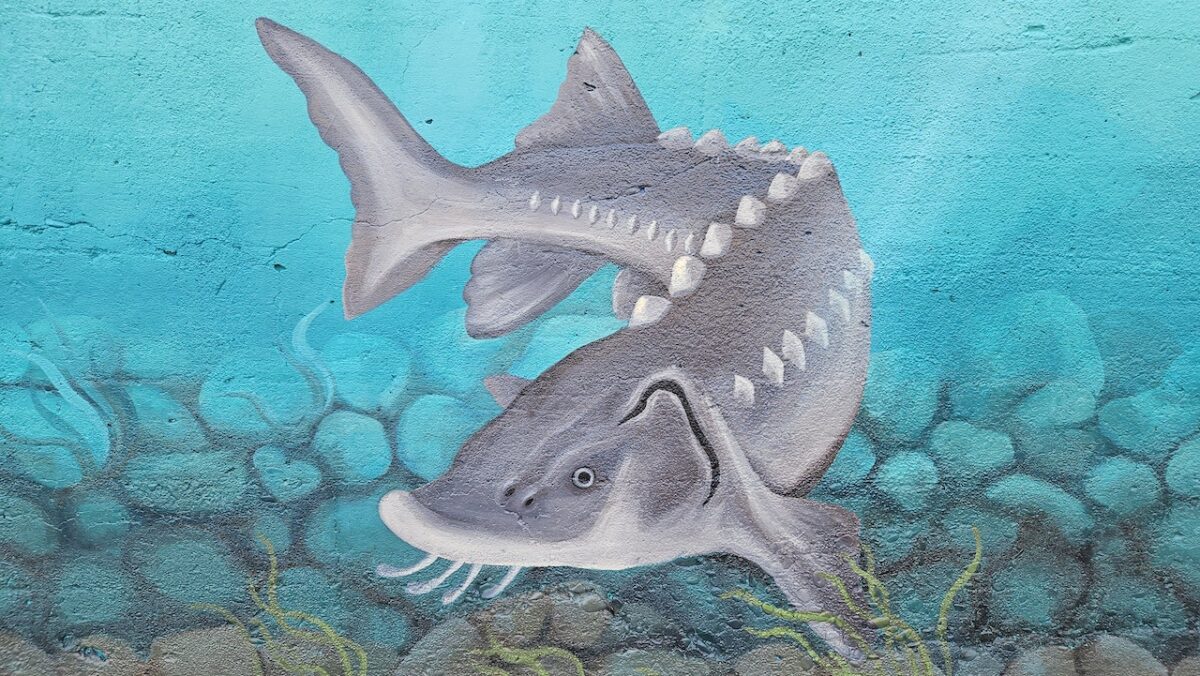
The mural also shows fish species that are native to the river – Chinook, steelhead, sturgeon, lamprey – in various life stages.
And painted at the south end is the horseshoe of Willamette Falls. Just across busy 99E crews have taken down much of the old Blue Heron Mill next to the falls as the Confederated Tribes of the Grand Ronde redevelop the site, which was once a tribal village.
Indeed, Oregon City is changing, and the new mural captures a moment in time for the river town with deep human history, and more than a few kinds of fish swimming just over the guardrail. Many are natives, some are introduced, and a few came downstream through no fault of their own, and now are headed back home.