BY ANDY WALGAMOTT, NORTHWEST SPORTSMAN MAGAZINE
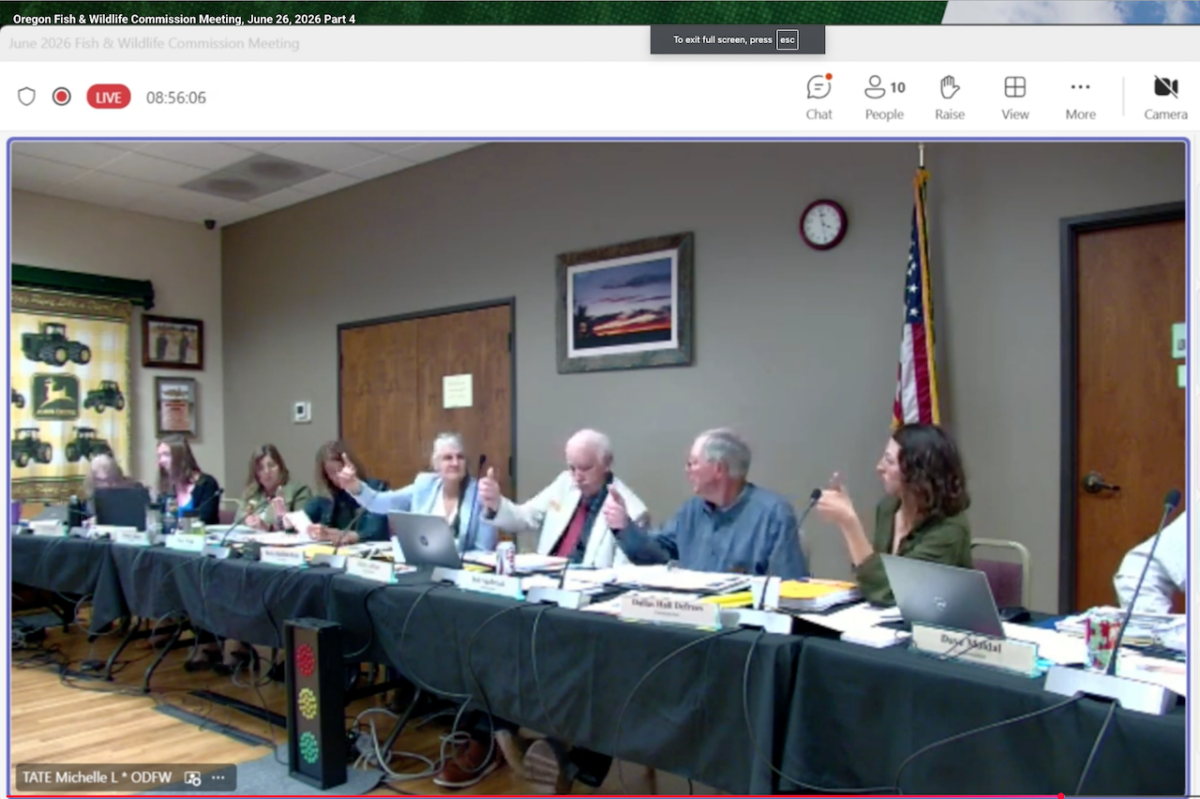
The Oregon Fish and Wildlife Commission gave the thumbs up to 2026 coastal wild fall Chinook and coho fisheries as proposed by ODFW as well as requested agency staffers to ask federal overseers if a silver season couldn’t also be held on the Alsea.
ODFW hadn’t initially proposed one on the Central Coast river this year because the forecast of 14,803 wild coho falls below a full seeding value set in the late 1990s and which is now acknowledged to be outdated but is also part of current fishery guidance plans.
But this afternoon in Redmond, led by Commissioner Bob Spelbrink of Siletz, the oversight board directed ODFW to talk to NMFS about whether an Alsea season that stays below the wild coho exploitation rate and would be open for at least 30 days with a one-a-day and three-for-the-season bag limit would be feasible, a short-term work-around to the long-term work of updating that seeding value.
“We can ask National Marine Fisheries Service for something; we’re not going to tell them, but we can ask,” said Spelbrink.
Even as the commission sets Oregon fall salmon fishing seasons, coastal coho are federally listed and require NMFS sign-off to occur.
This is the second year in a row at least that Spelbrink and fellow members have asked ODFW staff to try and liberalize fisheries for this stock on the brink of a delisting. In 2025, they were successful in getting “bonus days” on the water on the Siletz, Yaquina and Alsea Rivers after discussions between ODFW and NMFS.
As for the rest of the 2026 fall wild salmon fisheries, annual Chinook bag limits, while still conservative, will rise from two to five in the Necanicum, Nehalem, Tillamook and Siuslaw systems, and go from one to five on the Umpqua. There will also be a five-month season without a quota on the Umpqua, an improvement on last year’s 500-wild-Chinook allotment that saw fishing closed after it was filled by mid-August.
Speaking of 2025, today’s commission presentation also revealed that that Umpqua forecast was way off. At this time last year, ODFW predicted just 4,710 wild Chinook but ultimately an estimated 13,244 returned. The Siuslaw prediction was also off; 7,840 were forecasted and 13,085 actually returned.
Elsewhere, the Coquille will also again open for hatchery Chinook, September 19-October 18. Wild Chinook have been closed here for the last half decade due to low returns and impacts from smallmouth bass.
The only real down Chinook note on the Oregon Coast is that the Nestucca fall bag limit was decreased from five to two.
On the wild coho side, open days will increase on all North Coast systems, decrease or stay the same on Central Coast waters, change slightly on the Coos and Coquille, and more than double on Floras Creek and New River. However, the Umpqua will be closed for the season.
Again, wild coho seasons must still be approved by NMFS, which typically occurs later in summer.
See ODFW’s fall salmon page for more.
Even as they approved coastal seasons, Fish and Wildlife Commission members did express concerns about a forecasted super El Nino and its impact on salmon runs and river conditions this year. ODFW staffers said adjustments could be made in-season, and they would also be watching things with an eye on the coming years.
“We’ve seen this story before, so we know what life stages are going to be affected, how that’s going to affect the populations in the future,” said Chris Lorion, ODFW native fish conservation coordinator.
The discussion is available on YouTube.