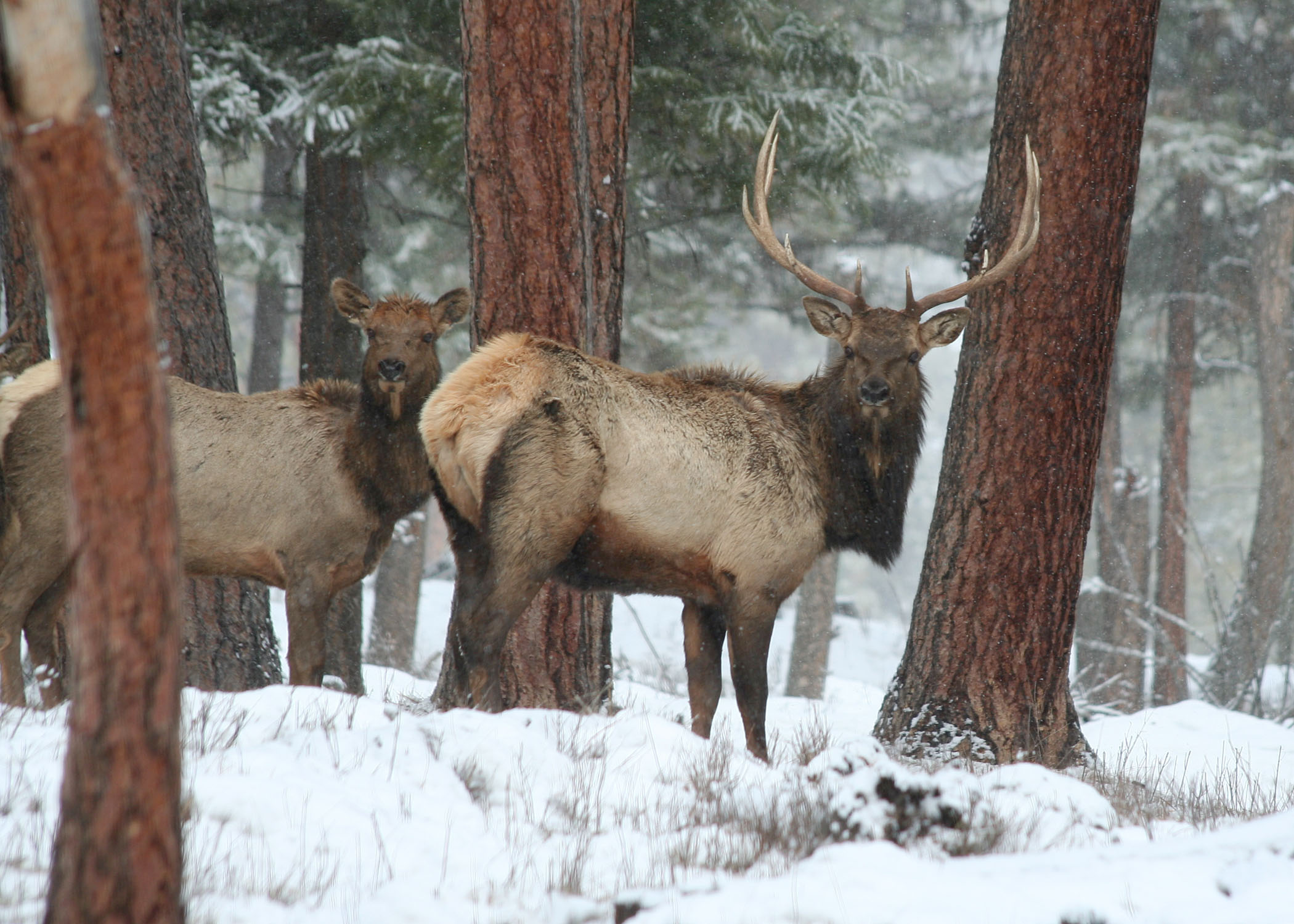
The Blue Mountains Forest Plan will shape elk habitat and hunting opportunities for the next generation; the latest draft falls short of the science and the collaborative vision that this landscape deserves
BY TRISTAN HENRY, COURTESY OF THE TEDDY ROOSEVELT CONSERVATION PARTNERSHIP
In the spring of 1912, 15 elk were loaded onto a railcar in Jackson Hole, Wyoming, and shipped west to Wallowa County, Oregon. Three thousand people gathered along the tracks in nearby La Grande just to watch them pass through.
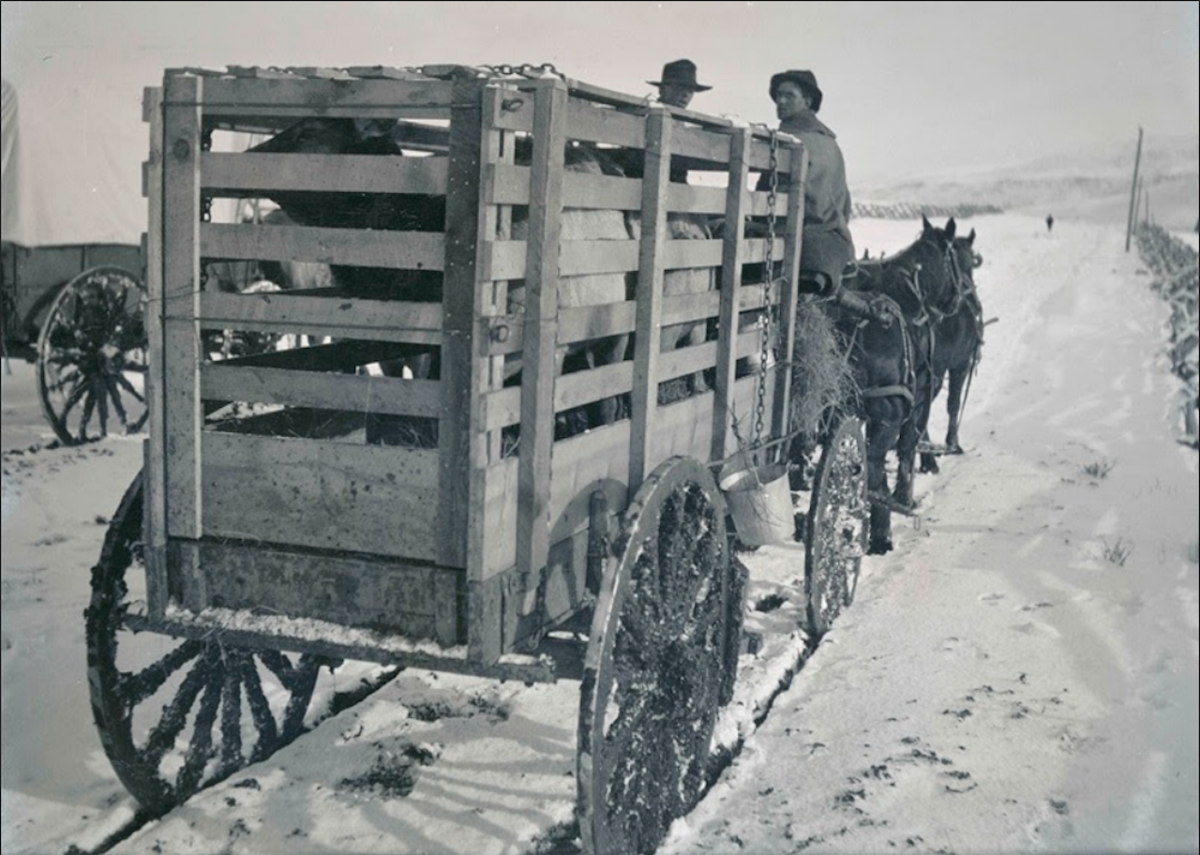
From the rail depot, the animals were hauled by horse-drawn wagon through deep snow to Billy Meadows, 46 miles north of Joseph, Oregon, and released into a fenced enclosure on the edge of the Wallowa-Whitman National Forest. A second shipment followed the next year, and by 1915, 265 elk roamed the mountains. By 1933, elk hunting seasons opened across eastern Oregon.
That recovery is one of many great conservation success stories of the American West, but truth be told, conservation has never been simple, is rarely convenient, and the pressures on this successful herd have changed dramatically within living memory.
The Changing Landscape
After World War Two, the Blue Mountains management focused on a timber landscape. Harvest levels hit historic highs, road networks expanded rapidly to access timber sales, and the forests were managed primarily for commodity production.
The environmental and regulatory corrections that followed and shifting public expectations around old growth and forest health swung the pendulum hard in the other direction. Timber harvest dropped precipitously and mill closures rippled through communities that had been built around a steady supply of logs. Forests that had been actively managed for decades were, in many places, left to accumulate fuels and grew increasingly dense.
While timber policy oscillated, other forces were coming to bear on the landscape. In 1994, Oregon voters passed Measure 18, banning the use of hounds to hunt cougars and bears. Cougar harvest declined and populations grew.
Wolves, absent from Oregon for decades, began recolonizing the Blue Mountains in the 2010s, adding another layer of predation pressure. Recreational use of national forest lands increased exponentially too, with more people using roads, trails, and traveling the backcountry than ever before.
Taken individually, each of these changes could be manageable. But together, across 30-40 years, they have reshaped the distribution of elk on this landscape in ways that are now impossible to ignore. Elk have increasingly concentrated on private agricultural lands surrounding the forests, seeking refuge from the cumulative weight of motorized disturbance, hunting pressure, predation, and inadequate habitat security on public lands.
The consequences are felt on both sides of the fence: landowners contend with infrastructure and crop damage and forage competition, hunters lose access to animals that were once broadly distributed across public land, and wildlife managers face the difficult task of potentially reducing herd numbers to limit agricultural conflict, even as public land hunting opportunity declines.
Blue Mountains Collaborative
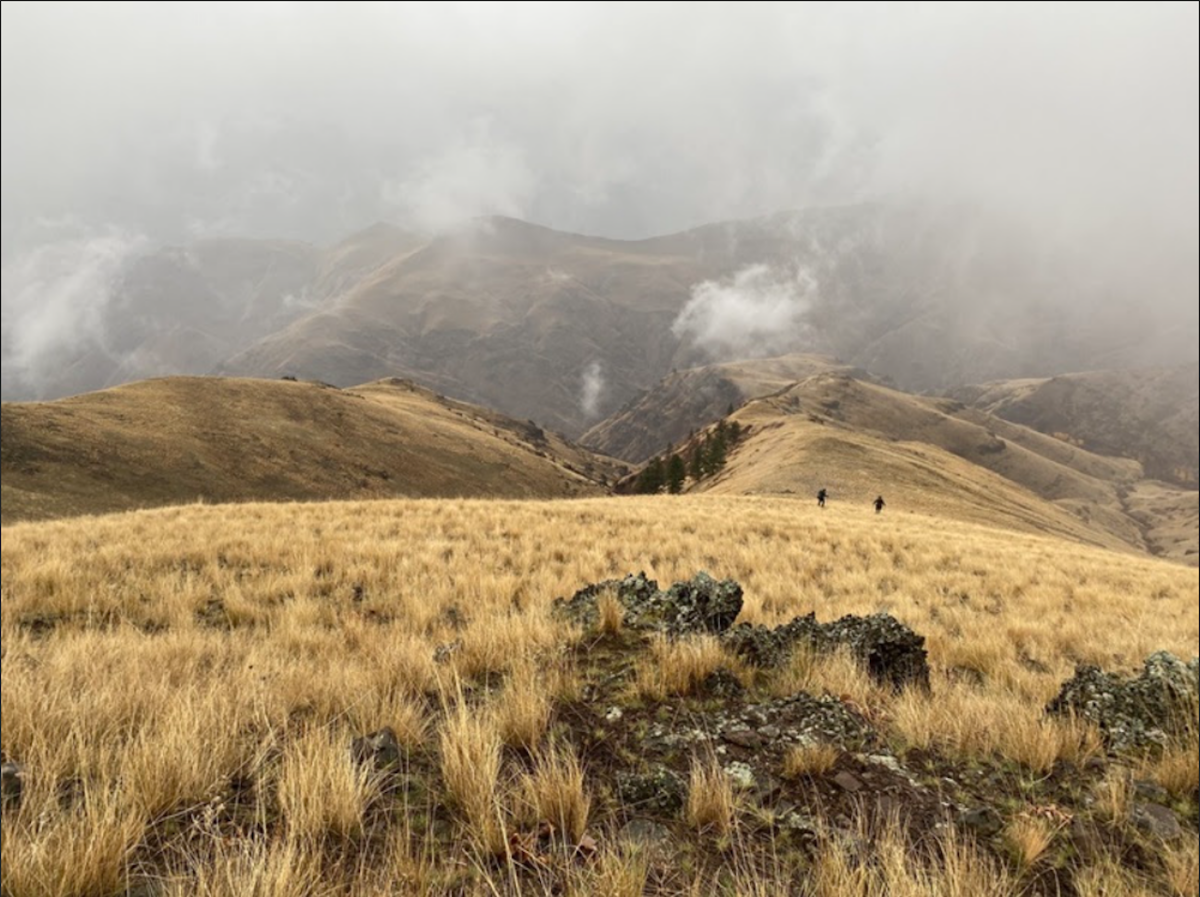
This dynamic conflict became a new normal. It was precisely this problem that gave rise to the Blue Mountains Elk Initiative (BMEI) in 1990, a collaborative effort among the Forest Service, the Bureau of Land Management, the Oregon Department of Fish and Wildlife, the Confederated Tribes of the Umatilla Indian Reservation, the Rocky Mountain Elk Foundation, and the Oregon Hunters Association.
For more than 30 years, the BMEI has funded and coordinated habitat improvements along with strategic road management decisions to help anchor elk on public lands and reduce conflict with neighboring agricultural operations. By combining grant funding, volunteer power, and agency support, the Initiative has delivered nearly $10 million in habitat improvements to date. It remains one of the longest-running elk initiatives in the country.
Against this backdrop, the Blue Mountains Intergovernmental Council, a collaborative body of county governments, state and federal agencies, and tribal representatives, also set about addressing the conflict. The Blue Mountains Intergovernmental Council (BIC) developed a desired condition statement for elk security that reflects a clear understanding of the problem and its solution.
The BIC calls for managing forest habitats, trails, and road systems in a manner that supports broad distribution of elk on public lands based on their seasonal habitat needs. It recognizes that achieving this requires balancing adequate nutritional resources, cover, and human disturbance regimes, and it explicitly accounts for the many other factors, including predation, hunting pressure, and private land practices, that influence where elk end up.
“Elk Security: Forest habitats, trails, and road systems are managed and maintained in a manner that supports and enables broad distribution of elk populations based on their seasonal habitat needs. The desired condition is that habitat is managed to provide a balance of adequate nutritional resources, cover, and human disturbance regimes that encourage elk to remain on public lands. Collaboration and coordination occur that benefits these desired future conditions by addressing the many other factors such as predation, hunting, and private land practices that also effect elk distribution while providing year-round recreational and cultural opportunities and limiting agricultural damage on private lands.” -The Blue Mountains Intergovernmental Council
That language deserves recognition. It was developed collaboratively, it reflects the input of the people who live and work closest to this landscape, and it captures what the science consistently shows: that forage, cover, and disturbance must be addressed together if elk are going to stay on public lands.
You cannot thin the forest to improve nutrition and expect elk to use it if activity on the road network keeps them moving. Conversely, you cannot close roads and expect elk to move in if the forage is not there. BIC members understood this, and their desired condition statement provides a foundation that any durable forest plan should build on.
The 1990 forest plans that currently govern these three national forests were supposed to be revised every 15 years. They are now 36 years old, but not for lack of trying.
The Forest Service first initiated a revision in 2004. A draft environmental impact statement followed in 2014, drawing thousands of comments during public feedback opportunities. Years of additional workshops and public engagement produced a near-final plan by 2018, one that incorporated science-based elk security provisions informed by decades of elk management research from the nearby Starkey Experimental Forest and input from the BIC’s predecessors, but that plan was never signed.
In March 2019, the Regional Forester withdrew the entire package, citing concerns that the revised plans were difficult to understand and potentially confusing to implement.
What emerged from that setback was in many ways the most productive chapter of this long process. Forest Service leadership sat down with local elected officials, tribal representatives, and state agencies to identify common ground on the issues that had derailed the prior effort. The Blues Intergovernmental Council was formally established in November 2019, and over the following years it developed the collaboratively agreed-upon desired conditions, including the elk security language discussed above, that were intended to anchor the next revision.
Then, in 2023 under the 2012 Planning Rule, the Forest Service re-initiated the planning process. The agency released a draft assessment in 2024 and published the draft environmental impact statement in July 2026.
The draft plan, however, does not carry forward the BIC’s collaboratively developed desired conditions for elk security. It drops valuable elk security standards from the 1990 forest plans without adopting a science-based replacement. The monitoring program does not include questions about elk habitat, elk distribution on public versus private lands, or the effectiveness of road management for wildlife.
The agency’s own Starkey Experimental Forest, located within the planning area, has produced decades of peer-reviewed research demonstrating the relationship between road density, seasonal disturbance, and elk behavior. That science is acknowledged in the draft but is not reflected in the plan’s enforceable components.
Hunters are not asking for a return to the 1990 standards, but do want modern, measurable elk management direction to sustain quality hunting opportunities that reflects what Starkey and 30 years of additional research have taught us about what elk need to remain on public lands.
Collaborative Action is the Way Forward
Hunters are concerned that this moment will pass without integrating those tools into the plan. The policies of the past three decades, whatever their imperfections, were grounded in the recognition that active management and wildlife conservation are not competing objectives. They are partners. Thinning and prescribed fire improve forage. Strategic seasonal motorized closures will let elk use that habitat. Monitoring tells us whether it is working. Adaptive management corrects course when it is not.
A durable plan does not require choosing between restoration and wildlife, between timber and elk, between access and conservation. It requires doing all of them well, together, with the kind of measurable accountability that lets the public see whether the plan is delivering results.
That is what the Blue Mountains deserve, and it is what the people who put those first elk on that train 114 years ago were counting on.
Note: The Forest Service’s draft environmental impact statement for the Blue Mountains is open for public comment through September 30, and hunters and anglers have a direct opportunity to weigh in on the future of this herd. For a full breakdown of what’s at stake for elk, water, and roadless areas – plus talking points and a link to submit your comment – see the Teddy Roosevelt Conservation Partnership article: Speak Up for Elk Habitat and Forest Management in the Blue Mountains.