

Enviro Orgs Sue Rufus Woods Net Pen Operator Over Facility Discharges
Operators of the commercial net pens that also raise nearly all of the fish released into Rufus Woods Lake for state and tribal anglers are being sued over discharges from their Northcentral Washington facilities.

Wild Fish Conservancy and Center for Food Safety allege that Pacific Seafood Aquaculture is violating the federal Clean Water Act and limits and conditions in the company’s National Pollutant Discharge Elimination System permit to rear rainbow trout for market as steelhead at its three net pens on the Upper Columbia reservoir.
WFC has a long history of going after fisheries and the net pens are well-known as the best places to fish on Rufus Woods because some of the 5,000 pounds of food fed each month to the commercial fish slips through the screening and ends up providing breakfast, lunch and/or dinner for stocked free-ranging triploid trout.
It’s that and other fallout from pen operations – specifically, dissolved oxygen and turbidity levels and monitoring and reporting requirements – that is drawing the attention of the two environmental organizations.
“The pollutants discharged include, but are not limited to, uneaten fish feed, fish feces, deceased fish and parts thereof, and drugs, pesticides, pharmaceuticals, and other chemicals used in fish production. These illegal discharges have occurred each and every day during the last five years at each of the three facilities and continue to occur,” they state in a 60-day notice of intent to sue sent to Pacific Seafood back in April.
They say degraded water quality, among habitat issues, has contributed to the declines of Endangered Species Act-listed salmon and steelhead in the Columbia River.
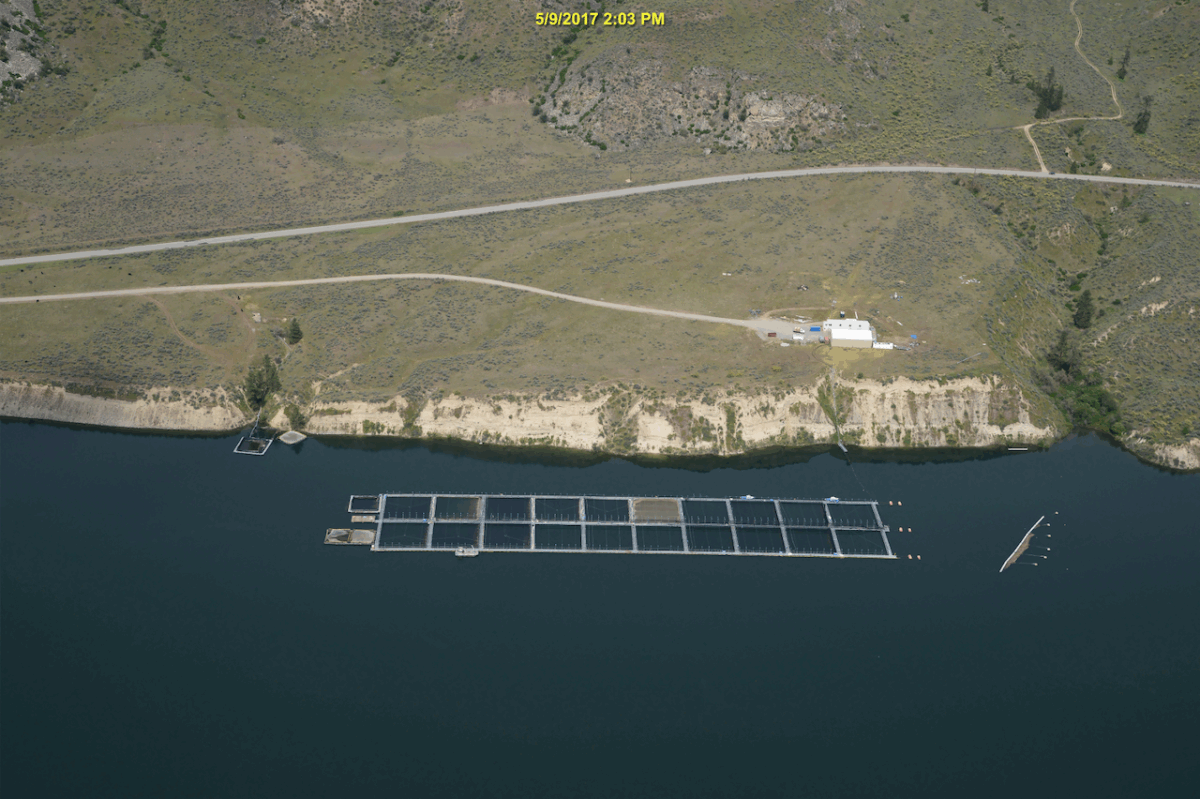
They’re asking a US District Court judge for the Eastern District of Washington to impose a “significant penalty” against the company, issue an injunction to enjoin net pen operations, and order the company to fix the problem, pay civil penalties and reimburse legal expenses.
The suit was filed July 5 and reported on in this week’s Columbia Basin Bulletin.
WFC is one of the groups that fought to end aquaculture operations in Washington state waters following the collapse of Cooke’s Atlantic salmon net pens near Anacortes in 2017.
Pacific Seafood’s net pens are operated from facilities located on the reservation of the Colville Confederated Tribes.
A webpage for the Clackamas-based company says that since its 2008 acquisition of the operation, it has “partnered with the tribe and invested millions of dollars to rebuild the entire infrastructure on the water including new, modern net pens, new moorings, and a state-of-the-art camera monitoring system. Today, Pacific Seafood employs trained dive teams to monitor pen structures and fish health along with 24-hour underwater video surveillance. Pacific Seafood has not experienced any net pen escapes since we began operating our farm.”
To provide for lost salmon and steelhead fishing opportunities due to construction of Chief Joseph and Grand Coulee Dams, the Colville Tribes’ Fish and Wildlife Department stocks Rufus Woods with trout from two sources: jumbos weighing better than 7 pounds that are reared at the tribal trout hatchery near Bridgeport below the reservoir, and from the net pens, which account for the vast majority of releases.
“Currently, the tribe contracts with Pacific Seafoods to feed and rear thousands of Rainbow Trout until they are ready to be released into Rufus Woods or other lakes on the reservation,” a CCT F&W webpage states.
The adipose fins on all the trout are clipped to differentiate them from native redband rainbows.
A total of 40,000 rainbows were slated to be planted in March, April and May, according to the Tribes’ release plan for 2025.
While another 29.6-pound state record triploid may not come along anytime soon, Rufus Woods provides a good winter boat and bank fishery in a region where many other waters ice over.
Triploids are also produced and reared at other private and state hatcheries in Washington. While the supply of net pen fish to this fishery may or may not be in jeopardy, the lawsuit will be an interesting one for legal minds to watch.
About Author
