BY ANDY WALGAMOTT, NORTHWEST SPORTSMAN MAGAZINE
Whiplash.
That’s what I was feeling Tuesday afternoon.
At 4:29 p.m., ODFW emailed to say they had greenlighted two-rod fishing on the Willamette, the river I’m trying to turn into my new home waters.
Yippee, now I can run a second 360 and spinner!! (And probably just catch twice the moss.)
At 4:36 p.m., a notice from WDFW arrived announcing all fishing was closed until November 1 on the Skykomish, what I consider to be my original home waters.
Instant adrenaline rush, meet punch to the gut – kidneys, head, family jewels, you name it.
Both rule changes are related to Chinook numbers.
On the Oregon river, enough adult hatchery springers had been counted at the falls through the end of May to now allow anglers to run a second line with the purchase of the $34 endorsement. Back in December, ODFW said two-rodding wouldn’t be allowed because the preseason forecast of 32,000 to the mouth of the Columbia was less than the 34,000 needed to pretty much guarantee 14,000 would arrive at Willamette hatcheries.
Thank goodness for a way to accurately count fish inseason and use that data to increase angling opportunity. Hat tip to ODFW.
On the Washington river, less than 3,500 “natural origin (or wild) Chinook” are forecasted back to the broader watershed, and given fishing impacts in the saltwater and the 10-year state-tribal management plan, the hatchery summer king, hatchery summer steelhead, fall coho, trout and other game fish seasons are shut down through Halloween.
Without any way to actually count fish inseason, a river and its popular – and hard-fought-for – fisheries have been wiped from the calendar, a sharp decrease in angling opportunity. Thanks for nothing, WDFW.
I shouldn’t be quite so harsh.
Sky kings – like all Puget Sound Chinook – are listed under the Endangered Species Act (as are Willamette springers), and with that new plan, seasons have been iffy the past four years, so this is no longer new.
In 2025, after a closure the year before and just a three-day season in 2023, anglers were able to tap into hatchery summer Chinook and game fish for about a month in early summer. But then the river was closed for all of the pink salmon run to protect unclipped Chinook during their late-summer and early-fall spawn.
“WDFW understands the value many anglers and guides from various backgrounds and their families place on these fisheries given their accessibility and popularity for summer recreation,” said Edward Eleazer, the regional Fish Program manager, in an agency blog post quietly posted yesterday.
Even having left the Skykomish a few years ago now, it still irritates the hell out of me that the huge efforts to fire up a summer steelhead broodstock season and fund Pugetropolis consumptive fisheries are now essentially for naught, or at least only every other year for a short while, depending on available budget resources and Chinook impacts. The former died in 2025’s legislature; the latter are mostly eaten up by northern interceptions, Puget Sound fisheries.
What is the point anymore? Why the hell did I spend so much of my time writing about all that stuff?
On the bright side, without having to manage, creel sample and police Sky fisheries, WDFW can at least use their diminished monitoring money elsewhere, nurse seasons along there.
And rafters will have the High Bridge, Sultan and Lewis Street accesses and river all to themselves, with no need to worry about sleds ripping up and downriver, or compete with drift boat trailers for parking spaces at the launches.
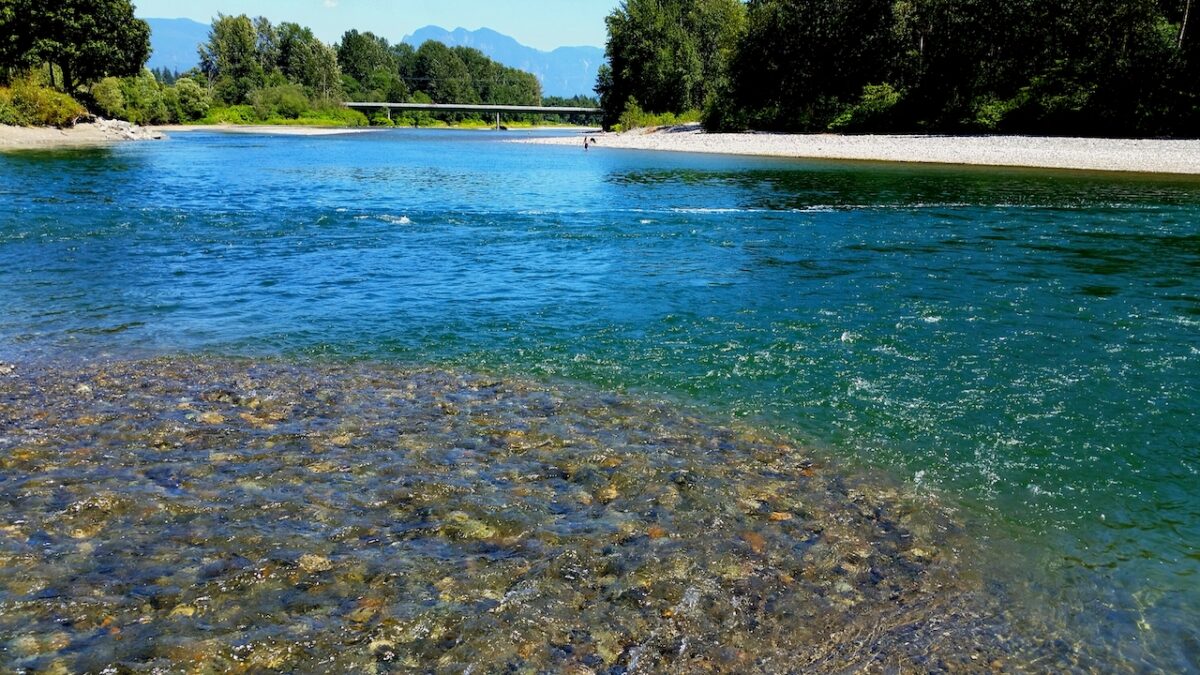
Looks like it’ll be an early start to floating season, what with the Sky at Gold Bar limping along at 2,260 cubic feet per second this morning, 30 percent of average over 97 years of record and 35 percent of median.
No Washington drought? My ass, Mass.
This is not to say that things are fine and dandy with Willamette springers and you should all come down. If this year’s count at the falls hits 31,590, it will at least match the 20-year average, a period of time that also includes 51,046- and 65,293-fish years. The recent five-year average is lower still, just 28,704.
For comparison’s sake, the run nearly hit the six-digit mark in 2004 – and might have if my neighbor hadn’t been banging out all those limits back in the day.
Will I buy that second-rod endorsement now that it’s available from ODFW? Probably.
Even with 22,513 springers already over the falls, recent years have proved that you should definitely not assume that all the fish are gone.
A trip to the mouth of the Willamette in 2021 showed me that there are Chinook to be caught in the system even next month.
I wrote a blog about that trip, comparing and contrasting fishing off the Willamette’s Kelly Point with angling off Puget Sound’s Possession Point on the second day of the Marine Area 9 mark-selective opener.
Copious field research in the Junes since then have shown there are a few biters above the mouth and HOC as well.
Take all advantage of opportunity when it’s available, kids. It may be gone all too soon.