BY ANDY WALGAMOTT, NORTHWEST SPORTSMAN MAGAZINE
(UPDATED 5:09 p.m., SEPTEMBER 30, 2026, AT BOTTOM WITH CHEHALIS TRIBE STATEMENT)
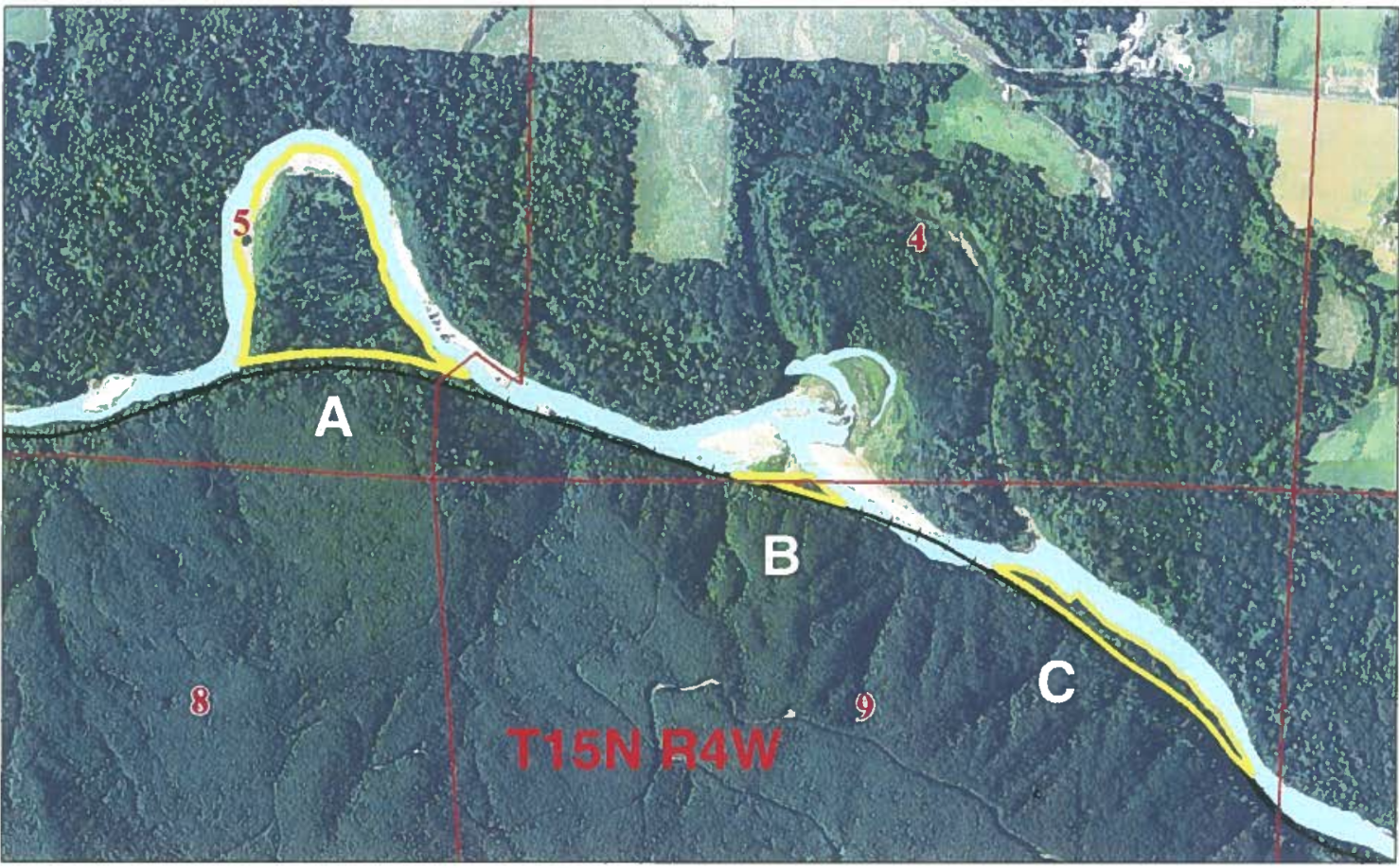
In late 2016, as the Washington Department of Natural Resources moved to convey 30 acres of state forest land along the Chehalis River to the Chehalis Tribe, questions were raised about whether sport fishing on the Grays Harbor system stream would be impacted.
WDFW and a local state lawmaker both asked for more time to clear that up before the deal was finalized.
DNR stressed that the conveyance was only for three chunks of upland property and that the deal specifically excluded the Chehalis River.
The real estate term of art “excepting therefrom the beds and shores of navigable water up to the line of ordinary high water” was included in DNR’s legal description for the land.
Despite the concerns from the legislator and state fishing managers, the Board of Natural Resources approved the $30,000 deal on a 4-1 vote in early January 2017. The three parcels joined an old railroad grade on the south side of the river that the Chehalis Tribe had previously acquired.
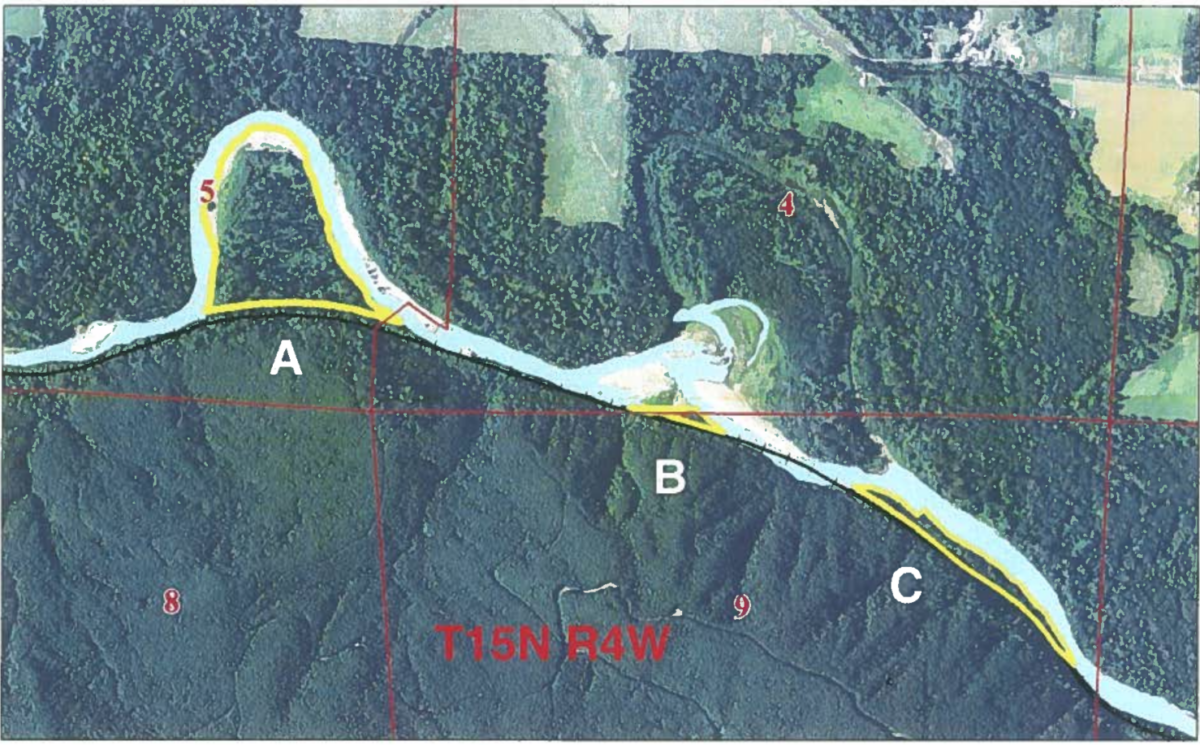
Fast forward to recent times and with much of the river banks in a 10-mile stretch between Oakville and Helsing Junction now owned by the Chehalis Tribe, the tribe believes it can force anglers to buy permits to fish it.
They’re charging $45 for a bank permit and $500 for a boat permit – with all aboard the boat required to have their own permit. Those found without one could be fined $500 and have their boat seized, the tribe’s website warns.
The permit requirement began last October, according to a Badger Fishing reel, and in June an angler found himself in tribal court fighting a ticket.
Today, with coho fishing season just about to begin on this portion of the Chehalis, WDFW issued an unusual statement warning anglers about possible fines from the tribe, even as the agency maintains that the river is “classified as a federally navigable waterbody.”
“Federal and state laws allow for floating navigable waters including for fishing. Washington state laws including RCW 79.105.060 typically allow for public access along navigable waters below the ordinary high-water mark. Intentionally obstructing the lawful taking of fish, shellfish, or wildlife is a crime under RCW 77.15.210,” the statement reads.
Even as WDFW suggested anglers and guides avoid the Chehalis between the South Bank Road and Independence Road bridges, they also advised that if they are approached by tribal law enforcement, tribal officials or tribe members to stay calm, present state licensing and catch cards if requested, ask if they are being detained or free to go should the situation warrant, and call game wardens or the county sheriff if tribal cops say they are going to seize a boat or fishing gear.
It really was a very remarkable statement for WDFW to put out – and it serves to underline those worries about angler access expressed back in January 2017 by the agency to DNR.
“WDFW’s primary concern about the Chehalis Oxbow land transfer is maintaining public access to the Chehalis River. The Chehalis River is important for recreational fishing, and the Chehalis Tribe’s reservation boundary relative to the River is a ‘gray area’ from a legal perspective, which complicates our co-management of fisheries with the Tribe,” Michelle Culver, an intergovernmental policy advisor, told the Board of Natural Resources.
“WDFW requests that the Board delay its decision on the land transfer to give WDFW an opportunity to discuss with DNR how we could best maintain public access to the River. WDFW was not consulted about this proposal – we learned about it by reading about it in the media. WDFW is not opposed to the transfer, we just want to ensure that public access is maintained,” she added.
In an email at the time to me, Culver added that DNR staffers had agreed that tribe’s boundary with the river was unclear and acknowledged that only the tribe and Grays Harbor County had been consulted on the deal.
Culver said that with the ownership of the river not clearly defined, it would have been helpful if DNR’s conveyance to the tribe had “explicitly preserved public access to the River” with a simple provision in the deal.
To repeat, today, WDFW firmly stated the river was federally navigable waters.
Minutes from that Board of Natural Resources meeting state in part:
“aquatic ownership was specifically excluded in the conveyance, and the determination of aquatic ownership likely could only be determined in a federal court due to the complexities with laws relating to the Chehalis Reservation and Washington Territorial ownership and US Government laws. Mr. [Robert] Winslow [of DNR] stated that he felt a delay of a few months likely would not produce any new information or any better clarity regarding the river ownership issues. Mr. Winslow stated that if someone currently has the legal right to travel down the river in a boat they would continue to have that same right after this transaction.”
At the time back in late 2016 and early 2017 I posted two blogs here about the questions surrounding the deal and the final vote. Those blogs vanished into the ether when our website was hacked in 2020.
But links I posted to social media show that some anglers were aghast – just as they are today.
“I would be wary of selling to the tribes,” said one ahead of the deal.
“WTF!! Why would anyone let that happen? Does that mean we can’t float thru that area of the river?” said another afterwards, adding, “It’s not good. Sounds like the Skokomish.”
Anglers have been blocked since 2015 from accessing hatchery Chinook and coho returning to a hatchery on a Skokomish River tributary after a US Department of the Interior Solicitor General opined that the Skokomish Tribe’s reservation stretched all the way across the river and was not just confined to the north bank. Following its own historical research, WDFW stated that the federal opinion was “factually and legally deficient.”
That river remains closed to this day.
Former State Representative Brian Blake (D-Aberdeen) had his eye on the DNR-Chehalis Tribe deal because of the Skokomish situation.
“Given what happened to Skokomish access we should all be concerned,” Blake told me before the Board of Natural Resources approved the deal. “I frequently get fishermen contacting me regarding unpleasant contact with tribal enforcement on this stretch of state water. My hope is that fishermen will attend this meeting and ask for clarification about who owns this stretch of the river. My position is the Chehalis Tribe controls to the ordinary high water mark on the north side of the river.”
Fast forward back to 2026, and earlier this year one legal mind worried that this situation is all about creating a test case that might set new precedents.
It remains a situation to watch closely.