BY ANDY WALGAMOTT, NORTHWEST SPORTSMAN MAGAZINE
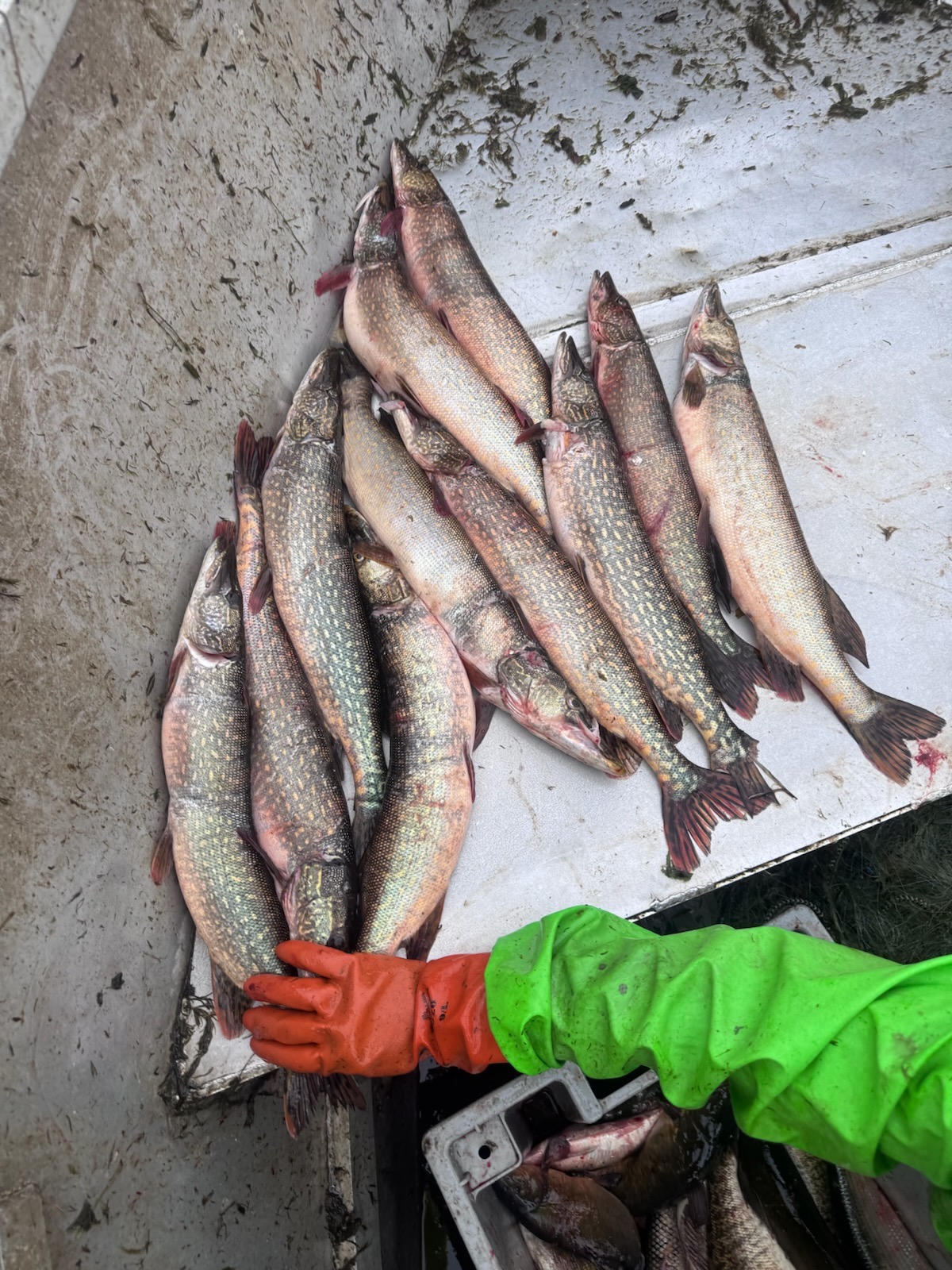
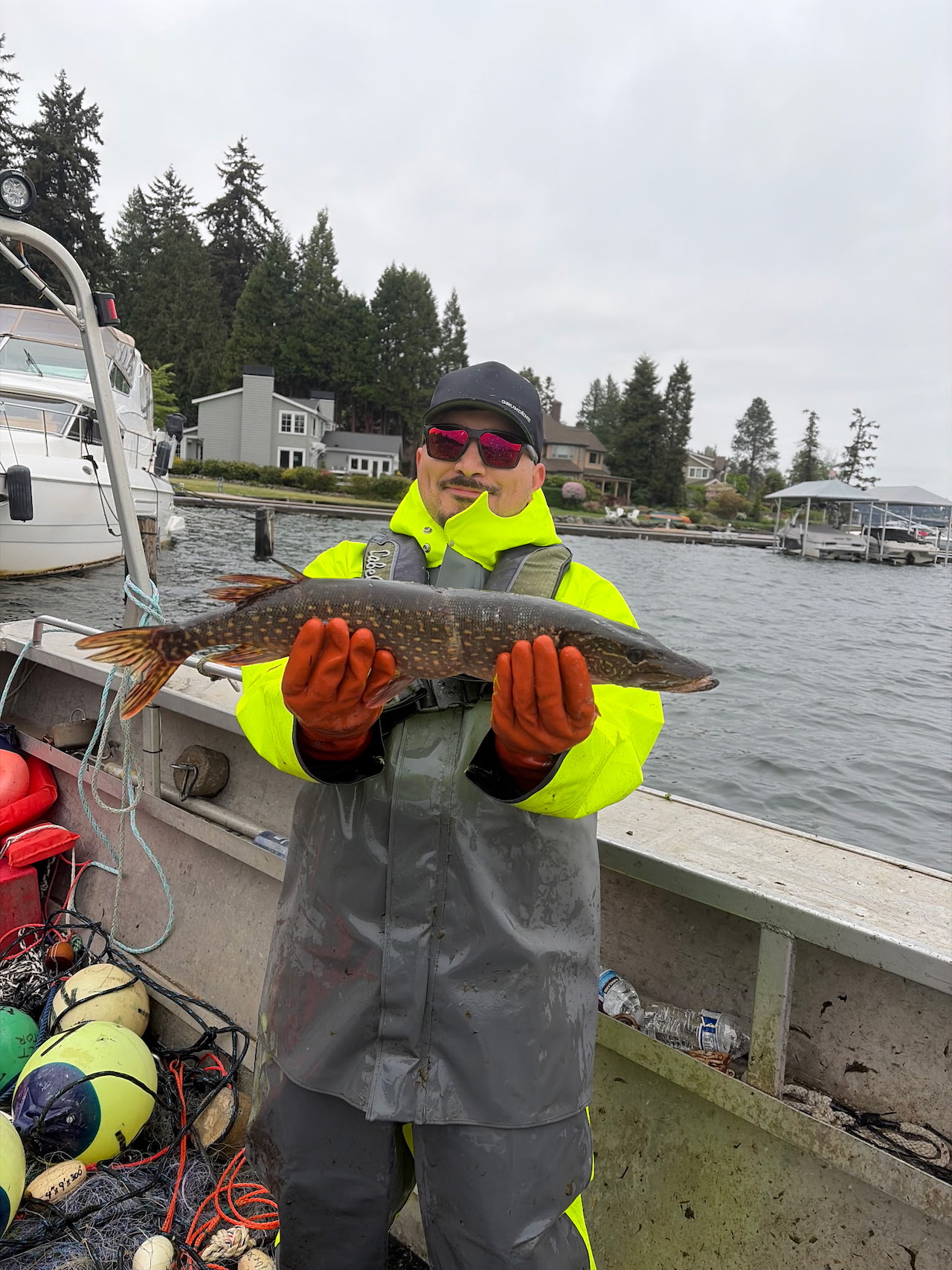
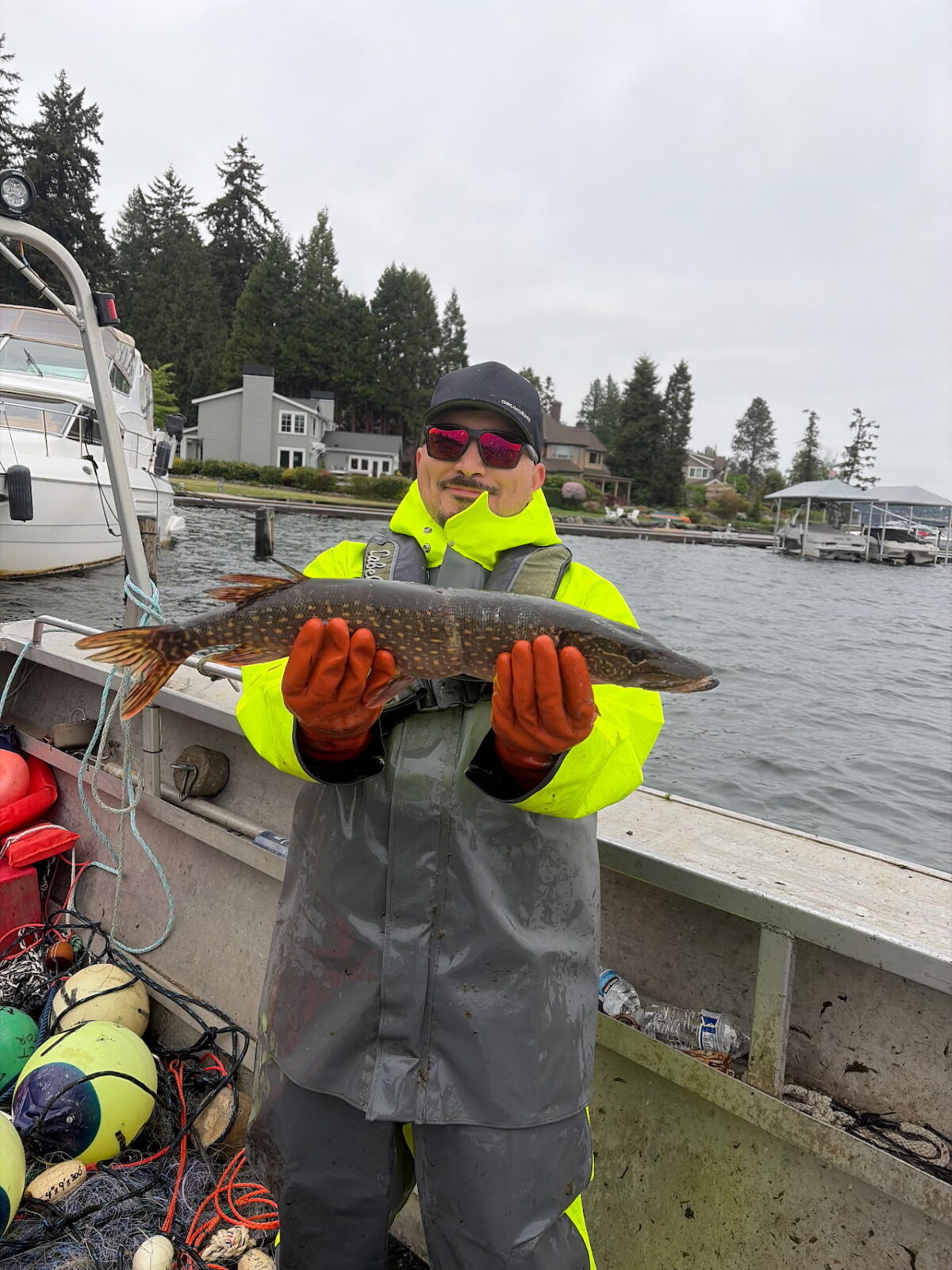
With gillnetting wrapped up for the season, tribal comanagers report that a total of 85 northern pike were removed from Lake Washington over four weeks this spring, leaps and bounds more than any previous year.
It’s a “worrisome increase,” states a Northwest Treaty Tribes blog on the effort, warning that if a population of the nonnative fish illegally let go in the lake takes off, it could mean less returning adult salmon, trout, kokanee and other fish for everyone to catch.
“We don’t want them here. They’ll limit everyone’s opportunities in the future,” said Jason Schaffler, Muckleshoot Indian Tribe fisheries division director, in that blog.
In early May, when the pike count was 37 after just a few days of netting, Schaffler told Northwest Sportsman that it “appears to be the first sign of a reproducing population.”
Analysis of pike otoliths, or ear bones, will confirm that, but he said the fish were from 18 to 20 inches long, which they reach after several years of growth.
Fast forward two months, and it all now has MIT considering what to do next, which Northwest Treaty Tribes reports could include controlling vegetation in Lake Washington so as to remove cover from which pike ambush prey and that their young rear in.
They also would like to definitively answer the question of whether northerns are now breeding in the lake.
“If so, it may prove more difficult to control,” the Tribes blog acknowledges.
Intensive efforts in Northeast Washington appear to have stemmed the population in the Pend Oreille River and is keeping Lake Roosevelt’s in check.
Prior to 2026, the most pike that had been ever caught in a single year at Lake Washington was three.
The Tribes blog says that more federal, tribal, state and local funding “will be essential” to dealing with the situation and keeping it from getting out of hand, but they also note that the Washington Legislature failed to pass a $1.4 million budget proviso that had been funding a WDFW project suppressing nonnative species that prey on salmon smolts.
Lake Washington’s pike could have only arrived via asshole bucket biologist, probably from a source population in the Upper Columbia, Pend Oreille River, Lake Spokane, Lake Couer d’Alene system or Idaho and Montana’s Clark Fork River.
Any caught on the metro lake should be killed and reported by calling 1-888-WDFW-AIS, emailing ais@dfw.wa.gov, or using the Washington Invasive Species Council’s reporting form or mobile app, available at invasivespecies.wa.gov/report-a-sighting.