BY ANDY WALGAMOTT, NORTHWEST SPORTSMAN MAGAZINE
Very grim news for Lake Washington salmon and those working to revive and protect its fish and fisheries.
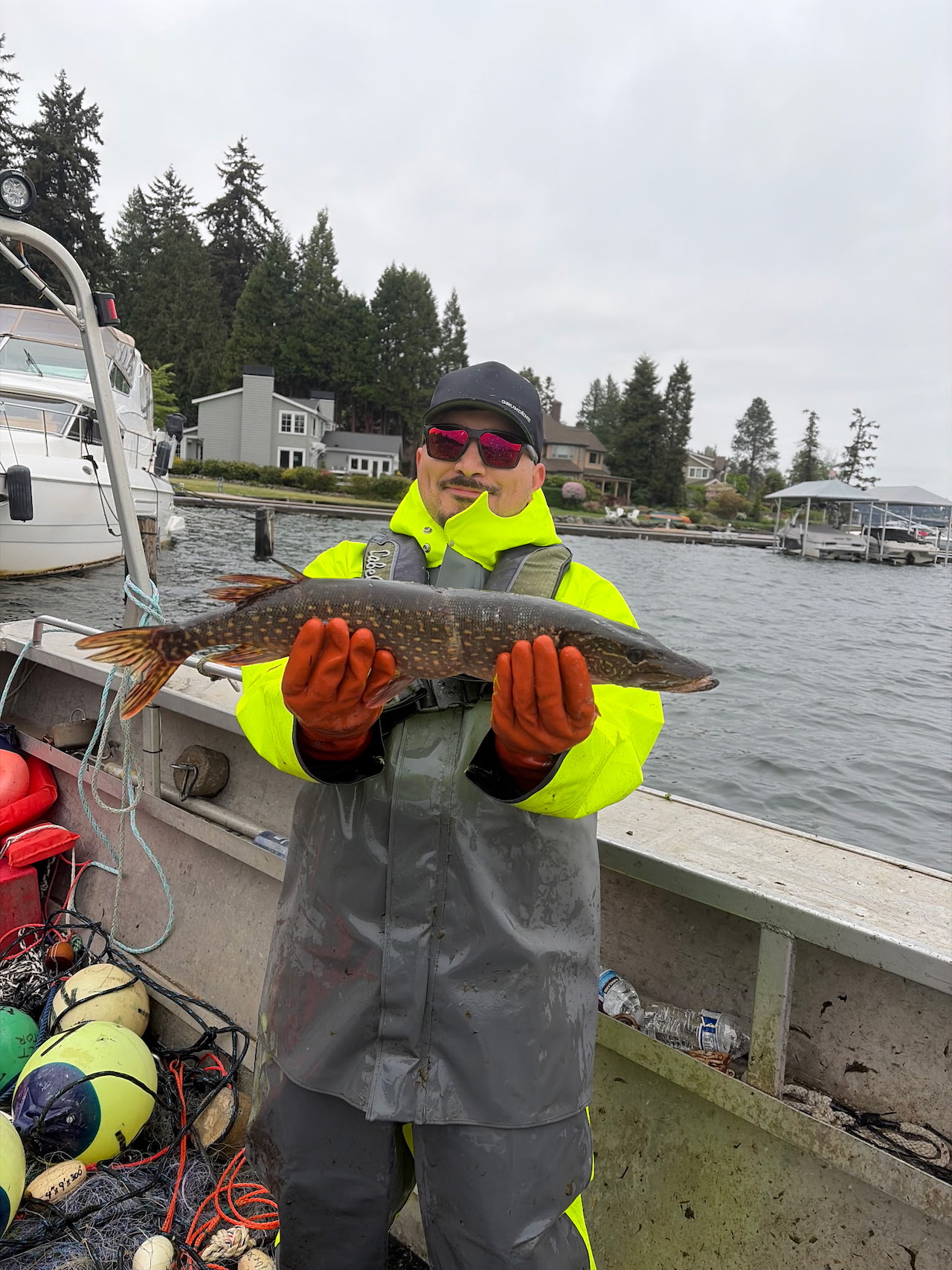
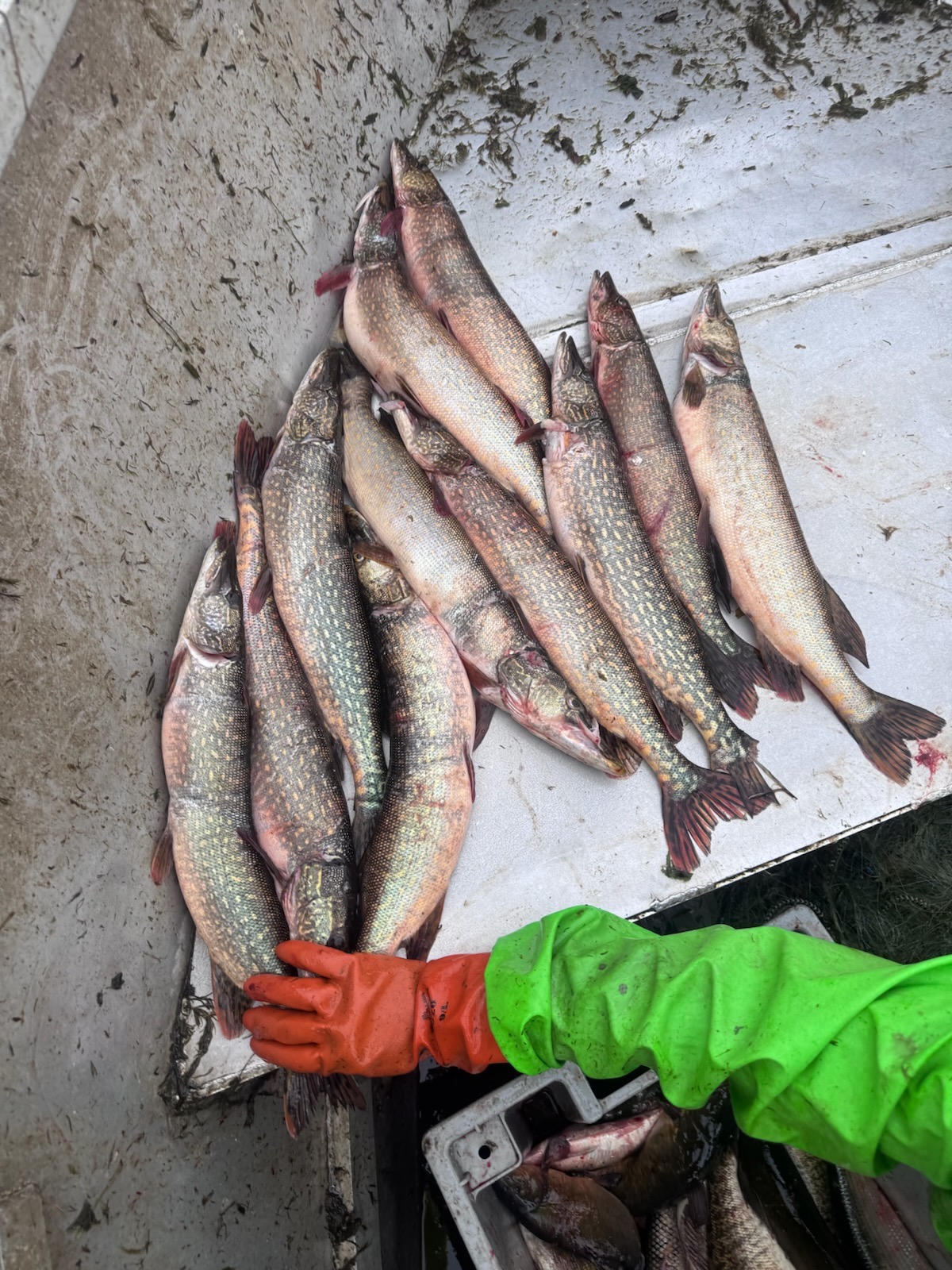
Tribal fishermen have netted 37 northern pike out of the big metro lake so far this month, a massive jump over past years that have seen just one to three of the unwanted nonnative invasive fish turn up since the first one was caught in 2017.
“Unfortunately, this appears to be the first sign of a reproducing population,” said Jason Schaffler, Muckleshoot Tribe Fisheries Division Director.
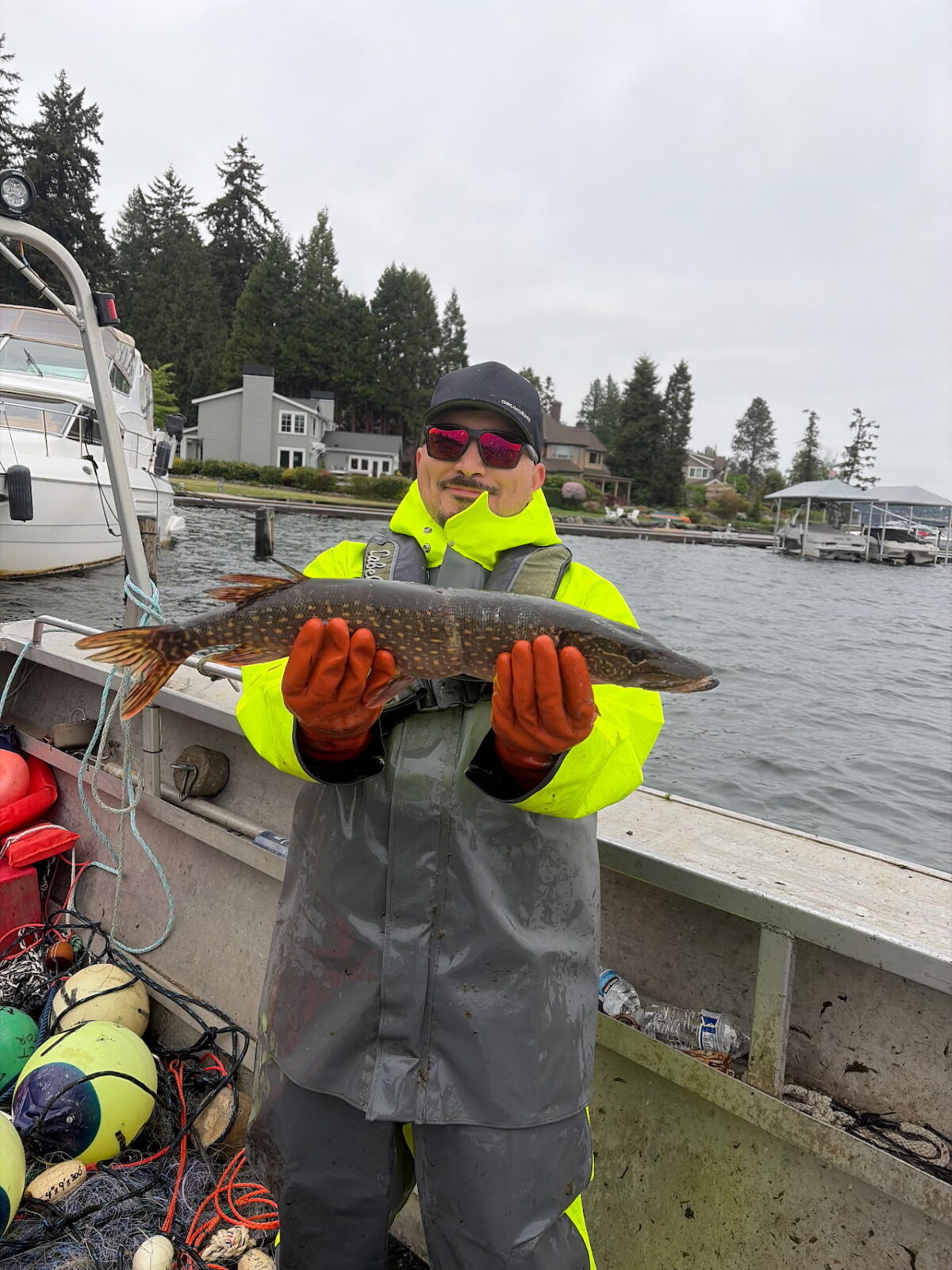
Analysis of pike otoliths, or ear bones, will help confirm that, but Schaffler said netters were catching pike running from 18 to 20 inches, which the fish reach after several years of growth.
It’s believed these particular fish were still sexually immature and likely didn’t spawn this year, but it also means that other northern pike in Lake Washington have been – and for some time now.
Hens can lay from tens of thousands to hundreds of thousands of eggs a year, based on their age and size.
Last year saw crews capture a nearly 3-foot-long postspawn female pike and, a week later and within 100 yards of where it was found, a male pike.
Schaffler said all of this year’s pike were captured near I-90, which splits the southern half of the lake on either side of Mercer Island.
The “significant increase” in northern pike catches is not likely due to increased netting this spring. Schaffler describes efforts as “fairly consistent across (the) years.”
MIT has been performing test and research netting on Lake Washington targeting introduced warmwater species towards reducing their densities and eventually establishing a commercial fishery, while WDFW has been netting to reduce perch, bass and crappie predation on juvenile Chinook, sockeye and coho during their outmigration.
WDFW’s efforts toward that end has been hampered by state budget cuts in recent years, but King County stepped up with “significant funding” for work this past winter.
Earlier this year during a legislative work session in Olympia on predators, Schaffler warned lawmakers that if Lake Washington pike establish a reproducing population, “we’re going to see the exact same problems we are seeing in Lake Roosevelt.”
There, WDFW and the Colville and Spokane Tribes have been working to suppress pike numbers after the fish came down from British Columbia and the Pend Oreille River, with a goal of keeping them out of the so-called anadromous zone below Grand Coulee and Chief Joseph Dams. WDFW has also been suppressing northerns in Lake Spokane, which feeds into Lake Roosevelt, and last year rotenoned a San Juan Island lake to get rid of a population there.
“Their voracious appetite for other fish and prolific spawning habits represent a potential for great ecological and economic damage, not just in northeast Washington but throughout the region,” WDFW states on its pike page. “Northern pike can live over 20 years, can grow to more than 45 pounds, produce a large number of young, and can consume substantial quantities of native and Endangered Species Act (ESA)-listed salmonids that are particularly vulnerable to predation.
Pike have wreaked havoc on salmon in Southcentral Alaska after their unlawful introduction there.
Lake Washington’s pike could have only arrived via asshole bucket biologist, probably from a source population in the Upper Columbia, Pend Oreille River, Lake Spokane, Lake Couer d’Alene system or Idaho and Montana’s Clark Fork River.
As they attempt to rebuild Lake Washington’s sockeye run, as well as its Chinook and coho returns, tribal and state managers want all of its pike dead.
“Any sightings of northern pike in Lake Washington should be reported to WDFW and any positively identified northern pike should not be released,” said Schaffler.
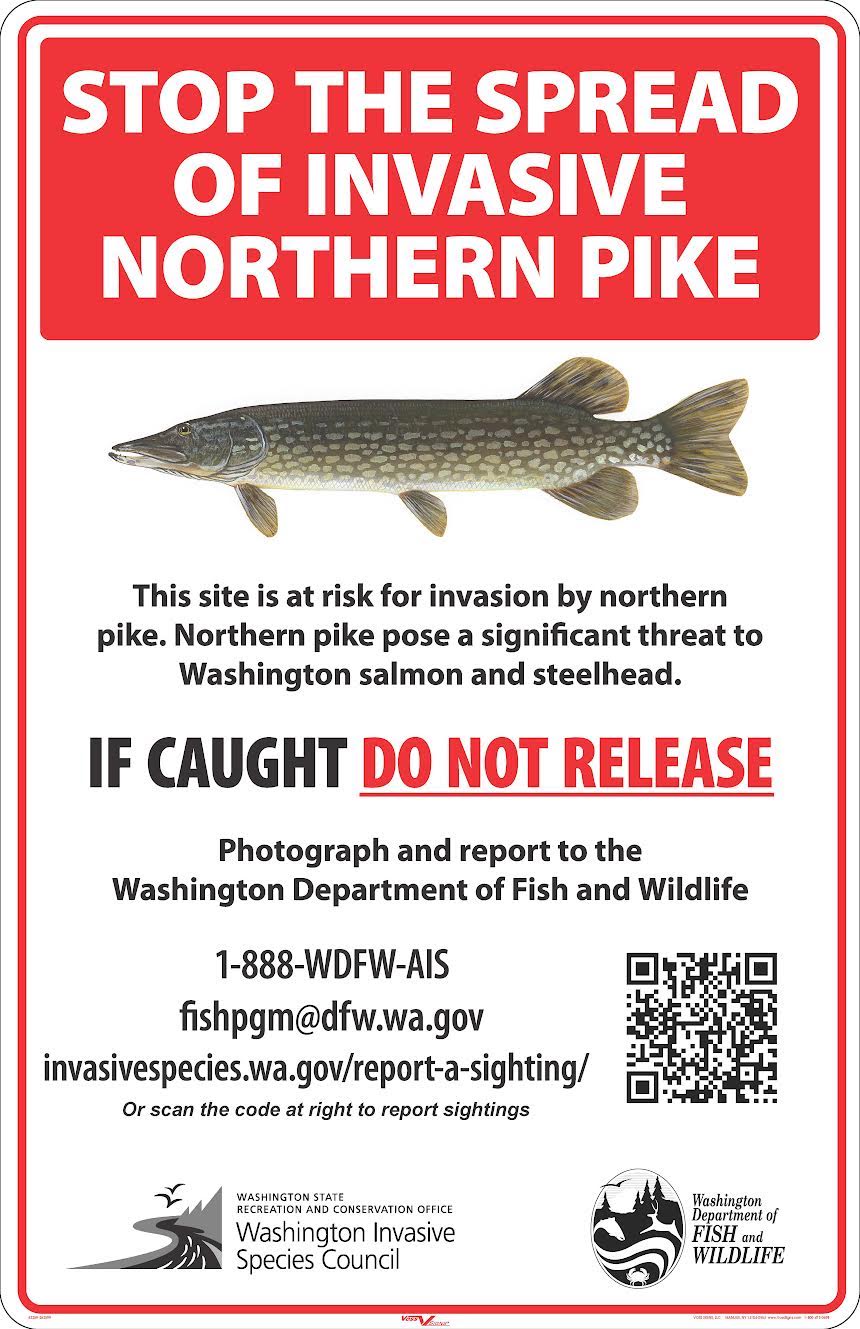
WDFW’s Chase Gunnell said that signs identifying what pike look like have been posted at boat ramps on Lake Washington and the Lake Washington Ship Canal and that any pike caught in the lake, Sammamish River or Lake Union should be immediately killed.
Photos should also be taken and reports filed by calling 1-888-WDFW-AIS, emailing ais@dfw.wa.gov, or using the Washington Invasive Species Council’s reporting form or mobile app, available at invasivespecies.wa.gov/report-a-sighting.