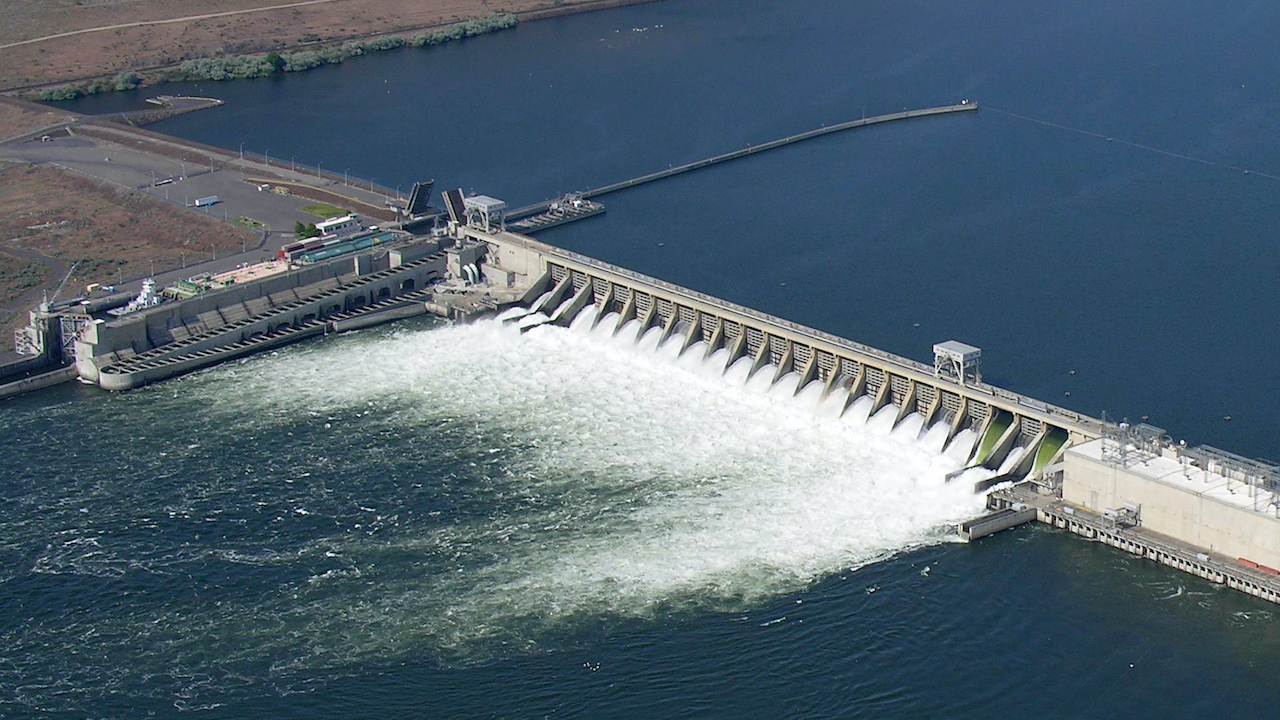
Last night’s big news that US District Court Judge Michael Simon ordered federal hydro system operators to spill water at eight mainstem dams on the Columbia and Snake Rivers to aid ESA-listed salmon and steelhead smolt outmigration is drawing reaction from parties in the case.
We’ll start with a statement from the Public Power Council, which sided with the federal defendants – the National Marine Fisheries Service, Army Corps of Engineers, Bureau of Reclamation and US Fish and Wildlife Service – in the long-running case, followed by a press release from the lead plaintiff, the National Wildlife Federation, then a release from a wider group of plaintiffs and their legal team, outside salmon advocate, the Nez Perce Tribe, which filed friend of the court briefs in the case, and the state of Oregon, which had also filed for a preliminary injunction:
We will update the blog when/if more statements come in.
Public Power Council Statement on Preliminary Injunction Ruling in Columbia River System Operations Case
The Public Power Council (PPC), representing non-profit, community-owned electric utilities across six Pacific Northwest states, issued the following statement after the U.S. District Court for Oregon granted a preliminary injunction affecting operations of the federal Columbia River system.
Based on PPC’s initial review, it is disappointing to see that the federal court’s preliminary injunction order adopts most of the operational changes requested by Plaintiffs. However, the court’s order does incorporate a few important reasonable operational approaches proposed by PPC as the lead Defendant-Intervenor for public power that serve to somewhat temper the ramifications of the court’s order.

The court also declined to require certain infrastructure and non-operational measures and clarified that the current emergency protocols and operational variances remain in effect. Even with these positive aspects, however, this ruling will nonetheless have significant implications for hydropower generation, grid reliability, increased greenhouse gas emissions, and higher costs for Northwest communities.
“PPC is disappointed that the court adopted a sweeping operational injunction that will materially affect the region’s clean hydropower system and the millions of people who depend on it,” said Scott Simms, PPC’s CEO and Executive Director. “The Columbia River system already operates under some of the most protective fish measures in the nation, and public power utilities have invested billions of dollars over decades to support salmon recovery while producing reliable and affordable electricity.”
The court’s order focuses primarily on altering river operations that will allow very high levels of “spill” over the region’s dams (instead of through hydropower turbines). PPC notes, as the leading Intervenor-Defendant for public power, that its concerns regarding reliability, power supply, and operational feasibility were partially reflected in certain elements of the order, including limits on additional spill at specific projects, reliance on previously implemented operating levels, and built-in flexibility for emergency conditions.
“We appreciate that the court recognized the need for operational flexibility and declined to impose several far-reaching measures that are better addressed through long-term policy and congressional processes rather than a preliminary injunction,” Simms said.
The court adopted some of PPC and other Defendant Intervenor’s recommendations that may reduce some of the harm caused by the preliminary injunction. Specifically, the court ordered reservoir elevations in-line with 2025 operating levels, which provide a larger operating range than what the Plaintiffs requested, accepted PPC’s proposal to adopt the 2025 Fish Operations Plan spill regime at Ice Harbor and John Day during the summer, and rejected the Plaintiffs’ proposals to require infrastructure repair and maintenance projects, study Minimum Operational Pool reservoir levels, and conduct a range of additional non operational conservation measures.
“Those limited acknowledgments, however, do not offset the broader impacts this decision could have on the region’s power supply, transmission operations, greenhouse gas emissions, and customer costs,” Simms noted.
PPC emphasized that public power utilities remain committed to a balanced approach that advances salmon recovery, maintains reliable electricity, and protects affordability for Northwest families and businesses.
“For years, PPC and its members have supported collaborative, science-based solutions outside the courtroom – including a strong and undeniable track record of investments in habitat, hatcheries, predation management, and improved system operations,” Simms said. “Lasting progress for fish and communities will come from durable regional agreements and congressional direction, not from repeated litigation cycles.”
PPC will continue working with the federal action agencies, regional partners, and policymakers to evaluate the operational, reliability, and financial impacts of the injunction and next legal steps, including potential appellate review.
“Our focus now is ensuring that the region can implement this order in a way that protects electric reliability and affordability while continuing to support fish recovery,” Simms said. “Public power utilities will remain engaged in the legal process and in regional collaboration to pursue solutions that work for salmon, communities, and the Northwest economy.”
National Wildlife Federation: Court-Ordered Emergency Actions Put Pacific Northwest on Course to Protect Imperiled Columbia Basin Salmon, Steelhead
Court-ordered emergency measures to the operations of the Columbia Basin hydropower system not only will help protect imperiled salmon and steelhead, but also underscore the need for longer-term measures to recover the species. The decision is the latest chapter in the 30-plus year legal fight to restore Columbia River Basin salmon and steelhead runs, which are rapidly swimming toward extinction largely due to the cumulative, negative impacts of the four lower Snake River dams. Plaintiffs in National Wildlife Federation v National Marine Fisheries Service returned to court after the federal government unilaterally ended the Resilient Columbia Basin Agreement.
“Because the federal government threw out a comprehensive plan that would have restored the Columbia Basin while investing in the region, returning to court is the only tool we have left to prevent the collapse of imperiled salmon and steelhead populations,” said Mike Leahy, senior director of wildlife, hunting and fishing policy for the National Wildlife Federation. “While these emergency measures are implemented, we’ll keep our eye on our long-term goal of helping the Tribes and the states restore Snake River salmon for the generations to come.”

Columbia Basin salmon and steelhead, particularly those that return to the Snake River to spawn, persist at dangerously low abundance and many continue to decline toward extinction. Of the 16 salmon and steelhead stocks that historically return to spawn above Bonneville Dam, four are extinct, and seven more are listed under the Endangered Species Act as endangered or threatened, including all that return to the Snake River.
For most of these endangered and threatened salmon, the largest threat in their freshwater life stage is by far the harm caused by federal dams. These dams kill and harm salmon as they attempt to migrate past each dam and by transforming the river into a series of slack water, warm reservoirs.
Earthjustice et al: Court Orders Emergency Actions to Protect Imperiled Columbia Basin Salmon
A federal court in Oregon today ordered federal agencies to change operations of the Columbia Basin hydropower system in critical ways to help improve salmon survival.
The Court unequivocally recognized the dire situation of Columbia Basin salmon, noting that “one of the foundational symbols of the West, a critical recreational, cultural, and economic driver for Western states, and the beating heart and guaranteed resource protected by treaties with several Native American tribes is disappearing from the landscape.”
To help imperiled salmon and steelhead, the Court ordered the federal agencies that operate the hydropower system to increase spill over eight dams on the lower Columbia and Snake Rivers, allowing juvenile fish to pass over the dams instead of through lethal turbines. The court-ordered spill includes additional water flow over the dams in the spring and summer, when increased spill is critical to aid in the recovery of wild Chinook salmon.

The Court found that similar emergency measures had been implemented before and were needed again: “The Court recognizes the dire situation these species are facing. … It appears that the 2020 BiOp and 2020 FEIS follow this disappointing history of avoidance and manipulation instead of sincere efforts at solving the problem and genuinely remediating the harm.”
The Court also said it was not persuaded by information from federal defendants, saying evidence challenging the benefits of spill to salmon “primarily was created for this litigation and is contrary to the scientific evidence in the record.” The Court also noted that, “the majority of the spill has been implemented over the years without such negative repercussions, and the Court does not anticipate such calamities will ensue from the current spill order.”
Conservation, fishing and clean energy groups represented by Earthjustice, joined by the State of Oregon, requested these changes in a preliminary injunction request that was also supported by the State of Washington, the Nez Perce Tribe, and the Yakama Nation who joined as amici (friends of the court). The parties returned to court in October, ending a four-year pause in litigation, after the Trump administration last summer unilaterally and abruptly ended the Resilient Columbia Basin Agreement aimed at restoring imperiled native fisheries to healthy abundance while investing $1 billion over a decade in the region.
Following are quotes from plaintiffs and Earthjustice:
“The changes to the hydropower system ordered by the court today are immediate and reasonable steps to prevent salmon extinction,” said Earthjustice Attorney Amanda Goodin. “Salmon need help now, and we’re encouraged the court has granted immediate, commonsense relief that will help protect imperiled Northwest salmon and steelhead.”
“Because the federal government threw out a comprehensive plan that would have restored the Columbia Basin while investing in the region, returning to court is the only tool we have left to prevent the collapse of imperiled salmon and steelhead populations,” said Mike Leahy, senior director of wildlife, hunting and fishing policy for the National Wildlife Federation. “While these emergency measures are implemented, we’ll keep our eye on our long-term goal of helping the Tribes and the states restore Snake River salmon for the generations to come.”
“This court decision secures badly needed improvements to hydropower operations to protect the Columbia Basin’s iconic salmon and steelhead runs that are essential to Tribal cultures and our Northwest heritage,” said Sierra Club Snake/Columbia River Salmon Campaign Director Bill Arthur. “We can avoid extinction and restore healthy salmon runs while making long-term investments to provide ample, reliable, affordable energy for the region. Since the Trump administration reneged on the Resilient Columbia Basin agreement, we are seeking other ways to achieve these goals. This court decision helps protect salmon and keeps us on that path.”
“These are the immediate and decisive actions we need to help prevent salmon and steelhead extinction,” said Idaho Rivers United Conservation Director Nick Kunath. “The court recognizes that we must listen the advice that fisheries managers and scientists have been sharing for decades before it’s too late.”
“These emergency measures required by the Court of the federal government will help prevent salmon extinction while we continue our work with others in the region toward a comprehensive solution to restore the Columbia Basin,” said Northwest Sportfishing Industry Association Policy Director Liz Hamilton. “These emergency measures granted by the court will increase survival for the young salmon leaving the river next year and provide hope for those whose livelihoods and culture depend on Columbia River Fisheries.”
“There’s no surprise that the federal government’s decision to walk away from a comprehensive agreement, without any alternative plan, resulted in a serious setback for the Northwest,” said Idaho Conservation League Salmon Program Senior Associate Abbie Abramovich. “These emergency measures offer wild Columbia and Snake River salmon populations a much-needed lifeline.”
“We absolutely can have clean energy and restored salmon runs, and today’s ruling is an important step in the right direction,” said NW Energy Coalition Regional and State Policy Director Zachariah Baker. “The ruling helps protect salmon, while the region continues to collaborate on the comprehensive, strategic solutions envisioned in the Resilient Columbia Basin Agreement the administration withdrew from, including how to ensure abundant, affordable, and reliable clean energy across the Northwest.”
“The hydropower interests that convinced Trump to break the Resilient Columbia Basin Agreement got what they wanted,” said Miles Johnson, Legal Director for Columbia Riverkeeper. “Because of their actions, today’s ruling is necessary to protect fish and fishing in the Columbia River — and it will not disrupt energy production or reliability in the Northwest.”
Save Our wild Salmon press release: Salmon and Fishing Advocates Applaud Federal Court’s Ruling Ordering Immediate Emergency Action to Protect Columbia Basin Salmon and Steelhead from Extinction
This past fall, plaintiff groups led by Earthjustice and supported by the lower Columbia River Tribes and states of Oregon and Washington filed a motion to lift the litigation stay that had been in place as part of the Resilient Columbia Basin Agreement (RCBA). This was quickly followed by a request for preliminary injunctive relief to modify federal dam and reservoir operations – and other emergency actions – in order to increase survival of endangered adult and juvenile fish migrating through the lower Columbia and Snake rivers.
Yesterday — The United States District Court in Portland issued its ruling on plaintiffs’request for preliminary injunctive relief to modify federal dam and reservoir operations and implement immediate emergency actions on the lower Snake and Columbia rivers to protect endangered salmon and steelhead from further harm.
The court-ordered increased spill over eight dams on the lower Columbia and Snake rivers, in time for the 2026 juvenile fish out-migration that begins each year in March and continues through the end of August—allowing juvenile fish to pass over the dams instead of through lethal turbines.

Judge Michael Simon noted, “The Court recognizes the dire situation these species are facing. … It appears that the 2020 BiOp and 2020 FEIS follow this disappointing history of avoidance and manipulation instead of sincere efforts at solving the problem and genuinely remediating the harm.”
The proposed order will take effect March 1, 2026, and continue through the court’s resolution of the case. The schedule for that resolution will be proposed by the parties within 30 days.
STATEMENT from Joseph Bogaard, executive director, Save Our wild Salmon Coalition:
“Salmon, orca and fishing advocates are breathing a big sigh of relief following the court order to better protect imperiled fish populations by requiring modifications to the operation of the federal dams on the lower Snake and Columbia rivers. Our region’s deeply cherished salmon populations are running out of time. The science is clear: Many native fish populations in the Columbia Basin today face extinction, and urgent action is needed to give them a fighting chance to survive and recover. Salmon advocates across the Northwest and beyond applaud the Tribes, States and non-governmental organizations for seeking emergency action, and we appreciate the court moving quickly to issue its decision. This order will improve survival of these imperiled fish populations as they migrate past dams in the lower Columbia and Snake rivers.”
While salmon advocates see the order as a strong victory for fish, the Court did not grant all of the conservation measures requested by plaintiffs. However, the Court acknowledged the urgent need to deliver emergency action to improve survival of both out migrating juveniles and returning adult fish, noting that “one of the foundational symbols of the West, a critical recreational, cultural, and economic driver for Western states, and the beating heart and guaranteed resource protected by treaties with several Native American tribes is disappearing from the landscape.”
Additional, long-term changes in the Columbia and Snake rivers will be needed to protect and rebuild sustainable fish populations, including the restoration of the lower Snake River. The federal Columbia-Snake hydro-system is the single greatest source of human caused mortality for these endangered salmon and steelhead populations.
The order, however, does provide immediate and critical relief for the fish and an opportunity for our region to work together on longer-term comprehensive solutions — for salmon and orca, to uphold Tribal Treaty rights, and to plan and develop a more sustainable energy system.
Nez Perce Tribe: Big Win for Nacox (Salmon)
“If you’re sitting in an ICU or emergency room, and the medical experts tell you a surgical procedure is critical to give you the greatest chance of survival and if you do not undergo the procedure your chance of survival is significantly lower, would you take the risk of not having the procedure?” said Nez Perce Chairman Shannon Wheeler.
“As hydropower has gone in, and the Northwest has grown, we must recognize the impacts this has had to the natural resources that have always been here. Growth and evolution in the energy sector is necessary and already happening in the Northwest and can be done in a way that doesn’t require salmon to bear the burden. The luxuries and conveniences we have today were developed on the backs of species like salmon and it is overdue to find a way to meet our comforts AND the needs of our life sources,” Wheeler continued.

“Tribes have invested in the work to restore habitat and produce hatchery fish, but the work hasn’t been put in on the hydro system to match the true needs of the fish. We have addressed all the other pieces of the problem, and still have work to do, but the biggest piece continues to be ignored,” Wheeler added.
“For us, ˀinoqtiyawˀáat- our leader, the salmon- was the one that stood up for us first,” he said. “And the Nez Perce have and will continue to stand up in every forum for the salmon, the land, and the water.”
State of Oregon: Governor Kotek Applauds Court Decision Restoring Columbia Basin Salmon Protections Abandoned by Trump
Today, Governor Tina Kotek welcomed a federal court order directing the restoration of salmon protections on the Columbia and Snake Rivers, calling it a win for the future sustainability of endangered salmon and for the sovereign tribal nations who have fought for generations to protect them:
“Judge Simon made the right call, and I concur with his repudiation of the Trump administration’s refusal to uphold salmon protections in the Columbia Basin. This decision lets us move forward focused on what really matters – restoring fish populations, meeting energy demand, and building a clean energy future for the Pacific Northwest.
“This ruling establishes dam operations similar to those over the past five years, with some modest adjustments in spill and reservoir elevations to reduce the harm to migrating salmon and steelhead. Recent preliminary analysis by the Northwest Power and Conservation Council indicates this will have modest impacts on power generation, our ability to meet peak demand, and our region’s overall ability to maintain a reliable, affordable power system.”