



Canadian salmon overseers today announced they plan to mass mark 90 percent of Department of Fisheries and Ocean-produced Chinook released from southern British Columbia hatcheries by 2027, more than doubling the current mark rate.
The move is the “next step in strengthening the long-term conservation and rebuilding of wild Pacific salmon,” according to a DFO press release.
“Pacific salmon are central to the cultural, ecological, and economic fabric of Canada’s West Coast. Expanding mass marking enhances our understanding of science, providing a clearer picture of wild salmon populations, and the performance of our hatcheries,” said Minister of Fisheries Joanne Thompson. “This supports better population management, can promote genetic diversity, and is one of the investments we are making so that these wild salmon runs can have the best chance at recovery and sustainability over the long-term.”
Mass marking has long been a common practice in Washington, Oregon and Idaho with hatchery Chinook and coho, and 40 percent of southern BC’s Chinook are currently clipped, per DFO.
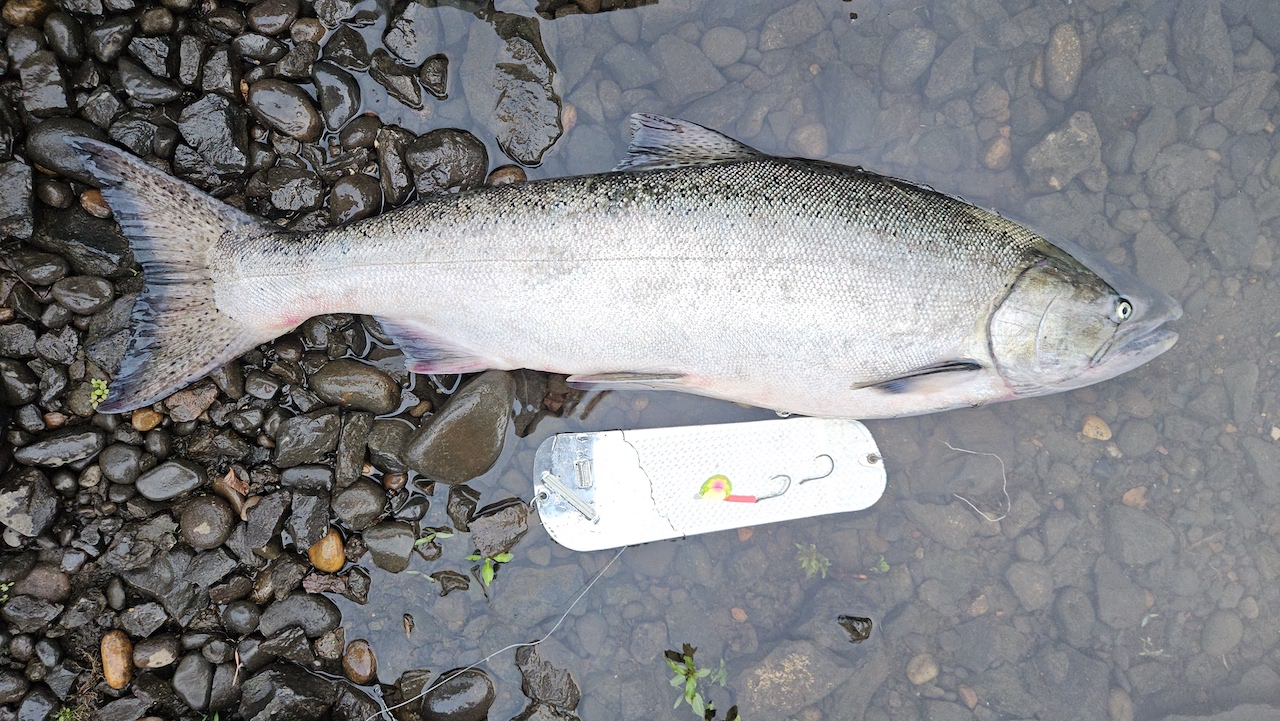
Removing the adipose fin (in most cases) allows anglers to easily tell the difference between wild kings, which often must be released, and harvestable hatchery fish.
As they feed south in summer along the so-called salmon highway off the west coast of Vancouver Island, , some Fraser River kings mingle with Columbia River and ESA-listed Puget Sound Chinook.
DFO says its goal is to eventually mass mark all of its southern BC hatchery kings and that it is also working with local production facilities to increase their mark rates “where feasible and supported by science, and in agreement with those community hatcheries.”
